
 Blog Details

Getting the most suitable ERP software solution for your business in the USA is no longer a matter of simply comparing features of different systems related to accounting. For today’s businesses, it is very important to have an ERP system that is not only an accounting system but also integrated with all aspects, including inventory, purchases, customers, employees, vehicle assets, field operations, and finance, from one central system.
Picking out the appropriate ERP system is based on various factors like company size, industry, number of locations, inventory quantity, fleet size, as well as operational complexity. A minor contractor will probably require scheduling, quoting, invoicing, and technician management, whereas a manufacturer will be looking at production, planning, procurement, warehouse control, and job costing as important features.
This article compares leading ERP systems and gives a breakdown of which systems will meet and suit most the needs of small businesses, inventory-heavy companies, fleet operators, general contractors, field-service businesses, factory manufacturers, and rapidly expanding mid-sized companies.
What Is ERP Software and Why Do Businesses in the USA Need It?
ERP stands for enterprise resource planning and is a management system that combines the company’s operational functions in one place. A central repository for finance and finance-related data, customer records, inventory, human resources, purchasing, selling, production, quality assurance, and customer service departments i.e., a business’s operational activities is the primary function of ERP software.
Businesses using this integrated ERP tool can easily find the right information and make decisions from one place, while at the same time having one set of data that everyone in the organization can see. In this case, placing a sales order automatically causes inventory reductions, orders are generated in purchasing, and sales fulfillment is arranged. In addition, the sales order triggers invoicing and financial reporting, as do other operations. One of the major features of an ERP system is the elimination of duplicate data entry. That’s a huge savings not only in time but also in the risk of errors. What is more, managers get up-to-date information about the running activities and problems of different departments, which greatly helps them make decisions and take action.
Firms are able to examine various examples of ERP systems and assess them as a result to decide which ERP best suits their business. There are systems that are specially tailor-made to handle accounting operations; others are used when it comes to deep involvement with inventory. The system that works with the asset is the one that will also be involved with the management of projects or field service. An ERP system will not bring the best results as long as the different business units run separate spreadsheets and programs for their work. For instance, an employee manually keying in the information several times, inaccurate stock inventory records, a production report ready only after many days, or, truth is, no two departments can communicate; situations like these easily signal the need for a properly integrated ERP system that is a more efficient foundation.
Key Features to Look for in the Best ERP Software in the USA
Inventory Management and Real-Time Stock Tracking
A robust ERP solution should keep the user posted on the status of goods, stock movements, storage transfers, reordering, and purchasing needs continuously. A company stocking many goods, accessories, raw materials, or devices will find the feature extremely useful.
While businesses are trying to pick which software is recommended for inventory management, look for other things that an inventory system does; i.e., whether the inventory system supports barcodes, can handle inventory of multiple locations, whether inventory replenishment can be done automatically, has an automated purchase order system, and a good set of reports.
Fleet and Asset Management
Different than just doing basic accounting for fleet-heavy enterprises, their ERP system is going to be a vehicle and asset tracking and maintenance scheduling, utilization, operating costs, downtime, and life cycle information manager.
Business owners looking for the best fleet management software reporting tools in the USA for 2026 should first have dashboards that convert fleet data into decisionable information. Such reports include maintenance cost per vehicle, utilization, fuel costs, repair history, asset replacement needs, etc.
Field-service organizations can go to dedicated field service asset management software for higher functionality. There, they link customer assets with equipment history, maintenance records, and technician activity.
Financial and Accounting Management
Financial management is one of the main aspects of an ERP system. When selecting a system, businesses ought to focus on functionalities such as invoicing, accounts receivable, accounts payable, and other payment-related aspects, accounting for company expenses, tax processes, and, of course, budgeting, and generating various financial reports.
Those enterprises managing multi-agreement scenarios may also be advised to evaluate whether their ERP has the ability to seamlessly connect with the best contract lifecycle management software, which can handle contract approvals, renewals, documents, and compliance processes.
CRM and Customer Management
A CRM connected to ERP keeps customer data linked to sales, service, billing, and operational records. Employees can see the customer records, the history of all customer communications, the sales pipeline opportunities, the records of customer service cases, and financial data without having to toggle to different software applications.
In a scenario where a company evaluates the best CRM for small business, the company will need to evaluate the usability of the application, the degree to which different processes can automate themselves, the availability of different types of reports, the degree of integration capabilities of the CRM with other external software, contact management, and the way in which the CRM information will flow without any manual intervention into other business processes.
For service providers, having a separate field service CRM software function may be of great advantage since customer profiles can be linked to jobs, technicians, proposals, invoices, equipment, and service history.
Procurement and Purchase Order Management
Procurement functionality is a one-stop procurement solution that offers a single workflow where a company can track its purchase request approvals, vendors, purchase orders, receiving, and supplier records with ease. This is also a way to control the money spent on procurement by not relying solely on the hands of suppliers’ manual procedures.
Learning how to manage purchase orders effectively is important because if a purchasing process is done badly, it can cause multiple orders of the same item, wrong quantities, delays in getting the goods, and inventory costs that are unnecessary.
10 Best ERP Software in the USA
The ERP platforms below can actually be quite different in how they manage business operations. Choosing the most suitable solution depends more on the specific features of a system your organization calls for than on the number of functions offered by software developers.
1. Fieldy — Best for Field-Service and Operational Businesses
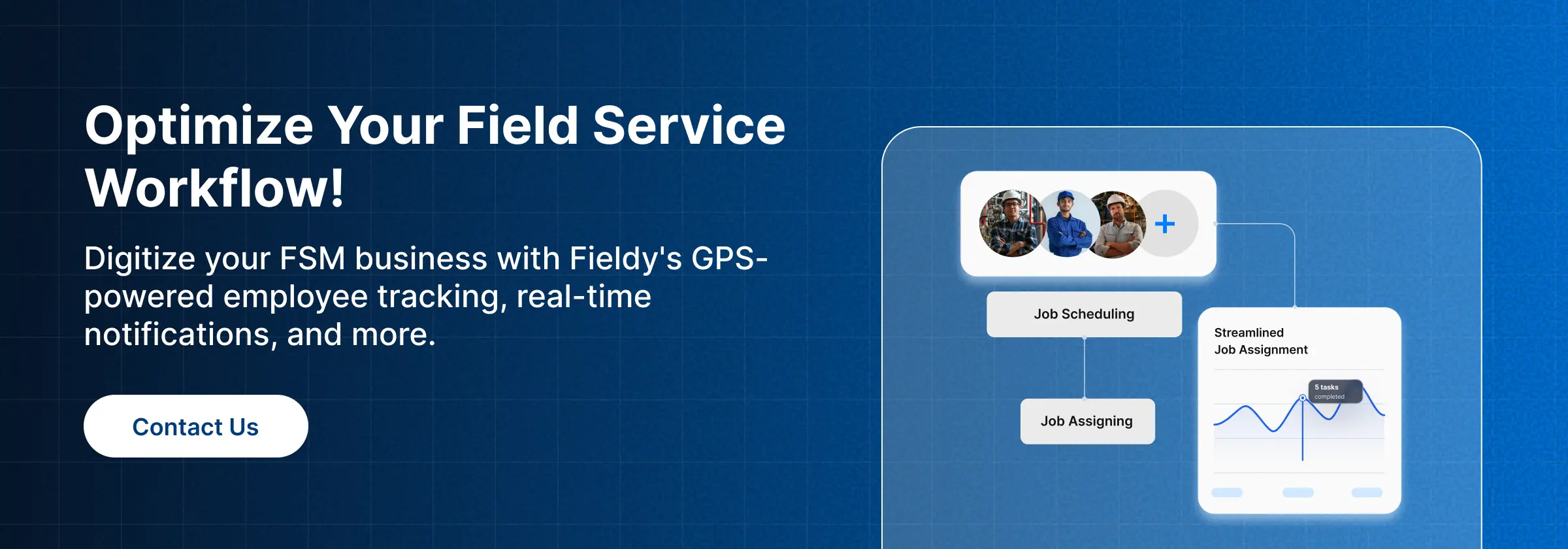
Fieldy could be the right fit for your business if you mainly deal with field operations in combination with customer interactions, scheduling, inventory, quoting, invoicing, assets, and workforce management. The software will be a good fit mainly for HVAC, plumbing, electrical, pest control, cleaning, and other service businesses.
This product gives a complete solution as far as scheduling, dispatching, customer relationship management, quoting, invoicing, inventory management, asset tracking, technician management, customer records, and operational reporting are concerned. Its field-oriented philosophy allows service businesses to efficiently organize and manage their daily operations without compelling their teams to get deeply involved in the very complex world of traditional enterprise ERP systems.
Best for: Companies providing field services to their customers, contractors, home-service providers, businesses operating with mobile crews, etc.
Pros: Powerful operational workflows, the ability to manage a mobile field service team, scheduling, customer management, inventory, quoting, as well as invoicing.
Cons: Companies that are in need of manufacturing operations with a very high level of specialization or enterprise financial functions will probably get a better result using a more conventional ERP system.
2. Odoo — Best for Broad Business Management
Odoo offers a modular ERP solution that enables businesses to mix and match a set of modules such as accounting, CRM, inventory, etc.
The product is a good fit for companies that can slowly develop their IT infrastructure thanks to Odoo’s flexibility. But at the same time, when more modules are introduced and workflows modified, the difficulty of the implementation and the extent of customization also rise.
Best for small and expanding businesses interested in a modular solution covering many functions.
Pros: there is a wide set of applications available that integrate closely, a lot of customization possibilities, excellent inventory features, and general-purpose functionality.
Cons: Implementation of the software will be complicated if customization goes far enough.
3. ERPNext — Best for Growing Inventory-Based Businesses
ERPNext is a complete system that supports accounting, inventory, warehousing, procurement, sales, CRM, factory or workshop, projects, and other activities as well as business functions through an integrated platform.
It would probably suit well for businesses that require better inventory management and procurement features with financial management. Yet, organizations can consider the deployment of ERPNext after assessing the implementation capabilities and the internal technology needs of the company.
Best for: Expanding enterprises that need to manage inventory, purchasing, and operations together.
Pros: large range of features with the combination of inventory, purchasing, accounting, and manufacturing.
Cons: there are many small businesses that require only some very basic features, and they often cannot afford to buy a more advanced or highly technical system.
4. MRPeasy — Best for Small Manufacturers
MRPeasy is based entirely on manufacturing needs and, because of this, is quite handy, in particular for companies in production who have issues with bills of materials, inventory procurement, work order management, etc. Manufacturers who are interested in the best ERP software for metal fabrication should look for features such as production scheduling, raw material management, job tracking, and costing.
Because production delays and material shortages can quickly affect profits, features like these are of major concern.
Best for: Manufacturing companies and those that are production-oriented. That’s the group for you.
Pros: Workflow is manufacturing-oriented, inventory control, production capacity planning, and procurement processes.
Cons: Service-oriented businesses might not really care for the manufacturing functions that MRPeasy includes.
5. Zoho One — Best for Customer-Focused Businesses
Zoho One is a bundled suite that contains all business departments like CRM, sales, marketing, accounting, customer assistance, reporting, and other departments. Its ecosystem may interest enterprises that want customer management and business applications connected under one supplier.
Best for: small and expanding organizations with strong CRM, sales, and customer-management requirements.
Pros: Good CRM features, integration with multiple services and software, reporting capabilities; the suite comes in one box.
Cons: Has several apps to achieve a fully integrated ERP workflow in case they were expecting only one to cover every process and function.
6. Acumatica — Best for Growing Mid-Market Businesses
Acumatica can be used to power ERP through modules like financial management, distribution, manufacturing, project accounting, inventory, and customer management.
It’s meant for groups of people who don’t only want to use the software but also get some kind of benefit from it over time by learning and being taught deeper business-management methods that many beginner-level platforms can’t provide.
Best for: Growing and mid-sized businesses that have complex requirements.
Pros: Scalable, handles finance, inventory, distribution, manufacturing processes, and works with other programs and apps.
Cons: A proper setup of such a system may demand more from users to organize and seek professional assistance compared to simpler solutions.
7. Microsoft Dynamics 365 — Best for Larger Organizations
Microsoft 365 Dynamics is an enterprise-grade business suite that includes solutions for accounting, logistics, marketing, and customer relationship management. Microsoft Dynamics provides a seamless connection with other Microsoft products for companies that already have an established workflow.
Best for: large corporations with multiple departments and various integrations to manage.
Pros: Lots of enterprise functions, ability to scale, Microsoft ecosystem integration, powerful analytical tools.
Cons: small businesses may find the setup and support a bit high in both cost and complexity.

8. NetSuite — Best for Complex Growing Companies
NetSuite offers its cloud-based ERP services and helps in the areas of financial management, inventory, order management, CRM, and other business processes.
An organization should switch to this product for a number of reasons, one being that the current accounting and operational systems are becoming a bottleneck and they require more centralized control.
Best for: larger and mid-sized businesses that are experiencing difficulties in the management of finance and other operational areas that can be solved using software tools like this.
Pros: The main advantages include effective management of financial aspects, capacity for expansion, inventory management capabilities, reporting features, and the cloud-based system infrastructure.
Cons: The high investment required, as well as the difficulty in the process of setup, might deter small-scale enterprises from the adoption of such software.
9. SAP Business One — Best for Established Small and Mid-Sized Companies
SAP Business One offers financial, sales, buying, warehousing, customer service, and operational features for smaller organizations that would like to use a mature ERP platform.
With its clear structure and approach, it can assist a business evolving from scattered software programs to a single central system.
Best for: Well-established small and medium enterprises needing integrated ERP functions.
Pros: Solid processes for inventory, finance, purchasing, and reporting functions.
Cons: Execution and customization could demand seasoned partners.
10. Sage X3 — Best for Complex Operations
Sage X3 is mostly for enterprises that have advanced requirements for finances, managing a supply chain, inventories, and other operations.
We could recommend it to companies involved with multiple departments, locations, products, and highly complicated operations.
Best for: companies that have been in operation for a while and have very complicated financial and operational situations to handle.
Pros: offers top-notch functionalities for finances, supply-chain management, inventory management, and operational activities.
Cons: might be too involved for small businesses that do not have such a level of complications in their operations.
Best ERP Software for Fleet Management
Fleet-heavy businesses need an ERP solution that can tie together vehicles and assets with maintenance expenses, staff, inventory, and operational activities. Just recording vehicle expenses in accounting application software is not enough if fleet utilization and vehicle maintenance have a direct connection to your productivity.
A complete system needs to do more than just keep track of vehicle records – it must also keep records of preventive maintenance, fuel costs, repair history, personnel records, utilization figures, and data from asset life cycles. Integrating these data with purchasing and budgeting records enables supervisors to identify the effective cost of operating a vehicle at the individual level.
Field service companies can take advantage of fleet information being linked with field service software, which allows vehicle and person activity to be treated not only at the individual level but together with order schedules, inventories, customer demands, etc.
Fleet Reporting Features That Matter
Detailed fleet reporting can be done by managers and includes aspects like usage of equipment, cost of upkeep, time without service, fuel consumption, performance of drivers, number of repairs, and costs of assets during their life cycle. These fleet reports are essential because they help managers find vehicles that are not used sufficiently, recurring maintenance issues that are difficult to solve, and equipments which are now too costly to operate.
Best Inventory Tracking Software in the USA
The best inventory tracking software in the USA is one that allows instant stock visibility through various storage points like stores, factories, warehouses, vehicle locations, etc. Barcode scanning transfers reorder points, purchase management, and inventory reporting are ways through which the accuracy of these software systems improves.
This is a big consideration factor for service-type businesses that have the stock spread through different locations. In such cases, a technician carrying many parts in his van may use up some of the parts and may need more without going back to the main office.
The field service parts inventory management tool is a great aid that can be used to track warehouse stock, van inventory, parts consumed, replenishment requirements, and technician availability.
Companies would also be better off if they had clear policies for asset records, serial numbers, equipment history, and ownership records. The teams can create uniform asset-tracking procedures if a useful digital asset management checklist is put in place.
Best ERP Software for Small Businesses
Small enterprises don’t need the strongest ERP on the market; just the right one for their needs. They need tools that eliminate their biggest problems without adding complexity.
Small businesses will find that the best ERP software for small businesses in 2026 will include cost-effectiveness, ease of use, a short learning curve, automation, third-party integrations, remote work support, and enterprise-grade scalability. In fact, it is common sense that the use of a platform that causes confusion among staff, rather than the opposite, will probably cause more harm than benefit.
What Small Businesses Should Prioritize
Features like accounting, CRM, inventory management, purchasing, reporting, workflow automation, and mobile access are quite often preferred over a system equipped with dozens of fancy modules. Small businesses should first identify the workflow elements they rely on daily and then make a selection of a system that not only suits their present needs but can also grow with the business.
ERP Systems for Field Service and Service-Based Businesses
The nature of field-service businesses is very different, as their activities do not occur strictly in an office. The information has to reach the schedulers, dispatchers, technicians who are in the field, customers, and the support team comprising the financial team and inventory management, etc.
The main role of a service-oriented ERP system or integrated solution can be the joining and integration of the customer request with the availability of the service personnel, quotation, invoicing, customer history, and inventory of spares, parts, and service assets. This way, a customer’s order will be turned into a physical service and payment.
AMC management software is also useful to companies that have to deal with recurring maintenance contracts since things like renewal date tracking, scheduling the service, monitoring the terms and conditions agreed by the customer, and performing the follow-up activities can be done without human intervention.
Managing Field Technicians and Daily Operations
Field service operations require seamless integration between technician schedules, job assignments, work orders in the field, communication with customers, tracking times, etc rather than being managed through independent spreadsheets and software.
Adequate knowledge of what a field service technician does helps managers design more efficient workflows around a technician’s workday.
Improving Field Service Productivity With Connected Software
Centralized customer information, automated process flows, mobile access, optimized scheduling, and job updates in real time can all cut down the time technicians get lost in paperwork or waiting for information. So, companies that seek “how to improve employee productivity in field service” should take a bird’s-eye view of the entire process chain rather than focusing only on individual employee performance.
Field Service Invoicing and Payments
Upon completing a job, if the system can instantly turn a work order into an invoice, then business owners can save time and reduce bill delay problems with administrative data entry tasks. Besides, managers can keep track of payment statuses while they make sure that the job, customer, technician, materials, and invoice still correspond to each other.
With the right field service invoicing software, your company will be able to close the gap between work completion and getting paid faster than ever.
ERP Software for Contractors and Home Service Companies
Contractors require various services like estimating, scheduling, customer management, inventory, invoicing, and workforce management. They could also benefit from project tracking, purchasing, job costing, and mobile workflows. An enterprise that brings a wide variety of services and wants to organize them can use a handyman services list as a tool.
With the handyman services list, a company can categorize services, offer packages, set uniform rates through estimates, and keep job workflows on track.
Plumbing and Other Trade Businesses
Plumbing companies have to manage and organize their technicians’ jobs, parts, customer estimates, and invoices at all levels. Linking these processes prevents problems of running out of materials and takes less time from the office staff with administrative work.
Having a well-organized plumbing services list can be of great help. Such a tool can standardize plumbing and related service catalogs as well as make processes and procedures for giving estimates and making appointments more alike from one situation to another.
Roofing Business Management
Roofing companies rely heavily on lead generation, client contact, estimate delivery, job scheduling, project management, document storage, and profit tracking, which good roof management software will be able to connect all of the different parts. The very best roofing software is the one that supports the entire sales and service cycle from initial lead through the completion of the project.
A good customer relationship management (CRM) system can assist your roofing business in managing contacts, customer conversations, follow-ups, and future opportunities. As you compare the best roofing CRM software solutions for your company, the integration between sales activity and operational delivery should be one of the main criteria you consider.
The accuracy of estimating also plays a big role since wrong estimates of materials, labor, or projects can drastically shrink your profit. Companies looking for the best roofing estimating software should seek ones that provide precise estimating workflows, which link directly to scheduling and job management.
ERP for Manufacturing and Industrial Businesses
Manufacturing businesses usually rely on more detailed activities since the success of this line of business also largely depends on factors like availability of raw materials, bills of materials, work-in-progress inventory, production schedules, procurement processes, quality controls, and finished goods.
A manufacturing business’s ERP must seamlessly integrate production planning, inventory, and purchasing. This gives businesses a clear picture of the level of inventory for the materials to be used, and it also allows them to assess if procurement must be done in advance.
ERP for Manufacturing Inventory and Production
Manufacturing processes need to understand the difference between raw materials, parts that are being made, and products ready for sale. Bill of materials lists are used for the components required in the production line, and the timing of production will organize the use of people, equipment, and supplies.
Another point to consider is purchase planning. Without the proper materials at the right time, you’ll find it hard to manufacture your products at all if the materials arrive late.
ERP for Enterprise and Mid-Sized Businesses
Mid-sized companies and those with large volumes of operations typically need much higher scalability, stronger user management, reporting automation integrations, and multi-location functionalities than smaller ones. It is through enterprise-level case studies that one can learn how bigger companies run with ERP implementation, process standardization, data migration, and change management.
It could be more helpful to look at specific industry examples in evaluating operational requirements, e.g., by checking out Thushhaara Technical Services LLC through a case study if you plan to run service-based operational workflows.
ERP vs CRM, Inventory, and Field Service Software
The goal of an ERP system is to connect business functions that are independent of each other; still, the implementation of an ERP does not mean that each specialized application will be a thing of the past. Many companies may still require specific CRM, inventory, fleet, or field-service services.
Different companies looking to install or get to know the top ERP systems should not only count the number of modules but, more importantly, analyze or assess the level of functionality offered by each platform.
ERP vs CRM
A CRM is mainly customer relationship-oriented, focusing mostly on sales pipelines, dialogue marketing, as well as customer service. On the contrary, an ERP covers more than those activities; it also deals with finance, inventory purchases, operations, and other support departments’ work processes.
So a company tends to pick an ERP software that includes CRM or bring in a special CRM for integration when customer interface processes are in particular complicated.
ERP vs Inventory Management Software
Dedicated software to deal with inventory is only going to be necessary and sensible as inventory operations turn out to be very technical or require features that are not offered by a general ERP.
At the same time, a single ERP’s inventory management might be beneficial when the products are to be integrated with procurement, business, money, the production cycle, or service sectors directly.
ERP vs Field Service Management Software
Field-service management software mostly deals with job scheduling and workforce dispatch, technician management, mobile work orders, customer communication, and handling field equipment. While searching for affordable alternatives to FieldEdge software USA, a business may still be able to pick an expert option with features.
To properly determine the need for Zuper competitors, companies have to understand whether they need just a field-service platform or have broader ERP functionality requirements.
Also, if you choose a solution other than a Workiz alternative, you need to assess your core requirement: it can be field-service management or an extended business management platform.
How to Choose the Best ERP Software for Your Business
Define Your Business Requirements
Go back to the roots, such as employee count, locations, vehicle assets, inventory volume, departments, customers, and industry requirements. Make sure you have documented the workflows that are slowing you down now or causing problems before you go out and look at vendors.
Check Integrations
Investigation time such as accounting, CRM, payment processing, fleet or telematics, e-commerce, payroll, and other key applications you currently interface with. Sometimes having fewer integrations that work well may be better than a list of features.
Evaluate Scalability and Total Cost
It is not only the cost of the license or subscription that you should look at. Total cost of ownership may include implementation, data migration, employee training, customization, integrations, support, and future upgrades.
Test Reporting and Analytics
ERP system reporting is expected to deliver helpful insight on such things as inventory levels, fleet performance, financial status, employee productivity, and customer activity. Also, the business has to be able to understand how to measure digital customer experience so customer-facing metrics can be embedded in the overall operational reporting.
How ERP Improves Business Operations
ERP minimizes the impact of workflow fragmentation by storing business-related data in one central place. This setup means that employees do not have to enter the same data twice, and at the same time, managers get a quick review of both operations and financial matters.
In service industries, connected workflows might also positively affect operating statistics like first time fix rate if technicians had comprehensive access to the customer records, job details, equipment register, spares availability, and other technical notes before being on a customer call.
Common ERP Implementation Mistakes to Avoid
The biggest ERP mistakes are usually made when the software has yet to be implemented. It’s possible for a company to pick a platform without having properly done the groundwork in documenting requirements, quite a bit underestimating the migration effort, ignoring the issue of employee acceptance, or deciding only on price.
The best approach is to carry out training based on specific roles and test the workflows first before going live with the product. Besides, companies should not allow themselves to go into heavy customization if there is no real business requirement that needs to be resolved with the help of standard functionality.
Final Verdict: Which ERP Software Is Best for Your Business?
There is no single best ERP for all businesses. The right ERP solution varies based on the business type, company size, level of inventory management required, how fleet-related the operations are, work team layout, financial handling, and growth strategies, etc.
For small businesses, the priority should be an affordable, easy-to-use platform that also includes accounting, CRM, inventory, purchasing, and automation functions. Those with stock as a main item of business will be better off selecting a system emphasizing stock visibility and procurement, while manufacturers will need production planning, bills of materials, costing, and warehouse management.
Fleet-based or field service companies: Fieldy is the most solid option in this lineup, and it is the only one that brings together different functionalities like scheduling and dispatching, customer relationship management, quoting, invoicing, inventory, asset management, and mobile workforce workflows within a service-centric platform.
For the bigger companies that are running complex operations, software like Acumatica, Dynamics 365 Business Central (Microsoft Dynamics), NetSuite ERP, SAP Business One, and Sage X3 might be just the right fit, as they can offer the level of scalability and advanced features suitable for larger enterprises.
In the end, the perfect ERP system in the U.S. will be the one that matches perfectly with your current work procedures as well as allowing growth and changes in the future. When making the decision, get your requirements clearly listed, identify and go through the main steps of each product you are shortlisted against, assess potential integrations and hidden costs, and engage end-users who will operate the system on a daily basis.