

 Blog Details

Introduction
Regardless of the type of professionals you’re handling, such as HVAC technicians, plumber crews, electricians, appliance repair professionals, or telecommunications engineers, a key figure is what differentiates really successful service organizations from the rest: the first-time fix rate (FTFR). FTFR reflects the frequency with which technicians solve customer problems on one visit, and that means sparing customers from having to make another appointment, getting a replacement part, or coming another day. A high FTFR not only reduces the number of operations that the company conducts but also directly impacts customer satisfaction, technician productivity, revenue, and long-term profitability.
Each additional visit leads to a higher gas price, more labor costs, increased scheduling complexity, and customer annoyance. However, businesses that continuously solve customer problems during their first visit handle more jobs per day, cut their overhead, and gain their customers’ trust. So it is no wonder that first-time fix rate (FTFR) is one of the most important key performance indicators that almost every field service industry keeps track of tightly. Through this article, you will understand exactly what a first-time fix rate is, why you have to pay attention to it, how to compute it accurately, what level you can achieve as a good FTFR, and the real-world tips that top service businesses use to boost one-visit solutions. Besides, we will also discuss common errors that bring down FTFR levels and describe how the latest digital tools allow businesses to dramatically increase the number of issues solved on first visits and at the same time optimize their operational performance.
What Is First-Time Fix Rate?
First Time Fix Rate Definition
First-time fix rate (FTFR) means how many service calls are fixed when the technician comes for the first visit, without the need for the customer to be reappointed; it also means the customer is not getting another set of technicians or that technicians make additional stops for spare parts. It measures the competence of technicians as well as the timeliness of a work order, how the inventory is managed, the diagnostics, and how customers are kept in the loop.
Getting things right the first time means that the technician shows up well-prepared with all the needed skills for the job, with the correct work description, tools, and the correct spare parts to completely rectify the problem. If any of these is missing, then the problem has a fairly high chance of being a repeat after the first visit. Companies that consistently have an FTFR of a high level usually end up with lower operational expenses, fewer complaints from the customers, a lot of positive product reviews online, and increased technicians’ utilization because less time is spent revisiting the work that has been done before.
Today’s what is known as field service management software platforms can play a huge part in improving the efficiency of first-time fixes. They do so by bringing together in a single software system everything that supports the preparation of the technician for the service call, i.e., scheduling, technician history, customer records, inventory status, and work orders.
Why Businesses Measure FTFR
First-Time Fix Rate goes well beyond being a technical performance metric; it is a clear marker of the health of operations. Each visit that cannot be fixed on the first visit triggers a chain reaction: reducing the capacity to do further scheduling, decreasing the output of the technicians, distorting your inventory planning, escalating fuel expenses, and finally resulting in a less-than-satisfactory experience for customers.
Think about a plumbing business coming to fix a leaking water heater in the home. If the plumber doesn’t carry the right replacement parts and/or tools, that homeowner will most definitely have to come back for another fix. Not only does this add fuel costs, but also the technician’s travel time, scheduling slot is taken away, plus the work. The technician will work another hour in the field, which increases the labor costs for the business. At the same time, the homeowner is probably irritated. The same kind of situations are happening every day in HVAC, electrical, and plumbing sectors, maintenance shops, equipment rental companies, etc.
If the manager measures the First-Time Fix Report, several repeating problems can be revealed. For example, a very low rate will probably point to weak technician training, poor inventory practices, ineffective diagnosis work, flawed scheduling systems, incomplete customer information collected during booking, etc. Keeping a regular check of this metric will allow companies not only to identify problem areas but also to better utilize the number of staff, improve operational processes, and carry out efficient and targeted technician training while still delivering a higher level of consistent customer satisfaction.
Why It Matters Across HVAC, Plumbing, Electrical, Telecom & Facility Management
Despite different ways of working across service sectors, one thing they all face is how to fix things with minimum hassle, no return visits. Since it reflects how fast a problem is fixed on the first visit without extra appointments, the first-time fix rate is a universal measure of service excellence. Repeat visits consume resources that could have been used for other revenue-generating activities. For an HVAC company, getting FTFR right is all about accurate diagnosis and the right stock of things to fix a machine if need be.
When a plumber is in, he has to be carrying the right fittings and the right materials for repairs, as there is no time for a trip to the store in between. Electrical workers, for example, have a major edge when they have all the drawings, diagrams, and components they may need, particularly the replacements. For telecom providers to be at work, as a minimum, they rely on a system that remotely detects that a customer needs to be visited for service.
For a facility management firm that has several teams to organize on each project, these teams need to complete work as a team, mainly in a scheduled maintenance window. That is the reason why having a team that is fast and efficient during maintenance hours is very critical. It can be summarized that all these service industries benefit from first-time fixes in terms of customer satisfaction, speed of service, and cost-effectiveness. A company that consistently brings customers a service that satisfies them and they do not have to return for repairs gains an important advantage in the market over the competition, which constantly fails and has to send in more personnel to do repairs.
What Is Considered a Good First-Time Fix Rate?
Taking as our starting premise that an industry’s complexity is such that service delivery cannot be easily compared from industry to industry. For instance, the fixing of a leaky tap in a house is very different from doing regular maintenance on a hospital’s machinery or from carrying out repairs to large-scale industrial heating systems. Despite all this, there are some performance indicators that we can rely on, which were developed mainly for different branches of industry. Such an approach can be really helpful when one decides the level to reach a certain performance by one’s own standards, or when a company makes a comparison of the performances of different firms.
| 🔧 First-Time Fix Rate | 📈 Performance Level |
|---|---|
| ⬇️ Below 60% | 🚨 Needs Immediate Improvement |
| 📉 60%–70% | ⚠️ Below Average |
| 📊 70%–80% | 👍 Good |
| 🌟 80%–90% | 🏆 Excellent |
| 🚀 Above 90% | 🥇 Best-in-Class |
In smaller service businesses, where technicians have more contact with regular clients and know their equipment well, the likelihood of fixing a problem on the first visit is higher. Yet, in larger companies with many technicians, coverage over a wide area, and more complex services, it is much harder to maintain constantly high first-time fixes without standardizing the process and using technology.
Besides comparing your business with the industry benchmark, you can benefit greatly from watching your developments each month. In fact, moving FTFR from 68% to 78% can boost profitability, even if your competitors say their numbers are higher for them.
There are quite a few elements, like the level of skill of a technician, availability of materials that need to be replaced or repaired, the nature of the task, the accuracy of the appointment’s time, how far away the location is, quality of diagnosis, the communication with the client, the customer’s equipment, the way the technical support is documented, and the frequency of preventive maintenance. Those businesses that have ongoing education programs, computerized processes, and well-crafted planning systems perform better than those that do all their tasks manually.
First Time Fix Rate Formula
The Standard Formula
Calculating the first-time fix rate is quite simple, but to derive meaningful insights, you need to have reliable and consistent job tracking that allows a clear understanding of what constitutes a first-time success.
Formula
First-Time Fix Rate = (Jobs Resolved on First Visit ÷ Total Service Calls) × 100
This means if a job is fixed and finished completely on the technician’s first appearance, only then can it be marked as a successful first-time fix.
If a customer had to have another visit from a technician – e.g., for further repairs, replacement parts, inspections, or to handle the follow-up on the same problem – then those visits shouldn’t be considered as successful jobs from the first-time point of view.
For example:
- Total service calls: 250
- Jobs resolved on the first visit: 210
Calculation:
FTFR = (210 ÷ 250) × 100
FTFR = 84%
84% first-time fix rate, meaning that technicians fixed 84 out of 100 customer problems at their first on-site visit.
Step-by-Step First-Time Fix Rate Calculation
A standardized method, instead of technician estimates or handwritten spreadsheets, is the best way to keep FTFR reporting accurate. If the method of calculation is the same every time, performance can be measured consistently across different teams through the periods of reporting.
Step 1: Track All Service Calls
Keep a record of all the times customers come to you for help and leave after receiving whatever they needed, whether that was a big thing or just a quick fix or inspection, during the period you are reporting on.
Step 2: Find Out the Jobs That Were Fixed on the Same Day
Figuring out which ones were resolved in their entirety at that single tech visit with no other appointments required to address them.
Step 3: Rule out follow-ups
A job where more parts, additional services, or even more visits by the tech were required should not be considered a first-time fix.
Step 4: Use the Equation
Take one number as the number of one-time fixes and another as the number of total service calls.
Practical Example
Imagine an HVAC company reviewing monthly service performance.
| 📊 Service Metric | 📈 Value |
|---|---|
| 📞 Total Service Calls | 420 |
| ✅ Resolved on First Visit | 348 |
| 🔄 Required Second Visit | 72 |
Using the formula:
FTFR = (348 ÷ 420) × 100
FTFR = 82.9%
Having an 82.9% first-time fix rate is pretty remarkable for several HVAC companies. But the company still needs to figure out the reason why 72 of the service calls had to be repeated. Most importantly, the reasons may have been an initial wrong diagnosis, absence of the necessary replacement parts, a wrong schedule, wrong customer data, or low technician training levels.
By addressing the root causes and not only the percentage alone, one is able to view the FTFR from a simple performance indication to a major tool for continuous operational enhancement.
First-Time Fix Rate as a KPI
Why FTFR Is One of the Most Important Field Service KPIs
Every service company measures many performance indicators, but very few of them are as closely related to customer satisfaction, profitability, and operating efficiency as first-time fix rate (FTFR). Unlike metrics that capture only one aspect of the service process, FTFR shows how effectively different elements like scheduling, technician knowledge, inventory access, diagnostics, dispatched support, and customer feedback are handled simultaneously. High levels of FTFR consistently mean that the different service functions are being well managed, instead of assuming the team just consists of good technicians.
Companies frequently list FTFR with all of their main on-site field service KPIs as it has a direct impact on labor expenses, traveling costs, technician utilization, sales income, and customer retention. If first-time fix rates are falling, managers could detect potentially larger issues in the operation, which may otherwise hit profitability. Instead of perceiving FTFR as just another numerical parameter on the display, well-managed businesses treat it as a signal indicator of a service level change and are watching the trend developments regularly by technician location, type of service, and customer segment.
KPIs That Work Together with FTFR
Besides the first-time fix rate being so beneficial, it really helps when you have other service metrics too for cross-checking. When you get a combination of Key Performance Indicators, they tell you the full story of service level performance.
| 📊 KPI | 💡 Why It Matters |
|---|---|
| ⚡ Response Time | Measures how quickly technicians reach customers after a service request. |
| 🛠️ Mean Time to Repair (MTTR) | Tracks the average time required to complete repairs. |
| 👷 Technician Utilization | Indicates how much productive time technicians spend on billable work. |
| 📋 SLA Compliance | Measures whether contractual response and resolution commitments are being met. |
| ⭐ Customer Satisfaction (CSAT) | Reflects how customers perceive the overall service experience. |
| 🔄 Repeat Visit Rate | Shows how frequently technicians must revisit completed jobs. |
For instance, imagine a firm with fast service response but having a low rate of first-time fixes. Why can that happen? Very likely, the technicians arrive quickly, but are unable to solve the customers’ problems in one go as they haven’t brought the required spare parts. Again, suppose the tech guys have a very low number of first-time fixes while the overall technician availability is very high; this could mean that staff is, in fact, working hard, but too much time is getting spent on repeat visits, and new revenue-generating jobs aren’t even getting started on many occasions. Looking at these KPIs concurrently assists the operations team in finding out why operational inefficiencies exist in the first place.
Why First-Time Fix Rate Matters
If first-time fix is the key to reducing repeat visits, which is Yes one of the main reasons for a complaint, it also goes further to improve field service operations overall. The very first successful call gets customers satisfied, which reduces the need to make more calls for the technicians to travel and spend more time. At the same time, it lowers both scheduling and labor costs as the employees are freed up to serve more customers a day. With consistent improvements in all areas that are small but significant, it eventually leads to an advantage for a business.

Field service-focused companies usually find that the improvement of FTFR can cause a ripple effect in the business. Dispatchers’ time in rescheduling appointments is decreased, and inventory teams are less busy with emergency part orders, resulting in Customer Service reps receiving fewer complaint calls. The workload for managers is also getting more regularized as they are not caught unexpectedly at times of high workload. Customers get their lives back more quickly with their problems solved and less disruption during the process.
Higher Customer Satisfaction
If technicians can’t fix most problems in one go, it’s very difficult to keep customers. After the first try, if the problem is still not fixed, customers probably won’t even consider the technician as good despite his/her politeness or expertise. A high fix-on-first Visit rate is an outward sign of professionalism, competence, and a high level of preparation.
Such qualities create a habit of repeat business and referrals. Happy customers will usually give an online review, keep maintenance agreements, and even suggest the company to friends or coworkers. For a very competitive business like the service industry, these benefits can make your Customer acquisition costs lower and, at the same time make you stronger in revenues in the long run.
Lower Operational Costs
Each subsequent visit leads to a new set of expenditure costs, which may at times not translate into any additional revenue. A company is obliged to put an extra penny for the extra fuel, pay its technician more, vehicle maintenance, and all administrative activities besides scheduling, and even opportunity costs are lost in getting further work done.
A case in point here would be if a plumbing firm has 30 repeat calls in a week. Even minor transportation and labor charges might amount to a substantial figure in dollars in one year. In such a situation, making slight improvements in the FTFR rate would usually lead to significant savings without the need to increase the size of the staff.
More Completed Jobs
If technicians are able to handle a problem while on their first visit, then their whole schedules will have more free time. They won’t have to go back to the jobs they’ve been assigned already, but instead get to pick up new customer visits, which means more work orders done per day.
Increased efficiency helps the company and the customer as well. For example, the customer gets their work done quicker, and the company can earn more money without needing to hire any additional technicians or increase its workforce.
Improved Technician Productivity
Skilled technicians would rather enjoy fixing new things than having to look at incomplete past work once again. Getting repeat appointments really gets to people because mechanics feel it’s just a correction for a mistake that could have been avoided, rather than proving their skills.
Equipping technicians with proper knowledge of the job, full past service details, the right replacement parts, and a clear schedule not only builds their self-confidence but also allows them to be more efficient. From increased productivity, employees are more satisfied, less likely to quit, and overall happiness at work goes up, too.
Revenue Growth
Every additional service visit takes away opportunities to get more work done. Companies that have a great FTFR rate will be able to serve more customers and earn more revenue without hiring additional staff. In this way, they can make more money without increasing their cost of operations.
Increased first-time fix rates also help in achieving better renewals of contracts, higher levels of customer loyalty, and more chances of selling preventive maintenance packages or upgrading the equipment during a successful service call.
Better Online Reviews
These days, clients are used to getting advice on service vendors from a few honest online reviews when considering purchases. Fast resolution of any concerns has led many businesses to gain higher ratings simply because clients really like to be made happy without any complications through customer service.
Customer reviews that speak positively not only enhance brand image but also increase the chances of ranking higher on local search engines, as well as enabling the company to attract new customers without having to increase marketing costs.
How to Calculate First-Time Fix Rate Correctly
What Counts as a First-Time Fix?
To obtain accurate data when measuring “Full Turn Repair,” one of the major steps to FTFR reporting accuracy is having a clearly defined successful first-time repair. One fact is that closing a work order doesn’t mean that the customer’s problem is entirely resolved.
Repair work that has resolved the main issue on the first visit should be marked as a first-time fix, and no follow-up appointments should be needed for the same problem. The initial service call will not count as a successful FTFR if the technician is sent back due to missing parts, wrong diagnosis, incomplete repairs, or recurrent failures. Companies need to come up with uniform regulations about warranty work, additional services requested by customers, and unrelated repairs so that accurate reports are made by all technicians from different departments.
Common Calculation Mistakes
Different companies may raise their first-time fix rates just like that without intending to, simply because of their use of non-conforming reporting rules. These false first-time fix rate results are a hindrance to accurate analysis of performance and often disguise the underlying inefficiencies in the operation that need attention.
Common mistakes include:
- Counting temporary repairs as completed fixes
- Ignoring warranty callbacks
- Excluding repeat visits from reporting
- Closing work orders before customer confirmation
- Failing to distinguish unrelated follow-up services
- Recording incomplete jobs as successful
By implementing standardized reporting methods, organizations can prevent such errors in the first place and also ensure that accurate operations data is used to make sound decisions at the management level.
Data Required
FTFR calculation accuracy is highly dependent on and relies on the availability of complete and consistent service records. Modern field service software is good at automatically recording a great deal of this data, which helps in greatly minimizing the human effort needed for manual reporting errors.
| 📋 Required Data | 🎯 Purpose |
|---|---|
| 📞 Total Service Calls | Overall workload |
| ✅ Completed First Visits | Successful resolutions |
| 🔄 Repeat Visits | Identifies failed first fixes |
| 👷 Technician Assigned | Performance tracking |
| 📅 Service Date | Reporting periods |
| 👤 Customer Information | Verification |
| 📄 Work Order Status | Completion confirmation |
| 🔍 Reason for Return Visit | Root cause analysis |
Being consistent in the way you collect the data will allow your organization to spot trends, compare how different technicians perform, and focus on where improvements in operations are most needed.
Top Reasons Your First-Time Fix Rate Is Low
Even top-tier service organizations sometimes suffer from low rates of fixes done the first time. In most cases, the reason lies more in company processes than in a lack of skills; those are the challenges in field service management that prevent employees from being adequately prepared for the job.
A great number of companies encountering field service issues find out to their surprise that raising FTFR levels is not all about fixing technicians’ problems. It turns out that coordinated improvements in scheduling, inventory, communication, training, diagnostics, and data management are needed before FTFR improvements can begin, and they have to happen at the same time. So, focusing only on technicians’ performance is not the way it should be done.
Poor Technician Training
Even experienced technicians must continuously learn as equipment improves and manufacturers come up with new technologies. Lack of regular training can cause misdiagnoses, missed symptoms, or extra visits just to talk to colleagues, all of which can be expensive.
Combining continuous technical education and mentorship helps technicians enhance the quality of their diagnoses and their confidence in making necessary repairs.
Missing Spare Parts
Arriving at the premises without the necessary parts is one of the main reasons why customers return. Lack of good inventory visibility, inaccurate or incomplete vehicle stock records, and delayed purchasing all very often lead to unnecessary return visits.
Inventory management at the point of sale makes it possible for technicians and dispatchers to double-check the availability of parts before assigning a particular job.
Wrong Diagnosis
Technicians who don’t complete the troubleshooting are often looking for the symptoms instead of the primary reasons. This results in temporary fixes that will not last, and the client will have to call the technician again soon.
The technician will be much more successful in fixing problems if they use better diagnostic methods, share what the other technicians have learned, and know the history of the client’s possessions.
Lack of Customer Information
If dispatchers only collect a minimal amount of information during a booking, there is a high chance that technicians will show up not really knowing what the issue is and how to fix it. A lack of model numbers, equipment age, previous repair history, or photos can definitely delay diagnosis and lead to even more trips.
It is a good idea to have customers provide the information in a structured intake form so that consistent information is collected and that dispatch is more effective.
Inefficient Scheduling
Assigning jobs to a technician being free, rather than being the competent one, causes extra service calls. Allocating a technician for certification, tools, and specialty increases the chances that a service is solved on the first visit.
Poor Communication
Lack of proper understanding among the dispatchers, technicians, warehouse staff, and customers results in misunderstandings that ultimately impact all levels of the service delivery process. Lost notes, half-filled work orders, and belated updates are just some of the things that can cause the first visit to be a failure.
Unified communication platforms not only fill the gaps in knowledge but also synchronize the teams’ work better in different departments.
Manual Paperwork
Paper-based work orders are often riddled with problems such as a lack of complete information, unreadable handwriting, obsolete customer records, and a service history missing parts or completely absent. Such defects in work orders have a direct impact on the work performance of the technician, which is why accurate reporting becomes a challenge with these types of limitations.
This is why digitized work orders help greatly, as apart from the technician being able to immediately see the history of the customer and other supporting information like photographs and service procedures, they also gain access to all the previous repairs and the like without needing paper documentation, and being able to rely on the most modern customer information.
12 Proven Ways to Improve First-Time Fix Rate
Getting rid of repeat work is not the product of one quick fix – you will see the change through many steps of enhancement in various parts of the service. From the moment a customer schedules the service to the technician’s work being finalized and the job closing, this is how the customer journey is mapped. Businesses achieving high first-time fixes regularly have an environment where training tech staff, the set procedure workflow, and performance monitoring happen together. Let’s see twelve time-tested approaches deployed by top field servicing organizations.
1. Improve Technician Training
If a company wants to provide excellent customer service, then they really rely on the quality of their technician. After all, technicians are the people who customers get to see, and the ability and skill that technicians have are directly linked to the effectiveness of first-time fixing of issues. The most excellent scheduling software can’t really cover up for slow diagnoses that are wrong or a technician not having the latest skill sets. Continuous training should include the latest technical know-how, manufacturer updates, troubleshooting safety processes, customer interaction skills, and even those less technical, softer aspects of customer service. Matching seasoned employees with junior ones is another good way for the practical knowledge that one can’t get from manuals to flow between generations.
So basically, what do field service technicians do? They can’t be thought of as merely people who fix equipment. They identify problems and explain them to customers; make repairs and keep records; manage inventory, suggesting maintenance; and act as the company representative and promote its brand. Investing in the continuous learning of our staff allows the technicians to perform these various roles very well and also helps with the chance of solving problems the first time around.
2. Use Smart Scheduling
Choosing a technician merely based on availability may not be the best solution because it can result in multiple callback situations. That’s why it would be more effective for job dispatch systems to take into account such factors as a technician’s skills, level of experience, location, and expertise with tools while also checking if equipment or spare parts are available before sending off a job to a technician. It is quite obvious that if an extremely competent technician is sent, it would probably mean a good first repair.
In fact, in many cases, organizations that are implementing HVAC field service management software have reported an increase in the percentage of first-time fixes due to their system’s ability to match a technician with a job, considering the equipment type and technician specialization. Besides that, an intelligent scheduling process also reduces unnecessary mileage, evenly distributes the work, and thereby greatly enhances the technicians’ productivity.
3. Improve Inventory Visibility
Technicians will not be able to get any work done if they don’t bring along the right replacement parts with them. Real-time inventory visibility allows dispatchers and technicians to get an accurate picture of the available spare parts and components and know the quantities down to the last piece before they leave the office to handle a service call.
Stock in vehicles should be updated immediately after the end of a job automatically, with warehouse inventory having been pushed out to the technicians’ mobile tablets/phones as it is. Low stock level notifications, the use of barcodes, and workflows for automatically triggering procurement should serve to minimize the chances of the lack of a spare item resulting in the need for one more visit.
4. Use Digital Work Orders
Work orders via paperwork usually have incomplete data handwritten in such an illegible way, or they just include obsolete customer records. On-site work order digitization resolves all these by giving complete job information before the arrival of the technician.
Digital work orders typically offer a history of equipment, previous repairs, photos, customer notes, warranty manuals, the necessary parts, and inspection checklists. Quick and easy access to essential data helps technicians to quickly figure out the problem and fix it on the first visit, which in turn reduces work time and increases customer satisfaction.
5. Improve Customer Communication
If a repair job is going to be successful, that has to be decided long before the technician walks out the door. When booking a technician’s visit, it is a good idea for the customer to include precise details about his or her problem together with supporting materials like photos, videos, the model number of the affected equipment, and a history of previous repairs.
Incorporating automated appointment confirmation, arrival of technician message, and service review not only increases the level of customer satisfaction, but also allows the technicians to have full information at the time of each appointment. By having clear and precise communication, misunderstandings that are the root cause of double bookings and repeated repair service calls can be avoided effectively.
6. Optimize Technician Routes
Travel time might not be directly connected to repair quality, but routing that results in unnecessary travel can bring technician fatigue, reduced appointment capacity, and delayed scheduling, which collectively lower service quality. Well-planned routes enable technicians to give more attention to customers’ problems rather than wasting their time stuck in traffic.
To reap the benefits of what is called route optimization, organizations must first know what it entails, as they can cut down on travel costs and increase promptness and technician productivity at the same time. Latest-day routing software considers traffic conditions, appointment windows, and other technician and job factors to develop daily schedules that use routes as efficiently as possible.

7. Implement Predictive Maintenance
Most of the time, waiting for the equipment to break down leads to harder, more complicated fixes. The concept used in predictive maintenance is to get information based on previous data and sensor feedback, together with the manufacturer’s recommendation, to pinpoint where failures might occur.
Technicians can take advantage of routine maintenance visits to get the job of replacing worn parts done ahead of breakdowns that could be very expensive to handle with emergency repairs. As a result, less frequent unplanned equipment failures also mean greater customer satisfaction. The other plus is a longer asset life.
8. Improve Documentation
Detailed technical manuals, for example, can allow a technician not only to learn from previous efforts, but also to prevent the same mistakes from being repeated. Any finished repair job should, at a minimum, give the details of diagnostic findings, the parts that were replaced, photos, the client’s signature, recommendations, and a note with any further observations.
If the technicians have good service records to refer back to and share, they can collectively improve their understanding of repair history. Apart from that, documentation helps in a lot of ways: tracking warranty claims, ensuring compliance with regulations, and upholding the standard of work.
9. Equip Technicians with Mobile Apps
Mobile applications can give technicians access to customer history, work orders, equipment manuals, wiring diagrams, parts catalogs, and inventory from anywhere. Rather than call the office for an update or leaf through a paper file, Technicians can access all of the necessary information straight from their phone or tablet.
This streamlines decision-making, minimizes waiting time, and promotes quick troubleshooting on the first trip.
10. Use AI-Powered Dispatching
AI is enabling dispatchers to improve scheduling decisions by concurrently studying technician skill levels, traffic volume, available inventory, past history of repair jobs, and customer handling priorities. AI-assisted dispatching also suggests the best technician given the situation and gives more accurate appointment duration forecasts and schedule adjustments based on emergencies.
This greatly affects the first-time fix ratio and increases the efficiency of technicians.
11. Standardize Workflows
Standardized procedures mitigate the effect of human error and guarantee that all technicians receive the same level of quality. Procedures must be maintained for preparing the vehicle and customer diagnostics safety check records, customer correspondence, warehousing, and job starting.
By establishing a defined field service management workflow, you can be sure that important processes are never missed. Digital checklists can be used to make the process even more consistent by providing processes and a predetermined order in which technicians conduct inspections, repairs, tests, and sign off on the job order before it’s closed.
12. Continuously Monitor KPIs
A continuous improvement, not a one-time project. FTFR should be tracked and used as a metric every month, together with other identifying metrics such as tech utilization, response time, customer sat repeat time to fix.
Performance dashboards have become a vital part of operations for managers. Using this trend analysis tool allows them to spot high-number technicians, observe any operational problems early and fix them before they escalate, and continuously accurately measure their business so they can gauge whether their decisions are effective.
Common Mistakes That Reduce First-Time Fix Rate
Even organizations that have highly skilled technicians may still inadvertently cause a drop in their First Time Fix Rate (FTFR) through operational errors that could have been avoided. Often, these problems start much, much earlier than one would think – well before the arrival of technicians at the customer’s premises.
Companies dealing with the issue of field service optimization are very much aware of the factors that affect first-time fix performance. They understand that simply putting pressure on technicians to fix things faster is not the solution, but that a continuous improvement of operations like scheduling, communication, inventory, documentation, and management of workers is what is needed.
Assigning the Wrong Technician
Getting a technician sent without the right certs or skills can cause errors in the diagnosis and the customer being called a second time.
Missing Inventory
Keeping up with the stock level of vehicle parts still remains one of the prime reasons for first-time visits failing. Having a well-kept parts warehouse and an inventory system that will automatically order supplies when needed will ensure that technicians are ready to work.
Incomplete Job Notes
Work orders that lack clear instructions often require the technician to gather information manually that could have been provided during reservation. The more specific the customer notes are before the technician arrives, the more accurate the diagnosis he will make.
Lack of Customer History
Technicians working without knowledge of prior breakdowns may be repeating unsuccessful troubleshooting actions or failing to recognize common faults in the plant.
Poor Communication
It is common for dispatchers, warehouse staff, repairmen, and customers themselves to exchange information on different levels – a source of confusion and frustration.
Inefficient Routing
Poor scheduling forces the technicians to get stuck traveling between their appointments more than they are actually working. The consequence is lower productivity and more tired workers, which may indirectly lead to poor repair results.
Industries That Benefit Most from High First-Time Fix Rates
Any service organization can gain from the improvement of the First-Time Fix Rate (FTFR). Still, the benefit is mainly large for a few sectors that depend mainly on quick fixes on-site and high customer satisfaction. These are such industries where a customer complaint is a major problem, which can easily cause the customer to lose their trust and the company a lot of revenue as a result.
If you understand what field service management is, it becomes clear why the first-time fix rate has become such an important performance measure in different kinds of industries. Instead of being at factory settings, field service staff go out of their way to different sites to fix the customers’ problems, making travel, planning, and coordination the key to achieving good results.
| 🏭 Industry | 💡 Why High FTFR Matters |
|---|---|
| ❄️ HVAC | Minimizes equipment downtime during extreme weather conditions. |
| 🚰 Plumbing | Prevents water damage and reduces emergency callbacks. |
| ⚡ Electrical | Improves safety while reducing costly repeat visits. |
| 🔧 Appliance Repair | Enhances customer satisfaction through faster repairs. |
| 📡 Telecom | Restores connectivity quickly and improves SLA compliance. |
| 🏥 Medical Equipment | Minimizes disruption to critical healthcare operations. |
| 🏢 Property Maintenance | Supports efficient management of multiple client locations. |
| 🏭 Manufacturing | Reduces production downtime and operational losses. |
For instance, an HVAC contractor doing repairs on commercial rooftop units in a hot summer can afford very few visits when the tenants depend mostly on climate control. In the same vein, it is important for hospitals that medical equipment repairs are done the first time to avoid any compromise on the care of patients.
In the field of plumbing, the initial burst pipe repair visit, which stops the water leak, will not only help save your house but also reduce the cost of repairs. With electrical contractors, the working hours for maintenance in commercial facilities are always quite limited, so the job at their visit has to be done the first time and completely. Like that, with manufacturers of industrial equipment, it is necessary to get the problem fixed right away because otherwise the longer the equipment is not in service because of a breakdown, the more the production schedule is affected, and because of this, revenues are going to be affected.
Across all business sectors, if you improve the rate at which problems are resolved successfully on the first attempt, you will not only maintain your customers for a longer time but also make your technicians more efficient, and will help you to achieve substantial cost savings, plus create a solid foundation for your company that will help you in competing with others in the long run.
Future Trends Improving First-Time Fix Rate in 2026
Field service organizations are beginning a new phase in which data, automation, and connected technologies enhance technician performance at the same stage when the customer is still waiting at home. By doing this, companies are no longer relying wholly on the technicians’ experience to handle the customer’s issue after a breakdown. The businesses are making use of data analytics and AI together with IoT devices and remote diagnostics not only to understand the problem but also to come up with the right solution, thereby saving the customers’ time as well as the company’s costs.
Experts see the field service management market as having a growing emphasis on automation as business owners struggle with their customers who have increasingly high expectations, a technician shortage, and the escalating costs of operation. Organizations that are quick to embrace these technologies are those that are set to provide customers with the fastest response times, the highest levels of satisfaction, and keep their rates of first-time fixes high, even while they continue running their operations more effectively.
AI-Powered Diagnostics
With machine learning at its core, artificial intelligence is revolutionizing the way technical issues get resolved. By combining insights from repair records, performance data of equipment, manuals provided by the manufacturer, and notes penned by technicians, machine intelligence makes troubleshooting much easier. Rather than going through and comparing dozens of service records manually, AI systems may suggest potential sources of equipment failure within moments.
So, if a large commercial cooling unit constantly develops problems with the compressor after operating in a particular environment, artificial intelligence would be able to pick up the trend and recommend checking certain areas before the technicians’ arrival. This helps technicians to diagnose the problem more accurately and prevents the replacement of unnecessary components. This way is cost-effective, saving time and helping to build a better environment.
Predictive Maintenance
Apart from a preventive maintenance schedule, regular inspections in a predictive maintenance setup can still be done more efficiently by utilizing sensors attached to your connected equipment.
If any kind of unusual operation of the equipment is detected, the maintenance crew gets alerts that enable them to detect and fix the problem before it gets to the point of equipment breakdown. Technicians are no longer limited to emergency breakdown repair jobs. They can actually do a planned repair, carrying necessary spare parts right to the work site.
In such a way, the downtime is kept to a minimum, while the first-time repair rate is greatly improved.
Internet of Things (IoT)
With the Internet of Things, it is possible to monitor the status of equipment in real-time, thereby allowing the possibility to remotely carry out diagnostics or fix things without the need for a technician to travel to the customer’s place.
The smart sensors that are on equipment, HVAC, elevators, manufacturing equipment, cooling systems, medical devices, and utility networks automatically send a report of how the equipment has performed over a period of time to a central monitoring system.
If technicians know the condition of the machine, they can decide what kind of tools, documents, and replacement parts they need to bring ahead of time.
Remote Technical Support
With video collaboration tools, on-site visits for no good reason are being minimized, giving the opportunity for the experts to help field service staff remotely via video.
For example, in case a field technician is dealing with unfamiliar equipment or a complicated breakdown, he would be able to get in touch with higher-level engineers via video call, exchange still images, send a stream of diagnostic information on the equipment, and get advice while the work is being done.
The time taken to figure out the problem is lessened through remote support, while the quality of the fix is ensured through such assistance!
Digital Twins
Digital twins generate virtual representations of physical equipment through real-time operational data.
The virtual images give technicians a chance to predict failure and simulate how devices work without breaking down.
Even though digital twins are more prevalent in manufacturing and industrial settings, they seem to be catching up in other areas like commercial and large infrastructure projects.
Augmented Reality (AR)
AR-enabled smart glasses and mobile applications can display repair manuals at the point of work with a transparent layer that shows the instructions right in front of the eyes while servicing the machine.
Instead of reading the manuals on paper or looking for documents on the web, a hands-free worker with a smart wearable may see the electrical schematics, how to carry out maintenance, etc., just by looking at the components through their AR glasses.
Another aspect is that AR also helps reduce a lot the chance of human errors in technician training through step-by-step repair processes that are assisted by AR.
Workflow Automation
Automation eliminates repetitive administrative work, allowing technicians to spend more time solving customer problems.
Examples include:
- Automatic appointment confirmations
- Intelligent technician assignment
- Inventory replenishment
- Digital work order generation
- Invoice creation
- Customer satisfaction surveys
- Warranty documentation
Reducing manual tasks allows organizations to complete more service calls while maintaining higher quality standards.
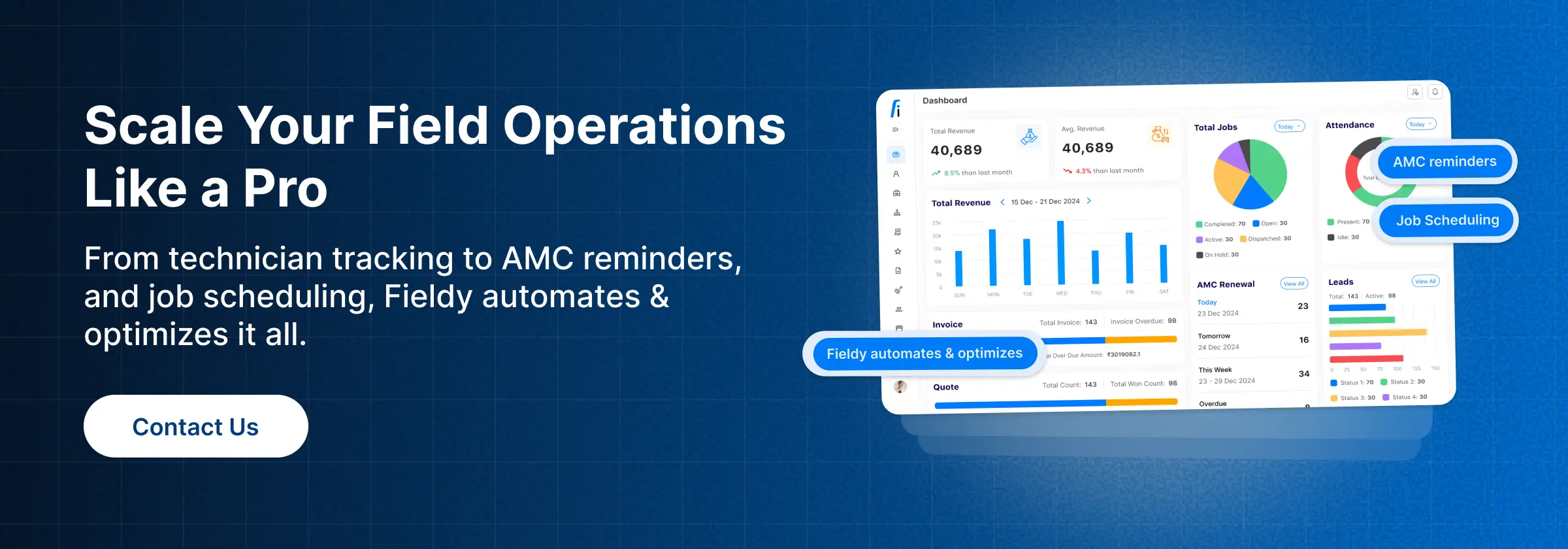
How Digital Automation Improves FTFR
Using technology cannot get higher first-time fix rates unless operations are changed so that decisions are made better. New digital platforms make the technician, dispatcher, and manager roles part of one connected flow that gives the right information to the right people at the right time.
The role of modern field service management (FSM) in increasing first-time fix rates is better explained when one recognizes the meaning of FSM. Field Service Management includes activities such as work scheduling, technician dispatch, parts inventory control, customer interaction management, performance measurement, payment processing, and mobile staff resource planning. All of them support the main goal of resolving customer problems on the first on-site service visit.
Automated Scheduling
Modern scheduling systems pair up technicians with service calls automatically based on things like certifications, familiarity with different equipment, availability, travel constraints, and the availability of spare parts and tools on premises.
They no longer assign work manually; instead, dispatchers get smart suggestions that help in technician utilization as well as a higher job completion rate.
Workflow Automation
Automated workflows ensure that every service request follows standardized procedures from customer intake through job completion.
This reduces human error while maintaining consistent service quality across every technician.
Mobile Documentation
Workers with mobile phones are able not only to change work orders but also to take and upload photos, get customer signatures, order replacement parts, and make invoices right after the job is done.
Another advantage is better accuracy in the diagnosis of problems through real-time documentation.
Smart Notifications
Technicians get informed automatically via reminders about appointments, lack of spare parts, expiration of warranties, time for preventive maintenance, and high-priority service requests.
Clients also get informed about appointments and technician arrival time, which ultimately helps to minimize the number of no-shows at appointments.
Analytics and Reporting
Advanced dashboards allow managers to monitor:
- First-Time Fix Rate
- Technician productivity
- Repeat visit trends
- Parts consumption
- Customer satisfaction
- Response times
- Revenue per technician
By drawing these conclusions, companies are better able to identify and address the reasons behind any decrease in operational performance and then make appropriate modifications for a positive outcome.
It is not limited to construction companies or other contracting firms that can raise their FTFR using automation. Higher FTFR also makes nontraditional companies, like a video surveillance systems company, more profitable. Technicians of such a company must be equipped with different cameras, networking elements, recording equipment, and know how to configure all of these during the first or a repair job only to be successful. With the use of integrated planning, full visibility of stock levels, and digital paperwork, the number of re-visited sites is minimized, while customer satisfaction is really enhanced, and so is the overall project profitability.
Conclusion
First-time fix rate has rapidly become one of the key performance metrics for modern field service organizations, simply because it directly points to service quality, operational efficiency, and customer happiness. It should be considered that every successful first appointment saves you additional trips, labor costs, improves a tech’s work schedule, and builds the customer’s trust. Be it technicians of HVAC, plumbers, electricians, telecommunication engineers, appliance repair specialists, or maintenance facilities, improving FTFR consistently is going to provide your business with the advantages that can be measured and which will increase eventually. Raising the bar for the first-time fix rate is not only dependent on highly skilled technicians or field staff. Companies should invest in efficient scheduling, having the right information from the customer at hand, checking inventory status at any time, following standard procedures, having regular training sessions, maintaining well-organized paperwork, and above all, setting up a good KPI measurement system.
We now live in a digital world, and many field service businesses are benefiting from various tech advances. AI diagnostics, predictive maintenance, IoT-based monitoring, augmented reality, and workflow automation allow service companies to quickly and precisely identify problems and carry out most of their services at the very first customer encounter. Modern field service management systems help to increase first-time fixes and, at the same time, reduce the burden of your operational activities at every stage of your field service operations. So, implementing an up-to-date Field Service Management solution will definitely benefit your business.
Fieldy combines intelligent scheduling, dispatching, CRM, inventory management, digital work orders, mobile apps, reporting, and automation into one platform. This way, it stands out as the strongest all-in-one option and ranks as a leading solution among today’s top field service management applications.