
 Blog Details

The rivalry in roofing has heightened because of the competitive nature of the industry, so speed and accuracy have become the main requirements for roofing estimating work. Homeowners are getting used to quicker response times, where detailed estimates reach them within hours rather than days, and contractors who are able to react at the blink of an eye are often the ones who end up winning many of the jobs. However, businesses that still prefer their old ways of using spreadsheets or handwritten formulas often lose out either to pricing mistakes, failing to chase up after a customer, inconsistencies in material costs, or getting stuck in lengthy approval processes.
The issues described above lead to decreased profit levels and, most importantly, the customer loses confidence. Roofing contractors should invest in high-quality roofing software that assists them in performing calculations automatically, preparing their proposals professionally, and overseeing their projects from an initial estimate right down to sending the final bill. Contractors wanting to reduce the time spent estimating and upgrade their ability to schedule and keep track of customer matters usually use estimating tools together with the solutions mentioned in the best roofing software article. If you are a homeowner or business owner, make sure to make a decision based on the needs of your home/project.
For instance, if you’re managing a small residential company or a roofing business with several crews, you may want to take the time and figure out how your estimating platform could help make operations more fluid. These systems allow contractors not just to compute material requirements, but more importantly, they can integrate other important functions such as CRM, scheduling, invoicing, customer relations, reports, and mobile workforce management, all into one workflow. This article aims to provide a comparison among top software providers and describe in which scenarios and which type of contractor may choose to invest in a particular system. Eventually, you’ll be in a place where you’ll decide which option is the best for your particular situation in respect of both financial considerations and the ability of the selected system to support your expansion goals.
Quick Comparison – Best Roofing Estimating Software at a Glance
| 💻 Software | 🎯 Best For | 📝 Estimating | 👥 CRM | 📅 Scheduling | 📱 Mobile App | ⭐ Rating |
|---|---|---|---|---|---|---|
| 🏆 Fieldy | Overall Best | ✅ | ✅ | ✅ | ✅ | ⭐⭐⭐⭐⭐ |
| 🏢 AccuLynx | Commercial Roofing | ✅ | ✅ | ✅ | ✅ | ⭐⭐⭐⭐ |
| 🏠 JobNimbus | Sales & Estimates | ✅ | ✅ | ✅ | ✅ | ⭐⭐⭐⭐ |
| 📐 Roofr | Fast Roof Measurements | ✅ | Limited | Limited | ✅ | ⭐⭐⭐⭐ |
| 🏗️ ServiceTitan | Enterprise Contractors | ✅ | ✅ | ✅ | ✅ | ⭐⭐⭐⭐ |
| 🛠️ Jobber | Small Roofing Companies | Basic | ✅ | ✅ | ✅ | ⭐⭐⭐ |
Why Roofing Contractors Need Estimating Software
Getting the estimate right is not just measuring a roof and calculating the shingle coverage. At present, the contractor should factor in material price fluctuations, labor costs, equipment costs, overhead, permit fees, warranty, and profitability while still being able to promptly respond to customer inquiries.
Multipurpose estimating software systems take the effort and frustration out of estimating by making quotation generation effortless, calculating materials precisely, applying cost templates, and keeping uniform procedures throughout the whole business operation. When estimating is synchronized with the FSM software, it is possible to switch from quotation to scheduling, dispatching, invoicing, and customer follow-up in a single system without rekeying the data into various separate applications.
Roofing company workers can also gain significant advantages from digital acceptance of proposals, customer file integration, field estimating via mobile apps, and real-time collaboration between office staff and the team in the field. Estimators can save time by not doing quoting all day long and rather spend that hour getting more work, whereas managers can keep their entire work running by having central dashboards that show their performance.
Key Features to Look for in Roofing Estimating Software
Roofing contractors might not have their estimating software developed exactly to their needs. On top of being just measurement or proposal platforms, they offer even further business management solutions integrated with Estimating. When you look for software that suits your roofing contractor needs, focus first on features like creating proposals and roof measurements digitally, editing custom job costing templates, tracking databases of material and labor costs, markup calculations, change order functions, managing customer relationships, scheduling, creating invoices, making reports, and QuickBooks synchronization. An equally significant point is the mobile feature because when estimators go to customer houses, they can do their job by using mobile phones.
Also, companies that manage crews can benefit from choosing a platform that not only offers estimating features but also integrates them with what is commonly referred to what is known as the field job scheduling software. In this way, technicians can get their schedules, manage their jobs, and do not have to type the same data again. Finally, the most important thing before deciding to buy a certain software tool is to make sure the software is flexible enough to handle your business growth as you hire more employees, cover new territory, and maybe even venture into new services such as installation of siding or exterior remodeling.
Best Roofing Estimating Software in 2026
1. Fieldy – Best Overall
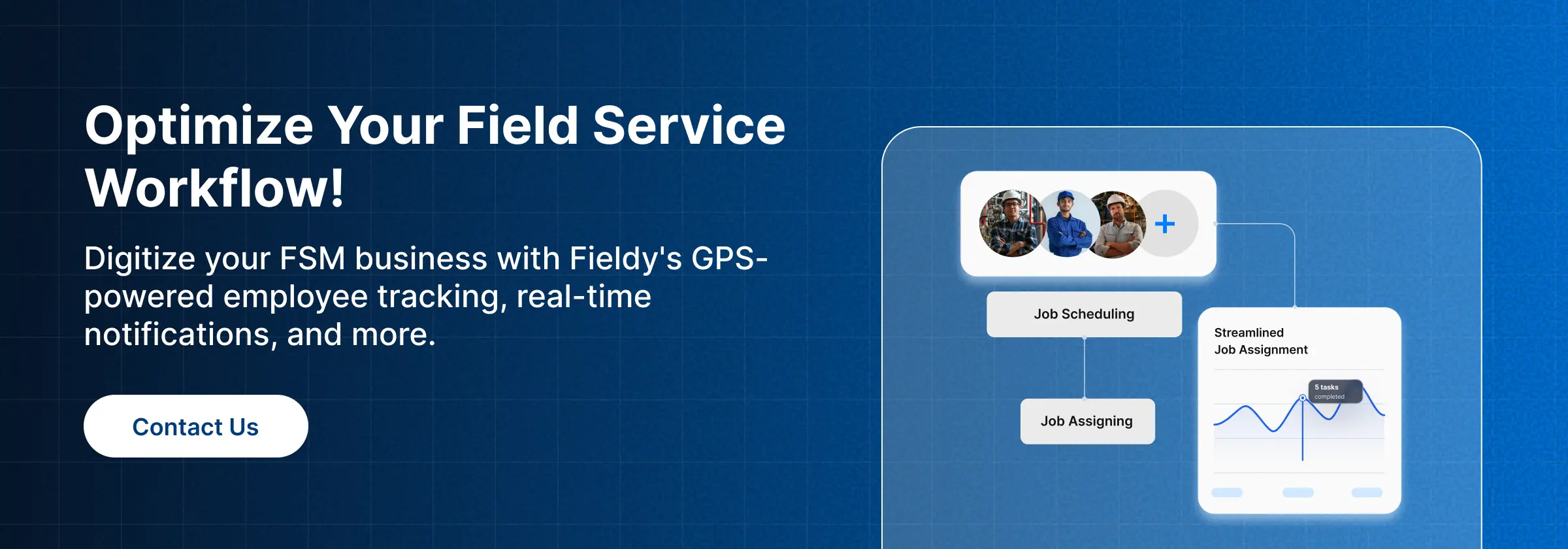
Among the top roofing estimation software in the market, Fieldy stands out due to its wide range of functionality. It is not just an estimating tool but also roofing management software for roofing contractors. From proposals to quotations, customer records, scheduling crews, assigning work orders, monitoring technicians, invoices, and analyzing business performance, Fieldy is the best roofing estimating software that covers everything on one dashboard. As a result, multiple apps aren’t required, and there is less work for the administrator.
Compared to many of its rivals, which usually offer only estimating features, Fieldy ties up the entire customer experience, from the very first inquiry to project finishing and a follow-up post-service communication. With this system, contractors never miss the details behind any project. So, the office crew and the field teams work together efficiently with no problem of entering duplicate data or communication breakdown. When they decide they need complete roofing business software, companies usually pick Fieldy since the system includes estimating, CRM, scheduling, invoicing, dispatching, data reporting, inventory tracking, plus mobile workforce management in a single scalable platform.
Key Feature
| ⚙️ Feature | 💡 Benefit |
|---|---|
| 📝 Roofing Estimates | Generate fast, accurate digital proposals. |
| 👥 CRM | Track leads, customers, and communication history. |
| 📅 Scheduling | Assign jobs and optimize crew availability. |
| 🧾 Invoicing | Create invoices directly from completed estimates. |
| 📱 Mobile App | Access estimates and customer data anywhere. |
| 📊 Reporting | Monitor sales performance and profitability. |
| ⚡ Workflow Automation | Reduce manual administrative work. |
Pros
- Comprehensive all-in-one roofing management platform
- Powerful estimating and proposal generation
- Integrated CRM and customer communication
- Scheduling and dispatch included
- Mobile application for office and field teams
- Reporting dashboards with business insights
- Supports growing multi-crew operations
- Scalable for businesses of all sizes
Cons
- Some advanced features may require onboarding for new users
- Pricing is customized based on business requirements
Best For
- Residential roofing contractors
- Commercial roofing companies
- Multi-location roofing businesses
- Exterior remodeling contractors
- Growing service companies needing an all-in-one platform
2. AccuLynx
AccuLynx is the most recognized platform that’s being utilized mainly by contractors who specialize in roofing (both commercial as well as residential companies who are working on several jobs) – The roof business can be divided into several stages from estimating to customer relations management, production management, scheduling and job tracking with document management, and all these functions have been integrated into one system which makes it possible for contractors to manage their operations and plan every detail of a job efficiently without constantly switching between different tools. Estimators can prepare and send beautiful proposals to their clients, keep the customer’s records up to date, monitor and track production timelines as well as job execution, and see the progress at a glance. The tool also has features that address the challenges connected to managing inspections, insurance claims, change order administration, and communication with subcontractors, which makes it very beneficial for enterprises working on highly complicated commercial ventures.
Most of the companies investigating the best roofing management software tend to compare AccuLynx to other products because of its workflow optimization and production management features, which allow such an efficient and high-quality job to a contractor doing the job. Yet, there might come a time when these companies need to look for solutions capable of addressing the wider needs of their organizations, such as providing support for other field services or expanding to more service lines. A product like Fieldy would allow a contractor to combine estimating, scheduling, dispatching, CRM, inventory management, invoicing, reporting, and mobile workforce management so that such an operation is a one-step solution that avoids any need to switch systems.
Key Features
| ⚙️ Feature | 💡 Benefit |
|---|---|
| 📝 Roofing Estimates | Generate accurate proposals quickly. |
| 👥 CRM | Manage customer relationships and sales opportunities. |
| 🏗️ Production Management | Track jobs from sale through completion. |
| 📁 Document Management | Store contracts, permits, warranties, and photos. |
| 📊 Reporting | Analyze project performance and profitability. |
| 📱 Mobile App | Update projects and customer records from the field. |
Pros
- Built specifically for roofing contractors
- Strong estimating and proposal tools
- Excellent production management
- Good documentation capabilities
- Suitable for commercial and residential projects
Cons
- Custom pricing may be expensive for smaller companies
- Learning curve for new users
- Less flexible for non-roofing service businesses
Best For
- Commercial roofing contractors
- Residential roofing companies with multiple crews
- High-volume project management
3. JobNimbus
JobNimbus has been embraced by many roofing contractors mainly because they find it to be a good blend of CRM tools with estimating, project planning, scheduling, and customer communication functionalities. Roofing contractors will appreciate that this platform has been developed keeping their needs in mind, and that means a lead generation process is followed with a signed contract and a completed project. A visual sales pipeline feature is present to monitor opportunities of the team, while other estimating functions make creating and sending proposals and getting customer approvals easier.
JobNimbus has additional features such as task management, document storage, mobile access, and communication among office work and field crews, so it becomes the best roofing CRM software. To pick between the two different software solutions, enterprises often weigh JobNimbus against the best roof CRM software, as both are critical to winning roof jobs and marketing the product to customers. It is a fact that JobNimbus is a very good platform if focused on CRM but enterprises with the need for larger-scale operational management may want to add the possibility of being able to control the level of warehouse goods or the ability to optimize the assignment of the work to the technicians and being able to keep track of the maintenance jobs that have been recurring and the use of more advanced software for reporting. Fieldy offers these kinds of comprehensive and integrated operational capabilities to businesses so they don’t get bogged down with juggling many different software systems.
Key Features
| ⚙️ Feature | 💡 Benefit |
|---|---|
| 👥 CRM | Organize leads, customers, and communication history. |
| 📝 Estimating | Create professional roofing proposals. |
| 📈 Sales Pipeline | Monitor opportunities throughout the sales cycle. |
| 📅 Scheduling | Coordinate inspections and project timelines. |
| 📱 Mobile App | Manage jobs from anywhere. |
| 📁 Document Storage | Store contracts, photos, and project files. |
Pros
- User-friendly interface
- Strong CRM functionality
- Effective sales pipeline management
- Good mobile experience
- Suitable for growing roofing businesses
Cons
- Advanced reporting is limited compared to enterprise platforms
- Inventory functionality is less comprehensive
- Custom pricing may increase with additional users
Best For
- Roofing sales teams
- Residential roofing contractors
- Small to mid-sized roofing companies
4. Roofr
Roofr was created mainly to make roof measurements in roof estimates a lot simpler: the aspect that takes a lot of time and effort in roofing estimate work is roof measurements, and this is where Roofr comes in to save time. Besides, through the platform, contractors are easily able to obtain a very precise aerial roof measurement report and quickly change those measurement figures into an accurate estimate or even proposal that is presented professionally. This helps save a significant part of the manual measurements that are generally done at the time of inspection, while at the same time, it ensures that the estimators can create much quicker and more consistent quotes. Alongside these tools, Roofr has digital proposal tools, electronic signatures, customer communication features, and basic CRM functionalities.
Roofr is particularly appealing for companies that are seeking to enhance estimation speed through various digital tools, and it also allows the customer to send back signed documents via the app. Some contractors working abroad tend to compare Roofr with the best roofing estimating software UK guides because this would help them understand which platform could support their work when it comes to regionally-specific pricing, measurement systems, and proposal processes. Roofr is excellent with measurement and proposal generation, but besides that, it is still basically a platform of estimates, rather than a fully-fledged roof business management platform. Businesses who need a system with features including integrated scheduling, dispatching, CRM, invoicing, technician management, inventory management, and business reporting features will probably be beyond the capacities of what Roofr can offer before long and would find that a single platform like Fieldy would be more suitable for their business.
Key Features
| ⚙️ Feature | 💡 Benefit |
|---|---|
| 📐 Roof Measurements | Accurate aerial measurement reports. |
| 📝 Digital Estimates | Professional proposals with pricing. |
| ✍️ E-Signatures | Faster customer approvals. |
| 💬 Customer Communication | Share estimates digitally. |
| 📱 Mobile Access | Manage estimates from anywhere. |
| 📄 Proposal Templates | Consistent branding and presentation. |
Pros
- Extremely fast roof measurement reports
- Easy-to-use estimating interface
- Professional digital proposals
- Electronic signature support
- Reduces manual measurement time
Cons
- Limited CRM functionality
- Minimal scheduling features
- Not designed as a complete roofing management system
- Limited inventory and dispatch capabilities
Best For
- Roofing estimators
- Residential roofing contractors
- Businesses focused primarily on estimate generation
5. ServiceTitan
The ServiceTitan platform is one of the most comprehensive and has an excellent reputation amongst large service home companies (e.g., multi-site roofing contractors with high job volumes). The platform brings all the functions – from estimating down to invoicing and customer relationship management – in one system. Roofing companies using ServiceTitan get the advantage of job-by-job cost breakdowns, workflow configurability options, real-time dashboards, and accounting and payment system integration with their service. What I just said are high-level features and capabilities of ServiceTitan that suit businesses that, for example, employ a large number of crews that are spread over various locations.
Companies that want even more operational features besides estimation usually put ServiceTitan and a field service CRM software together, where one integrates customer management with the other, two that scheduling, dispatching, and technician tracking are the main features. ServiceTitan may impress with its range of features, but its setup, cost, and learning requirements could pose difficulties to small roofing enterprises. When it comes to those who want high-level functions and a smoother experience, a roofing fieldy often becomes a contender because it comes with a one-stop shop that offers estimating, customer relationship management, scheduling and invoicing, inventory tracking, and mobile workforce management in an application that you can easily onboard your teams and expand usage as well.
Key Features
| ⚙️ Feature | 💡 Benefit |
|---|---|
| 📝 Advanced Estimating | Create detailed proposals with accurate pricing. |
| 👥 CRM | Complete customer lifecycle management. |
| 📅 Scheduling & Dispatch | Optimize technician assignments. |
| 🧾 Invoicing | Faster billing and payment collection. |
| 📦 Inventory Management | Track materials and equipment. |
| 📊 Analytics | Real-time business performance insights. |
| 📱 Mobile App | Connect office staff and field teams. |
Pros
- Enterprise-grade feature set
- Strong reporting and analytics
- Powerful workflow automation
- Extensive third-party integrations
- Excellent scalability
Cons
- Premium pricing
- Longer implementation time
- Steeper learning curve
- May include more functionality than small businesses require
Best For
- Enterprise roofing companies
- Multi-location contractors
- Large commercial roofing businesses
6. Jobber
Jobber is an appealing business for small service companies, mostly because of the clarity of its interface and an uncomplicated workflow process. Roofing service professionals can easily create estimate reports, plan and manage customer service calls, keep track of clients, create invoices, and take online payments without getting involved in extra complexities. The program mostly appeals to owner-driven businesses and small teams who are looking for a less expensive method to run their day-to-day operations without sacrificing professionalism and better customer communication.
Businesses that are comparing field service scheduling software and bundled estimating software often look at Jobber. Besides its easygoing scheduling function and mobile compatibility, many more factors at play can affect the company’s purchasing decision. As such, if a roofing business grows, the company will probably require enhanced sales and marketing features, a more mature inventory management system, dispatch optimization, reporting facilities, and automation of business processes, which are beyond those currently available through Jobber. Fieldy offers the solution to these growing operational needs through a single comprehensive system that can back organizations during every phase of their expansion.
Key Features
| ⚙️ Feature | 💡 Benefit |
|---|---|
| 📝 Estimates | Create professional customer quotes. |
| 👥 Customer Management | Organize client information. |
| 📅 Scheduling | Manage technician calendars. |
| 🧾 Invoicing | Generate invoices and collect payments. |
| 📱 Mobile App | Access jobs while on-site. |
| 💳 Online Payments | Simplify payment collection. |
Pros
- Easy to learn
- Affordable for small businesses
- Good mobile application
- Professional quoting tools
- Excellent customer communication
Cons
- Limited advanced reporting
- Basic inventory management
- Fewer enterprise-level customization options
Best For
- Small roofing contractors
- Owner-operated businesses
- Residential roofing companies
How Roofing Estimating Software Improves Business Performance
Many roofing jobs win because of the contractor’s responsiveness to the customer in the form of answering questions with quick and accurate replies. The contemporary estimating software can prepare professional proposals in a fraction of the time it used to take without making pricing mistakes that cost profitability. A platform integration also gives the estimators, office staff, project managers, and the field teams a common ground for collaboration since they are on the same customer and project data. A company that goes for a field service quoting software will most likely gain faster proposal delivery, consistent pricing, better customer interaction, increased approvals, and, of course, increased profitability. Rather than devoting an hour to tedious manual work, a good estimator can make a customer connection and win a bigger sale.
Many major business advantages come from this source:
| ⚙️ Business Function | 💡 Operational Benefit |
|---|---|
| 📝 Digital Estimates | Faster proposal creation. |
| 🧮 Automated Calculations | Reduced pricing errors. |
| 👥 CRM Integration | Better customer follow-up. |
| 📱 Mobile Access | Quoting from any location. |
| 📅 Scheduling | Faster project handoffs. |
| 📊 Reporting | Better sales visibility. |
| 📈 Proposal Tracking | Higher close rates. |

The companies that have unified their estimating system usually gain a higher level of efficiency throughout each department, as the verified estimates can immediately become the basis of the planning, buying, billing, and implementing of projects.
Estimating Software vs Traditional Spreadsheets
Quite a few roofing companies are still using spreadsheets as a tool when it comes to estimating how much material, labor costs, overheads, and the pricing should be. At first glance, spreadsheets are a very cheap method of keeping track of all these things, but once the business becomes larger, they are quite a headache to handle, particularly if it needs to be updated or if you want to share an outdated one. Issues like losing control of versions, manually working out figures, pricing differences, and re-entering data multiple times are very commonly the problems that lead to serious losses and also a decrease in work speed. When you choose software for estimating that has its field service invoicing software integrated together, there is a big saving in time and resources because it automatically transfers finalized estimates into invoices. As a result, your staff won’t have to spend their valuable time on tedious tasks like admin, and the invoices will be more precise too.
| ⚙️ Capability | 💻 Estimating Software | 📊 Traditional Spreadsheet |
|---|---|---|
| 🧮 Automatic Calculations | ✅ | Manual |
| 📄 Proposal Templates | ✅ | Limited |
| 👥 CRM Integration | ✅ | ❌ |
| 📅 Scheduling Integration | ✅ | ❌ |
| 📱 Mobile Access | ✅ | Limited |
| 📊 Reporting | ✅ | Basic |
| 🤝 Collaboration | Real-time | Manual file sharing |
| 🎯 Error Reduction | High | Low |
As customer expectations continue to rise, professional estimating software provides a significant competitive advantage over manual spreadsheet-based workflows.
How to Choose the Best Roofing Estimating Software
One estimating platform will not be suitable for all types of construction businesses like roofers. You need to look into aspects like how big your outfit is, what kind of jobs you do, what part of town or what city you cover, your team organization, and what you plan to do if your business grows. For example, if you are a contractor who mostly does single-family homes, maybe the most important features to you software-wise will be quickness and really it’s easy-to-use. Yet, commercial roofers usually have their eyes on the more sophisticated features like project management, document control, and reporting. The decision process will be influenced by whether the software can interact well with accounting systems, if it is mobile-friendly, automates workflows, and could grow with the company. A business contemplating different solutions that come with field service asset management software may also get the most out of a software solution that has the ability to track not only their equipment, tools, and inventory but also be helpful in estimating and customer management.
When comparing vendors, you’d better keep this checklist in mind:
- Ease of implementation
- Roofing-specific estimating capabilities
- CRM functionality
- Scheduling and dispatch
- Mobile application quality
- QuickBooks integration
- Reporting and analytics
- Inventory management
- Customer support
- Long-term scalability
Selecting software that can grow with your business development, not just your present needs, can avoid expensive data transfer later and deliver a better ROI while your roofing business is growing.
Common Mistakes to Avoid When Choosing Roofing Estimating Software
An incorrect selection of an estimating platform can result in operational bottlenecks that are extremely difficult and costly to rectify later on. A lot of contractors tend to get too involved in dealing with present issues and completely ignore the aspect of how their chosen software will be a good fit for the growth they foresee. The top-tier roofing estimating software would enhance the degree of accuracy in estimations while, at the same time, working in harmony with the various components such as scheduling, customer management, invoicing, reporting, and field operations. When making your choice, besides the features, you must also think about user-friendliness, ability to expand, the level of support provided during the setup process, and whether it delivers good long-term benefits.
1. Choosing Software Based Only on Price
Choosing the cheapest software may seem to be the way to go, mainly for small roofing businesses. The reality is that less expensive software generally does not have sophisticated automation, CRM functions, reporting tools, or integrations, which become important when the growth of your business picks up. Spending a little more for software that frees up staff and makes work more efficient can result in much better returns on investment over time.
2. Ignoring Mobile Accessibility
The work of roofers calls for them to mostly be out of the office setting. Estimators, project managers, and field crews demand immediate access to customer data, job information, schedules, photos, and job status updates from any location. Limited mobile capabilities of a software application can result in the slowdown of communication and the delaying of the finalization of the project.
3. Overlooking CRM Integration
Proposal submission is not an estimate completion signal! Estimators work hand in hand with the sales team to nurture leads, tackle customers’ questions, schedule work, and build long-term relationships. Using stand-alone software with no embedded CRM means your sales team will probably be juggling several separate systems, which translates to more administrative burden for them and, at times, even a poor sight into the sales pipeline of the company.
4. Choosing Software That Doesn’t Scale
A lot of contractors are buying software that functions well with five employees but becomes unreliable or even crashes when the business expands to twenty or fifty users. When considering a software platform, make sure the platform can seamlessly handle more crews, different locations, more users, and new services, without a total software change.
5. Ignoring Workflow Automation
Manual entry of data not only raises administrative expenses, but it also offers chances for errors. New-day roofers are software-assisted in ways that estimates are converted automatically into jobs, invoicing, and customer profiles in parallel, and that reduce the monotony of administrative tasks. Organizations that have automated their operations, together with the ways on how to improve employee productivity in field service, usually get quicker turnaround, better technician productivity, and higher profits overall.
6. Not Evaluating Customer Support
Evidence shows that even a top-grade software demands introduction tutoring and, at times, technical help. When a provider delivers customer support that is both efficient and timely, together with helpful educational materials and implementation tips, such providers greatly speed up the process through which contractors get the maximum utility out of their software instead of platforms that offer poor post-sale assistance only.
Related Resources Worth Reading
Incorporating insights from compensation trends across your industry into your evaluation of estimating software may also allow you to make labor budgets by analyzing how much roofers make and price strategies even more precisely reflective of the realities.
Besides accurate estimation, winning roofing jobs takes producing a constant stream of new qualified leads. Learn how companies can use SEO for roofing to increase their websites’ visibility online, rank higher in search engines, and get found by homeowners looking for roofing services in their area. See our roofing SEO article.
Many roofers decide to diversify their services to increase the level of recurrent revenue and cut back on seasonal fluctuations. When considering the option of diversifying your business, you may want to refer to our handyman services list, which includes profitable services that not only go hand-in-hand with roofing work but also ensure you maximize your crew during all seasons of the year.
If you have multiple service departments or are expanding to include additional home services, you may enjoy the benefits of having an additional plumbing services list. This list features the plumbing services that contractors can offer both to their residential and commercial customers, thereby broadening the base of the business.
Getting the material to your project on time and at a great price is a key thing in getting your roofing cost estimates right. Check out this article on “how to manage purchase orders”; it discusses ways to streamline supplier interactions, get your order status updates, avoid buying delays, and keep your project costs close to budget at all times.
Home buyers today assess the whole experience, starting from getting a quote and leading to the finishing touches of the project. Our guide on how to measure digital customer experience reveals essential metrics that help roofers track customer satisfaction, get more referrals, boost word-of-mouth marketing, and build online reputation at the same time.
In case your business covers services of several types of trades, you’ll probably appreciate having our plumbing services list, which details regular plumbing works in residential and commercial sectors that a contractor can include to grow the business in various areas and better serve the current customer base. A good source of recurring income for your business is the maintenance contracts. With this, we mean the maintenance agreements that your clients can sign on an annual basis, which allow them to receive periodic maintenance inspections, regular inspections of equipment, and even to be serviced on an emergency basis.
As your roof business matures, the maintenance agreements become one of the main revenue generation means. In a nutshell, through our AMC software guide, you’ll get to know how Annual Maintenance Contract management software enables roofers to automate re-signups, keep recurring appointments, manage communication with the customers, and ultimately result in increased customer stickiness.
Conclusion
Being precise has proved to be the major edge for roofing contractors in 2026. Customers demand immediate and professional proposals whilst businesses desire the most reliable pricing that safeguards profit margins and enables on-time execution of projects. State-of-the-art roofing estimating software eradicates manual calculations, allows for efficient teamwork between staff members and field crews, minimizes mistakes, which are usually expensive, and in addition allows the contractor to seize on new business opportunities at a much faster pace compared to the traditional spreadsheet-based workflows.
Since all tools mentioned in this article are capable of delivering great benefits to the business owner, the decision ultimately will be based on what your business objectives, the size of your team, and your operational needs are. Separate software for estimation could be suitable for sole proposers, but roofing contractors who have a growing trend tend to find an integrated system more rewarding, which would be the one linking up the various functions like estimating, CRM scheduling, dispatching, invoicing, reporting, inventory management, and mobile workforce management.
With the review, Fieldy has proven to be the best suggestion. Fieldy is not restricting the contractor to the generation of the estimate; it is the full customer journey solution starting at the customer inquiry, quotation scheduling, technician coordination, invoicing, and long-term relationship management. The combination of fieldy being very user-friendly, highly configurable with great automated features, as well as supporting large-scale growth, makes it an equally good fit for residential roofers, commercial contractors, and multi-crew expanding businesses.