
 Blog Details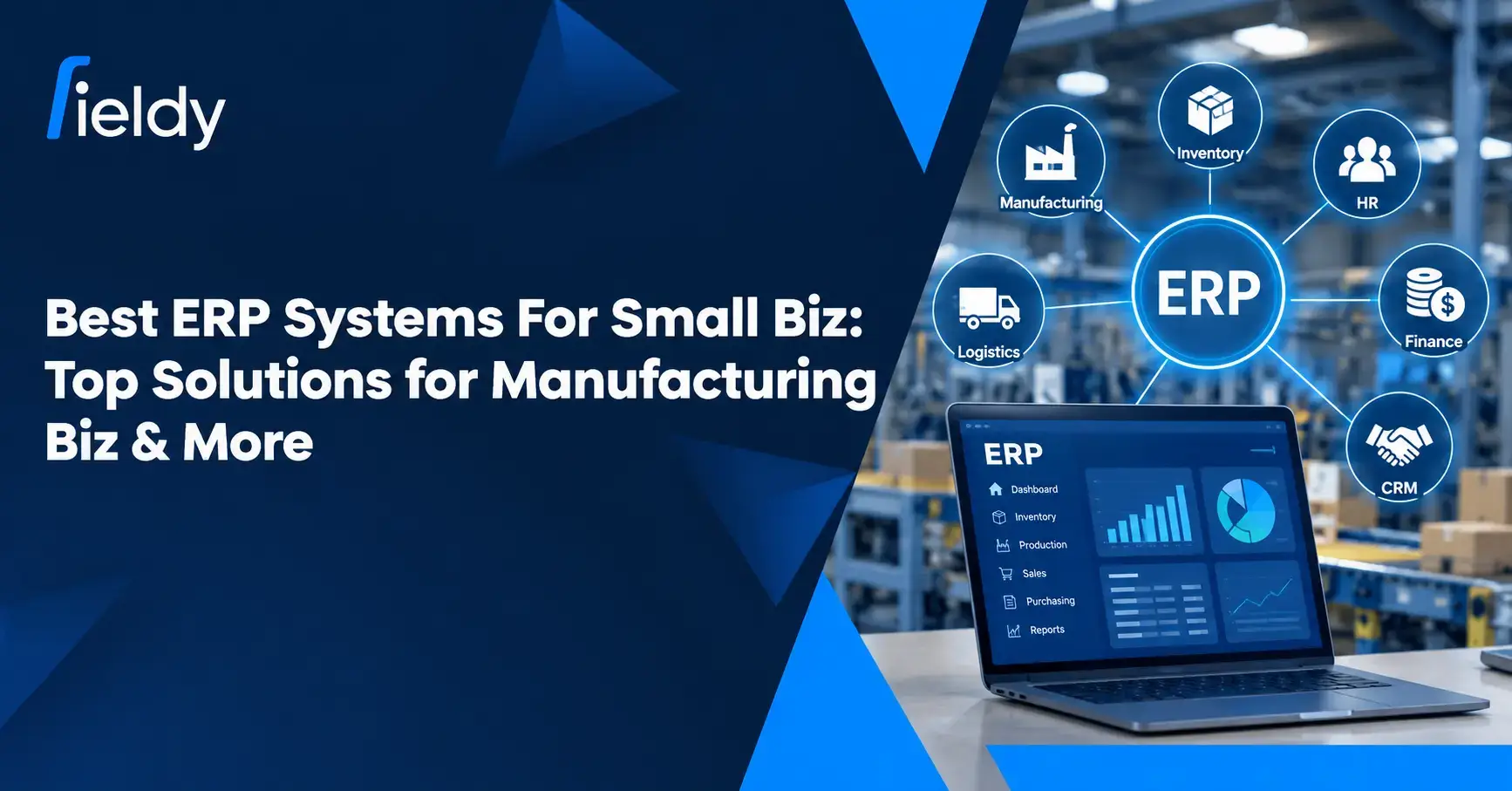

Many entrepreneurs are now getting rid of the traditional disconnected accounting, inventory, CRM, and operations tools to have an integrated business platform. An excellent ERP system can consolidate financial information, customers, suppliers, inventory, human capital, and operational details onto a single platform. That means workers won’t have to go back and forth between spreadsheets and multiple programs.
The right selection of the best ERP software for small businesses in 2026 strongly relies on the company’s field of activity and type of operations. For example, a manufacturer needs production planning and materials list support, whereas a service provider might be more interested in scheduling issues, work orders, inventory handling, invoicing, and mobile connectivity. This article outlines seven ERP software solutions and helps identify the best fits; however, we would recommend Fieldy as an ideal solution for those business enterprises that require operational support combined with basic business functionalities.
What Is an ERP System and Why Do Small Businesses Need One?
Enterprise Resource Planning (ERP) software integrates different business processes within a single, centralized system. Rather than keeping different records for sales, purchasing, inventory, finance, and operations, employees have access to shared data and connected workflows. This leads to a more efficient, integrated business process across the different departments.
ERP becomes a strategic decision for small businesses, as spreading spreadsheets and various standalone applications makes data handling complicated at that stage of the business evolution. Having all data in one place helps a great deal in minimizing the problem of duplicate data entries, enhances the visibility of the whole inventory, speeds up the processing of various tasks such as buying and financial matters, and offers business owners very immediate access to the reports and data on the state of the business. Asset management companies should look into the functionalities offered by enterprise asset management software, particularly when it comes to equipment or things that need frequent servicing.
Key Benefits of ERP for Small Businesses
Among the major advantages of implementing this system are a single source of truth for data, more efficient report generation, workflows that run on their own, transparency for purchasing activities, fewer administrative tasks, and more teamwork across the organization. The idea is more than just software; it will remove redundant communication steps and help employees view company activities consistently.
What Should Small Businesses Look for in an ERP?
To put simply, the main issue a company has must be solved by the software system, not merely be feature-rich. Accounting, inventory, CRM, purchasing, reporting automation, integrations, security, usability, and scalability should all be evaluated before signing.
Core Accounting and Financial Management
Look out for features like invoicing, managing expenses, handling accounts payable/receivable, financial reporting, payment tracking, and proper taxation support. In this case, integration with already available accounting systems may be an important consideration, as replacing all financial processes would be unnecessary.
Inventory and Stock Management
It is essential to provide inventory functions with what comes next features, for example, real-time stock levels, reorder points transfers barcode support, and multi-location visibility. For service companies mostly, it is of great help to have a software solution that can track parts used by technicians, as it really helps when searching for a field service parts inventory management tool.
CRM and Sales Management
CRM features should include the management of leads, contacts, sales pipelines, follow-ups, communication history, and customer records. Businesses that depend heavily on getting more customers should determine if an ERP would work practically as a separate best CRM for small business.
Purchasing and Vendor Management
The features related to purchasing can allow users to streamline the process, e.g., by automatically generating purchase orders, updating supplier information, handling approval requests, and verifying received goods. It is a good practice for any user group to agree on and define exactly how to manage purchase orders before customizing the ERP system.
7 Best ERP Systems for Small Businesses in 2026
The platforms below are compared according to functionality, industry fit, usability, scalability, integrations, reporting, and operational requirements.
| 💻 ERP | 🎯 Best For | ⭐ Main Strength |
|---|---|---|
| Fieldy | Service businesses | Field operations + business management |
| Odoo | Flexible SMEs | Modular ERP |
| ERPNext | Budget-conscious businesses | Open-source ERP |
| MRPeasy | Small manufacturers | Production management |
| Zoho One | CRM-focused businesses | Connected business apps |
| ContractWorks | Contract-heavy organizations | Contract workflows |
| Acumatica | Growing mid-market companies | Scalable cloud ERP |
1. Fieldy — Best ERP Overall
FIELDY is highly compatible with small- and mid-sized growing companies where some tasks are done locally, and some in the field; such activities may be in the office as well as visiting locations. Fieldy brings together a comprehensive set of tools – client management, appointments, field services coordination, pricing, billing, stock service tickets, equipment tracking, labor planning, reporting features, and workflow management – as a single unified platform.
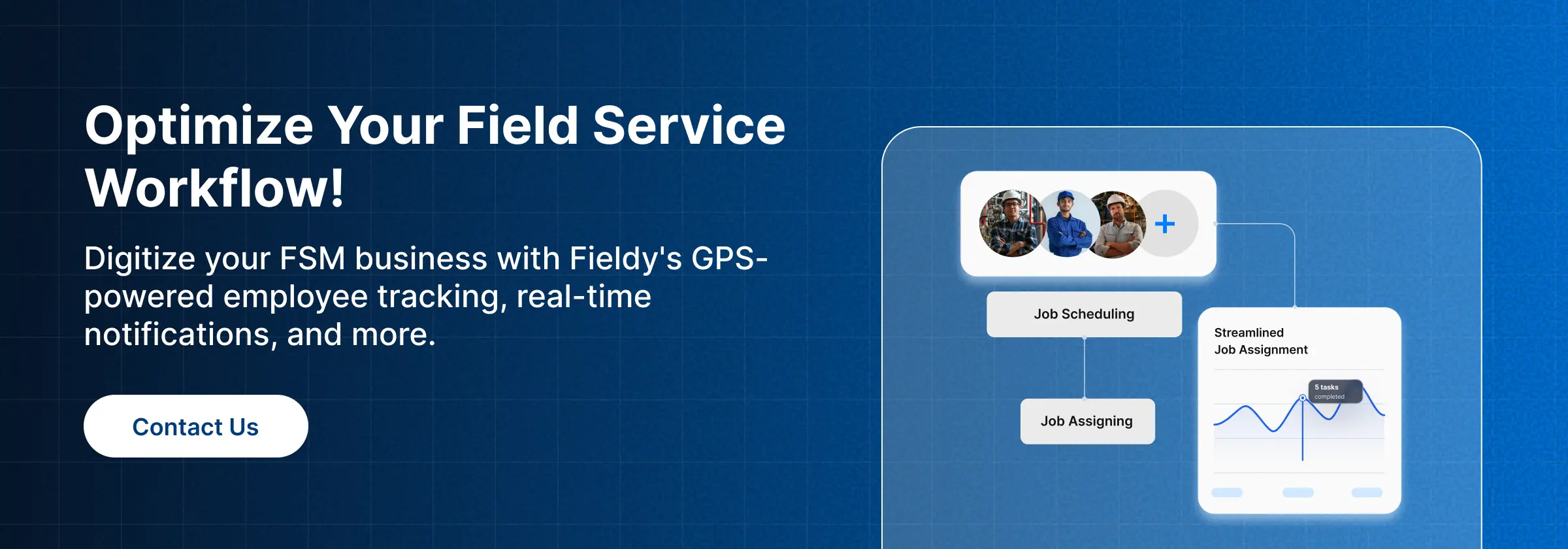
For the service industry, such as HVAC, plumbing, electrical, cleaning, roofing, pest control, and similar sectors, the primary benefits are not the features of traditional manufacturers’ ERP but rather the ability to connect every part of the business from customers’ initial request to a completed job and payment. The business can handle customers, allocate tasks, coordinate workers, track progress of jobs, and keep an eye on the operations without the necessity to switch between different unrelated apps. So, field service software is an excellent alternative to traditional ERP systems, which might also require field service-related applications.
Best for: Service companies, contractors, fieldwork teams, SMEs who are expanding their operations.
Strengths: Scheduling, sending of teams, customer relationship management, quoting, billing, warehouse management, mobile process management, analytics, and workflow automation.
Limitations: Production companies using custom processes may find it advantageous to use specific manufacturing ERP systems instead.
2. Odoo — Best for Flexible SMEs
Odoo’s architecture is based on modules. So, businesses can choose what they need, from accounting, CRM, and inventory to sales, purchasing, production, projects, and various other aspects. So, such a level of customization might make it the go-to choice for many firms that have no problem initially limiting themselves to only a few functions of Odoo and expanding the use as their demands increase.
The downside of this feature is a greater complexity involved in deployment and system setup. This complexity grows together with the number of modules added and the extent of modifications needed for them to align with a company’s processes. It would be very wise for any business to have a clear picture of how much time and money configuring, supporting, and administering Odoo will cost. Those businesses where financial matters are the major activity may also benefit from a quick comparison of Odoo features against those of the best billing software in India.
Best for: SMEs wanting a broad, customizable business platform.
3. ERPNext — Best for Budget-Conscious Businesses
ERPNext is a free-source ERP system which has features related to accounting, CRM, inventory, purchasing, manufacturing projects, and the like that support various business operations.
Since it is built on an open architecture, it may attract the attention of companies that desire more control in their software environment. It is a great system if there are technically minded business members on board who are good at configurations and customizations. But companies that do not have such a technically sound setup need to weigh implementation and support needs heavily. Companies dealing heavily with their inventory should evaluate ERPNext’s functionalities compared to which software is recommended for inventory management, and only then decide.
Best for: those small businesses searching for an adaptable and potentially affordable (cost-effective in the long run) ERP.
4. MRPeasy — Best for Small Manufacturing Businesses
MRPeasy was built on the ground up with small manufacturers in mind. It features tools for production planning, lists of component stock purchases, work tickets, and manufacturing processes.
We feel its concentrated focus would better meet the needs of companies that manufacture goods, rather than having one system that you tailor to fit you. Metalworking companies must look carefully at how raw materials are used, job costs, scheduling, and purchasing when deciding which best ERP software for metal fabrication needs.
Best for: Small manufacturers, manufacturing companies, and expansion-minded fabricators.
5. Zoho One — Best for CRM and Customer-Focused Businesses
Zoho One is a solution that integrates a CRM, financial system, sales, marketing, collaboration, analytics, and other business apps into one comprehensive tool. Small enterprises that regard customer acquisition and relationship management as crucial aspects of their work tend to find it interesting.
What sets it apart is the vast number of different applications that make the platform not a highly specialized product for one industry. Before starting their deployment, enterprises should identify and understand the main business processes to ensure that the platform is able to meet the requirements and that there is no need for unnecessary customization. If you want to find out which CRM is the best for you after reviewing platforms with a strong CRM focus in particular, it would be good to see if one of the more comprehensive platforms also fits your needs; you might want to read a comparison of several best CRM software in India.
Best for: Customer-focused SMEs and businesses already using the Zoho ecosystem.
6. ContractWorks — Best for Contract and Compliance Management
ContractWorks is designed in particular for organizations looking at handling their contract document approvals, document management, renewal reporting, and compliance workflows. Unlike a conventional all-in-one ERP product, it’s a kind of specialized software that focuses more specifically on business process management.
Having a lot of service agreements and supplier contracts as well as compliance documents, companies may find that this product’s concentration on certain functionalities could be helpful. Before the company buys a product, it would need to check whether it needs a general ERP or mainly whether it calls for the best contract lifecycle management software features.
Best for: Businesses where contracts and compliance are operational priorities.
7. Acumatica — Best for Established or Mid-Market Businesses
Acumatica is basically a cloud-based ERP software tailored for mid-sized, growing companies that have sophisticated financial, distribution, manufacturing, projects, and operations needs, among others. It brings a higher degree of sophistication as well as greater scalability compared to many basic small-business systems.
These extra functionalities can also render the software deployment more complex, and smaller companies should avoid paying for features they don’t need. But if a business is already close to reaching the multi-branch or multi-department level, evaluating top ERP systems could be extremely helpful in determining whether going for a more scalable platform is necessary or not.
Best for: Established SMEs and growing mid-market organizations.
Best ERP Systems for Different Types of Small Businesses
| 🏢 Business Type | 🎯 Recommended Approach |
|---|---|
| 🔧 Service Business | Fieldy |
| 🛍️ Retail/Inventory Business | Inventory-focused ERP |
| 🏭 Small Manufacturer | MRPeasy or manufacturing ERP |
| 🏗️ Contractor | Fieldy |
| 📈 Growing Mid-Market Company | Acumatica |

Typically, service-oriented businesses require scheduling, dispatch, customer management, work orders, invoicing, and mobile workflows. Manufacturers should concentrate on production BOMs, purchasing, and job costing, and inventory-driven businesses should factor stock accuracy and warehouse management.
ERP Features Small Businesses Actually Need
Inventory Management
Beyond knowing how much stock is available at all times and setting a threshold for when to order fresh supplies, managing inventory also involves keeping stock in different warehouses and tracking movements of small items or parts.
CRM and Customer Management
Good management of leads, proper customer information recording, sales pipelines, and a record of interactions will help a company to seamlessly transfer a customer from the sales team to the operational team.
Financial Management and Billing
Apart from a few things that don’t come connected, everything else is. Quotes, invoices, payments, expenses, and accounting integrations should all be tied together.
Field Service & Workforce Management
Technician-based businesses require effective scheduling, dispatching, work progression, mobile support, and visibility of the workforce. When technicians’ availability or bookings are modified during the day, field service scheduling software will be very helpful, as it will enable one to quickly update appointment details.
Asset & Equipment Management
A company that keeps customer or even its own equipment should be able to keep track of the assets’ records, their service log, maintenance schedule, and current condition. It is through the use of field service asset management software that such features may add value to the general ERP system.
ERP for Small Manufacturing Companies
Production planning and BOM management should be at the top among the things a manufacturer must get right, then work orders, procurement, inventory, quality control, and job costing. A good production planning module should bring together production data with purchase planning and accounting functions; this way, it is easier to trace material requirements, plan purchases correctly, and track production costs instead of having production figures left standing on their own.
The key areas for metal fabrication companies are material purchasing, raw material inventory, production scheduling, customer orders, job costing, and invoicing. If production processes in the business are quite a bit complex, a customized manufacturing system might be the way to go.
ERP for Inventory Tracking and Stock Management
The inventory function gets to the heart of a business that operates several warehouse premises, suppliers, or a vast range of goods and components. You might want your system to include a reorder point feature, track stock flow (movement of inventory), purchasing workflows, and report generation.
An ideal ERP will also synchronize inventory needs with sales, purchasing, and operations. This ensures that excess inventory is minimised while also protecting the company from unforeseen stockouts.
ERP Solutions for Oil and Gas and Other Specialized Industries
A lot of oil, gas, and other asset-intensive industries will require a much better level of maintenance procurement compliance, asset, and workforce capabilities than a typical small business ERP can support. Because of this, it would be wise to assess the specific industry requirements before a decision is made to adopt a general-purpose software.
ERP Systems for Mid-Market Companies
As businesses scale up and the number of users increases across different teams, locations, and departments, issues like multi-location operations, user permissions, integrations, reporting, and data migrations become more and more critical. In fact, a tool that is suitable for one team or ten people won’t work well for hundreds of users or multiple departments.
How Much Does ERP Software Cost for a Small Business?
ERP costs depend on several factors, like the number of users and modules, and whether it’s a one-time or annual fee.
There might be other charges apart from the recurring subscription fee. You should also take into account costs related to getting the system up and running, moving your data from old systems to new ones, educating your employees who will use the system, connecting your system to other external services, customizations to fit your business, ongoing support after delivery, and additional users or modules.
How to Choose the Right ERP for Your Small Business
You should first identify the biggest operational issues instead of starting by considering software features. After that, find out which departments are going to be sharing data, determine important integrations, figure out full ownership costs, test the user experience, and check scalability.
Seeing a live demonstration of the system with your real workflows is really helpful. Request vendors to give a presentation of the system processing a complete customer order purchase job, inventory movement, invoice, and a payment.
ERP vs Separate Business Software: Which Is Better?
| 💻 ERP | 🔗 Separate Software |
|---|---|
| 📊 Centralized data | Multiple systems |
| 🧩 One platform | Several subscriptions |
| ⚙️ Integrated workflows | More integrations |
| 📈 Unified reporting | Fragmented data |
| 🛠️ Higher implementation effort | Easier initial adoption |
This is one reason that ERP systems are useful: different applications being unable to communicate often means problems in daily operations. In contrast, service-oriented companies could be better off by adopting an industry-specific platform that supports their on-location work procedures rather than making a generic ERP compatible with these tasks.
Field Service Businesses May Need More Than a Traditional ERP
Service businesses require much more than accounting and inventory. They need job scheduling, dispatch, mobile workflows, quotation, invoicing, customer communication, equipment record-keeping, and technician management.
A field service CRM software platform will allow customer information to be directly linked and accessible on the customer job card, technician appointment, and service history.
For businesses dealing with estimating and customer approvals, field service quoting software offers an integration between sales and operational activities.
After work delivery, field service invoicing software closes down the gap between job completion and payment, decreasing the paperwork required.
Companies with high dispatch turnover should also test field service dispatch software for technician assignment, taking into account availability, location, skill, and workload.
Businesses dealing with recurring maintenance contracts can benefit from AMC management software and service contract organization, renewal tracking, and scheduled maintenance handling.
On top of regular employee attendance apps, a mobile employee GPS tracking app would be helpful for mobile crews to provide a much higher level of visibility into the field activities of technicians and their locations.
A field staff tracking app may also be required by companies whose field employees are scattered all over, so they can track their assignments and work activities.
Recurring service technicians’ equipment and job management are specific to HVAC contractors. That’s why HVAC field service management software plays such an important role for them that it cannot be overstated.
ERP Implementation Tips for Small Businesses
The secret behind a successful implementation lies in identifying and handling the workflows that are really worth spending on. Make sure the data you’re moving is clean before the migration. Provide the employees with training that aligns with their roles. Stay away from customizations that aren’t necessary. Also, do not rush in with automation at once; you can only bring in as much as the staff can handle.
In addition, management must continue checking the usage of the system from time to time, not only after going live but also after that period, in a way rather than just expecting a completed implementation to bring success for sure. Tracking completion times, administrative workload, scheduling efficiency, and other operational measures can reveal opportunities to how to improve employee productivity in field service.
Final Verdict: Which ERP System Is Best for Small Businesses in 2026?
In the end, you can’t find one ERP that fits every small business perfectly all over the world. If you are manufacturing, you will probably need production management and Bills of materials; if the goods that you are dealing with are mostly inventory items, you are definitely gonna need a stock management module that is good enough; if the major focus of the company is accounting, you will need financial depth, and finally, if the company is at the growing stage, you need scalability.
However, for field-work-focused small businesses, Fieldy would still be the only ERP that has field capability with all what I just said elements of a CRM system that can help track your sales pipeline and schedule customers’ visits, the ability to dispatch workers, to work on quotes and invoices, an inventory management function that can track consumables and assets as they move through time, as well as the operational control that field work needs.
The rightERP systemis one that is able to perfectly handle your processes with minimal disruption today and not create an unnecessary amount of work tomorrow.