

 Blog Details

🔷 Introduction:
Lead management has been a major revenue differentiator for businesses in 2026. It is no longer the case that companies lose deals because of poor pricing or weak demand. Instead, they lose those deals because of mishandling, delaying, forgetting, or not following up with leads at all. As a result, this trend has driven decision-makers to look for a trustworthy lead management software comparison to help them choose a platform.
The thing making this decision so hard is that many tools advertise to “manage leads” while, in fact, they deal with totally different issues. Some emphasize marketing automation, others CRM structure, and a few try to connect leads directly with operations. Knowing these differences is very important, especially if changing software can cause interruptions in sales pipelines and customer relationships.
This manual serves as an analytical comparison rather than a product pitch. It reveals what each tool is really good at, where it has difficulties, and what type of business gets the most out of each option.
📈 Why Lead Management Software Matters More Than Ever in 2026
Consumer conduct has undergone a major transformation in the past few years. Customers demand almost immediate answers, transparent follow-ups, and smooth handoffs between sales and service teams. If these expectations are not fulfilled, leads silently seek competitors.
Meanwhile, companies are racking up leads at an unprecedented rate from ads, websites, referrals, marketplaces, chat tools, and inbound calls. Without a proper framework, such a volume turns into a liability rather than a benefit.
Lead management platforms of today are the solution to this problem. They are more than just a place to keep contact details; they also facilitate the timing of the response, ownership assignment, progress tracking, and creating accountability of teams.
🔄 How Lead Management Has Evolved Beyond Traditional CRMs
Traditional CRMs were designed to help track relationships and not to facilitate quick operations. They were built on the assumption that sales reps would manually update records, log calls, and remember follow-ups. This model is no longer viable in high-velocity markets.
The features of modern-day systems are largely derived from Lead Generation Management Software, which emphasizes the automatic capture and routing of leads the very moment they enter the system. This change guarantees that no inquiry is left waiting for a response for hours or days.
Therefore, the lead platforms of the present day have become so advanced that they almost fail to distinguish between a CRM, an automation engine, and an operations tool. Some tools manage this change smoothly; others are still stuck in the old ways of working.
⚠️ Why Comparing Lead Management Software Is No Longer Optional
Many businesses pick up lead tools as a reaction to situations that have gone wrong. Most of the time, they do this because something has broken. Leads are escaping, conversion rates are falling, or sales teams are becoming heavily loaded. However, in a hurry to make a decision, companies often end up choosing software that is not suitable for them.
A correct comparison provides the following advantages to businesses:
- Not to pay more than necessary for features that are not used
- To avoid having to migrate again in the future
- To match the software with the actual workflows
- To be sure that the software can grow with the lead volume
It is quite significant to understand this when one is contemplating the so-called best lead management software, since “best” is entirely dependent on the particular case.
🧩 Key Criteria Used in This Lead Management Software Comparison
To keep the assessments fair, every platform in this guide is judged based on the same criteria.
Lead capture capability is the most significant factor. Platforms should be able to support different channels without the need for manual imports. The second factor, automation depth, is a measure of whether follow-ups are actually done on time. CRM structure, the third factor, indicates how well customer history is saved.
Besides that, operational integration is very important, especially for service businesses. The evaluation criteria are completed by mobile usability, reporting accuracy, and pricing scalability.
🎯 Why “Best” Depends on Business Model, Not Popularity
There is no lead management platform that is perfect for all cases. A SaaS startup with an inbound marketing strategy will need tools that are very different from those of a field service company that dispatches technicians. That is the reason why many businesses that are looking for the top lead management software are so puzzled.
In their words, enterprise CRMs, SMB tools, and FSM platforms are all mixed without giving any context. By understanding your business model first, the comparison becomes more understandable, and it is less likely that you will make a mistake that costs you a lot of money.
🏆 List Of Top Lead Management Platforms of 2026
1️⃣ Fieldy: Lead Management Built for Execution, Not Just Sales
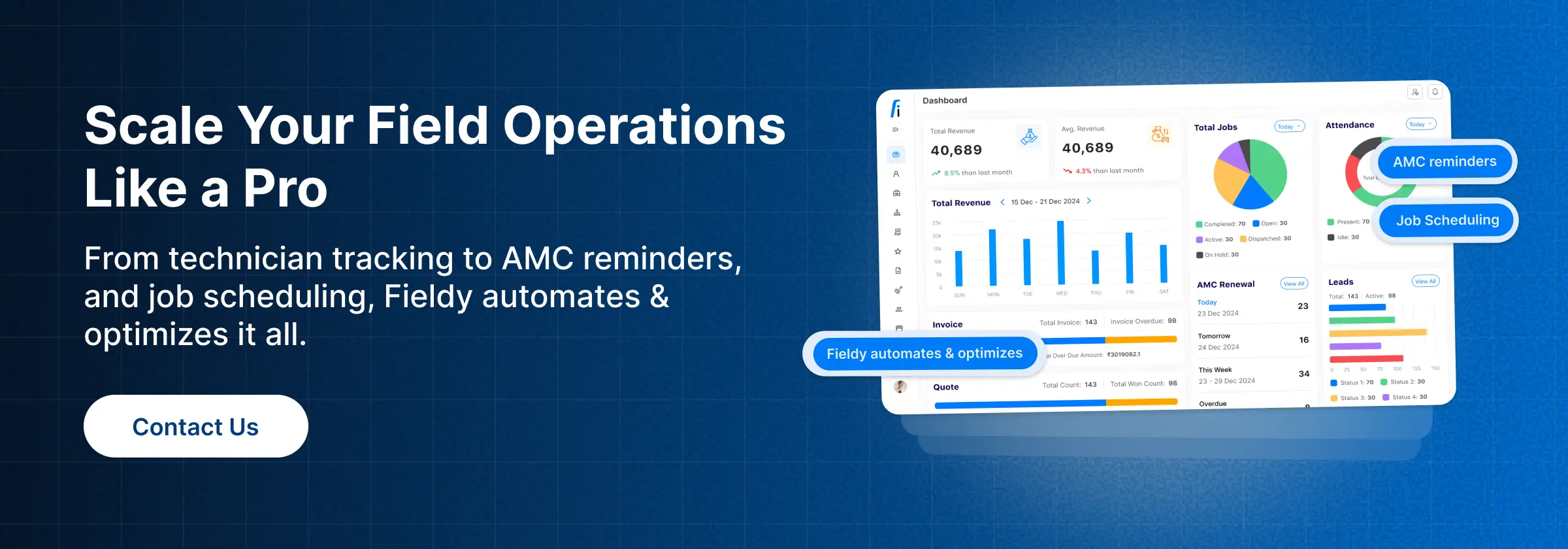
Fieldy treats lead management as an operational challenge. It doesn’t just stop at qualification; the software automatically links leads to scheduling, dispatching, invoicing, and payment workflows.
This attribute makes it especially powerful for businesses where leads quickly turn into jobs and the sales cycles are not lengthy. Due to this architecture, Fieldy is often mentioned as the best CRM lead management software, even though it goes far beyond traditional CRM boundaries
Another major advantage is visibility. Sales teams, managers, and field employees all have access to the same system, which minimizes miscommunication and waiting times.
Fieldy is a perfect fit for firms that want their leads to be turned into actual work seamlessly without having to manage several platforms at once.
2️⃣ HubSpot CRM: Excellent Marketing Automation, Limited Operations
HubSpot is usually the first CRM that businesses decide to use. The main reasons for that decision are the simplicity of use and powerful inbound marketing instruments. The platform is very efficient in generating leads through content, email, and ads.
Nevertheless, HubSpot was never intended to become a post-sale operations management tool. Companies that depend on scheduling, dispatching, or service execution are often forced to introduce additional tools in their environment.
That is why HubSpot is commonly put against other options in the Best Lead Management Software for Small Businesses category when there is a rise in operational complexity.
3️⃣ Zoho CRM: Powerful Customization with a Learning Curve
Zoho CRM is a major draw for businesses that want to keep their options open without having to pay an enterprise price. It makes it easy to customize pipelines, fields, and workflows to a great extent.
However, that freedom to customize means that the setup is time-consuming and complicated. In order to fully realize the potential, consultants or dedicated admins are often required by the teams.
Zoho is a good fit for companies that have technical resources in-house and mature processes, rather than teams that are looking for a quick rollout.
4️⃣ Salesforce: Enterprise-Level Lead Intelligence
One of the main reasons why Salesforce is the dominant topic in enterprise CRM discussions is its lead scoring, reporting, and automation capabilities that can be scaled to a very high level.
However, it is hardly ever the case that Salesforce would be the best option for small or mid-sized businesses. The costs of implementation, the ongoing admin work, and the add-ons tend to increase the total cost of ownership quite rapidly.
The best use of Salesforce is for large sales organizations with long deal cycles and dedicated CRM teams.
5️⃣ ServiceTitan: Sales Performance Focus for Large Contractors
ServiceTitan is aimed at home service industry businesses that generate high revenues. Its lead tools are basically the same thing as the call tracking and sales performance analytics because they are tightly integrated.
Nevertheless, pricing and contract commitments are factors that often lead companies in the growth stage to look for the best ServiceTitan alternatives that provide similar workflows with more flexibility.
6️⃣ Jobber: Simple Lead Intake for Very Small Teams
Jobber keeps things intentionally simple. It allows small service businesses to track inquiries and convert them into scheduled jobs.
As the number of leads increases, the limitations regarding automation and reporting become noticeable. This is the reason why many users eventually look for the best jobber alternatives when they are scaling.
7️⃣ Housecall Pro: Scheduling-First Lead Handling
Housecall Pro focuses on scheduling and customer communication. Lead handling is available, but it is not the main emphasis.
Growing teams often compare it with the Best Housecall Pro Alternatives when they require deeper CRM insights or more automation.
8️⃣ Fieldpoint: Legacy Platform with Modern Replacements
Fieldpoint is a combination of CRM and FSM, but it lacks modern usability and the depth of automation. Therefore, a considerable number of companies that were using Fieldpoint are now looking for Fieldpoint Alternatives that can better facilitate their mobile teams and real-time workflows.
📊 Lead Management Software Comparison Table (2026)
| 🧩 Software | 🎯 Best For | 📬 Lead Capture Channels | 🔄 Automation & Routing | 📊 CRM Depth | ⚙️ Operations / FSM Fit | 📱 Mobile Experience | 💰 Pricing Flexibility | ⚠️ Key Limitations |
|---|---|---|---|---|---|---|---|---|
| ⭐ Fieldy | 🛠 Service & field-based businesses | 🌐 Web forms, 📞 calls, 🔗 referrals, 💻 ads | ⚡ Advanced rules, auto-assignment, SLA-based routing | 📈 Medium–High | ✅ Strong | 📱 Excellent | 💎 Scales with team size | ❌ Not ideal for long B2B sales cycles |
| HubSpot CRM | 📈 Marketing-led teams | 🌐 Forms, 💻 ads, 📧 email, 💬 chat | 💼 Strong marketing workflows | 📊 High | ⚠️ Weak | 📱 Good | 💰 Freemium → expensive at scale | ⚠️ Limited post-sale execution |
| Zoho CRM | 🛠 Custom-heavy internal teams | 🌐 Web, 📧 email, 🔌 APIs | ⚡ Moderate–Advanced (custom setup) | 📊 High | ⚠️ Weak | 📱 Average | 💰 Affordable tiers | ⚠️ Steep learning curve |
| Salesforce | 🏢 Enterprise sales orgs | 🌐 Omnichannel, 🔗 integrations | ⚡ Very advanced | 📊 Very High | ⚠️ Weak | 📱 Good | 💰 High cost, add-ons | ⚠️ Complex & admin-heavy |
| ServiceTitan | 🏠 Large home service contractors | 📞 Calls, 🌐 web, 🔗 referrals | 💼 Strong call-based routing | 📊 Medium | ✅ Very Strong | 📱 Excellent | 💰 Rigid contracts | ⚠️ Expensive for SMBs |
| Jobber | 👤 Solo & small service teams | 📝 Manual + basic web | ⚠️ Minimal | 📊 Low | ✅ Moderate | 📱 Good | 💰 SMB-friendly | ⚠️ Limited automation |
| Housecall Pro | 📅 Scheduling-first service businesses | 📞 Calls, 🌐 web | ⚠️ Basic | 📊 Low–Medium | ✅ Strong | 📱 Good | 💰 SMB-focused | ⚠️ Weak CRM depth |
| Fieldpoint | 🏛 Legacy FSM users | 📡 Basic omnichannel | ⚠️ Minimal | 📊 Medium | ✅ Moderate | 📱 Average | 💰 Enterprise-oriented | ⚠️ Outdated UX & automation |
🌍 Why Industry Context Matters in Lead Management
Lead workflows vary significantly from one industry to another. For instance, logistics companies often assess CRM tools in conjunction with the Leading Fleet Management Software for the Trucking Industry, where leads have to be quickly converted into dispatch actions.
Service businesses, conversely, are more concerned with the speed of their response and the execution of the job rather than marketing attribution.
One of the biggest mistakes that companies make when choosing lead software is ignoring industry context.
🧭 How to Choose the Right Lead Management Software in 2026
Before selecting a platform, businesses should evaluate:
- Daily lead volume
- Response time expectations
- Sales vs service complexity
- Automation maturity
- Team mobility
- Budget growth over time
Choosing software that matches current workflows, but can also evolve, is the safest approach.
🏁 Final Perspective
Lead management software has become more than just a sales tool; it is a growth engine. Companies that select platforms in line with real workflows convert quicker, keep more customers, and grow with less disorder.
Properly comparing tools is not about discovering the most features; it is about finding the best fit for how your business actually works today and where it is going next.
❓ FAQs
What is lead management software used for?
It captures, organizes, tracks, and converts leads across their lifecycle while ensuring timely follow-ups and accountability.
Is CRM the same as lead management software?
No. CRM focuses on customer relationships, while lead management emphasizes capture, routing, and conversion speed.
Which businesses benefit most from lead automation?
High-volume and service-based businesses see the biggest gains due to faster response times.
Can small businesses use advanced lead tools?
Yes. Many platforms now offer scalable pricing tailored to small teams.
Why do businesses switch lead management software?
Common reasons include missed leads, poor reporting, slow follow-ups, and a lack of integration.
Are all-in-one platforms better than separate tools?
For operational businesses, unified platforms reduce friction and improve conversion consistency.