

 Blog Details

🚛 Introduction:
🚛 Why Fleet Management Software Is Critical for Trucking in 2026
The trucking sector in 2026 is heavily bombarded with challenges that barely stand. The hikes in fuel costs, the shortening of delivery times, the imposition of more rigorous compliance regulations, and the amplifying customer expectations are the main reasons why fleet operators have to reconsider the ways they manage vehicles, drivers, and daily operations. Fleet operators who rely on manual fleet tracking methods or basic GPS tools will find it extremely difficult to survive in the market.
Today’s fleet management software is not limited to tracking the location of a vehicle only. It enables the management to get an up-to-the-minute picture of the company’s vehicles, the driving habits of the personnel, fuel consumption, maintenance schedules, and general efficiency of the company’s operations. If dispatching, invoicing, and even lead tracking are combined with the use of these business systems, fleet platforms cease to be just a monitoring tool and become the primary operational backbone. This is also the reason why many transport companies are now considering the evaluation of platforms that integrate operations with tools usually found in the best lead management software when customer acquisition and service delivery are becoming closely related.
We will discuss in this guide what fleet management software actually means for trucking companies, the main features that the software should have, and five leading platforms that are shaping the industry in 2026.
🧠 What Is Fleet Management Software for the Trucking Industry?
Fleet management software is a centralized system designed to help trucking companies monitor, manage, and optimize their vehicles, drivers, and operational workflows. At its core, it connects drivers on the road with dispatchers, fleet managers, and back-office teams through real-time data and automation.
Unlike basic GPS tracking tools that only show vehicle locations, modern fleet management platforms provide a complete operational view. They track fuel consumption, driving behavior, maintenance needs, compliance status, route efficiency, and driver performance. Many advanced systems also integrate with payroll, billing, and customer systems, creating a seamless flow of information across the organization. This is where fleet tools increasingly overlap with broader operational platforms similar to top lead management software, enabling businesses to align fleet performance with customer demand and revenue workflows.
For trucking companies managing multiple vehicles, drivers, and customers, fleet management software is no longer optional—it’s a strategic requirement.
Fleet management software is essentially a single system that facilitates truck companies to keep track of, control, and get the most out of their vehicles, drivers, and operational workflows. Fundamentally, through real-time data and automation, it links dispatchers, fleet managers, and back-office teams with drivers on the road.
Firstly, they are not just simple GPS trackers that only reveal the locations of vehicles but are instead fleet management platforms that furnish companies with an in-depth operational view. Such platforms monitor fuel consumption, driver behavior, maintenance needs, compliance status, route efficiency, and driver performance. Additionally, some sophisticated systems can also link with payroll, billing, and customer systems, thereby facilitating the organization to have a smooth flow of information from one department to another. Thus, fleet resources are becoming increasingly integrated with other operational platforms like the top lead management software, which allows businesses to synchronize fleet performance with customer demand and revenue streams.
Truck fleet management software has evolved from being an option to a strategic necessity in the case of companies with multiple vehicles, drivers, and customers.
⭐ Key Features to Look for in Leading Fleet Management Software for the Trucking Industry
Choosing the right fleet management software starts with understanding the features that directly impact efficiency, safety, and profitability.
1️⃣ Real-time vehicle tracking and telematics provide continuous visibility into where vehicles are, how they are being driven, and whether delays or issues are occurring. This allows dispatchers to respond proactively instead of reacting after problems arise.
2️⃣ Route optimization and fuel management help reduce fuel costs by identifying the most efficient routes, minimizing idle time, and analyzing driving patterns that waste fuel. Over time, these insights translate into significant cost savings.
3️⃣ Driver behavior and safety monitoring uses telematics and AI insights to track speeding, harsh braking, fatigue indicators, and unsafe driving habits. This not only reduces accident risk but also lowers insurance premiums.
4️⃣ Maintenance scheduling and alerts ensure vehicles are serviced before breakdowns occur. Preventive maintenance reduces downtime and extends vehicle lifespan.
5️⃣ Compliance and reporting, including ELD support, audit-ready logs, and regulatory alerts, are essential for avoiding fines and ensuring legal operations.
Finally, integration with CRM, payroll, and lead systems is becoming increasingly important. Trucking companies that also manage contracts, customers, and service commitments benefit from systems that connect fleet activity with sales and billing. This is why many operators now look at platforms that align with the best CRM software for lead management or even solutions designed for the best lead management software for small business operations.
🏆 5 Leading Fleet Management Software for the Trucking Industry (2026)
1️⃣ Fieldy – Best & Most Preferred
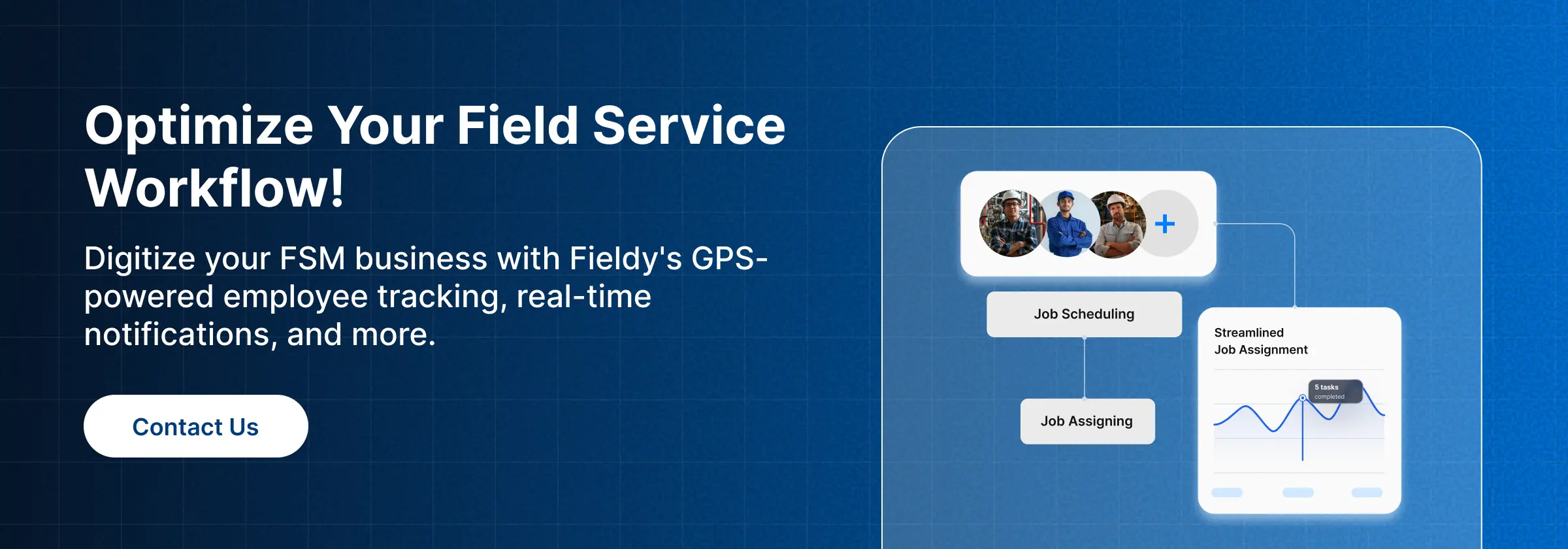
It is essential to know the reasons why different trucking companies decide to upgrade their fleet tracking technologies before they evaluate different features. Usually, the growth of their operations leads to situations where the management of the dispatching, customer coordination, billing, and workforce through multiple systems becomes the only way to handle these aspects. Fieldy’s FSM Software is an all-in-one platform that aids in integrating these fragmented pieces, thereby connecting the movement of the fleet with the people, processes, and the general profit.
| ✅ Pros | ⚠️ Cons |
|---|---|
| 🚛 All-in-one fleet, workforce, and operations management | 📍 More value-driven for operationally active fleets than tracking-only use cases |
| 📡 Real-time vehicle and driver tracking | |
| 🧭 Smart dispatching and route optimization | |
| 📋 Integrated CRM and job management | |
| 📱 Mobile apps for drivers and supervisors | |
| 📈 Scales well for small and mid-sized trucking fleets |
Fieldy is not just about simple vehicle tracking. It acts as a full employee GPS tracking app whereby the management team gets an instant and clear view of the driver’s locations, the job status, and the on-ground activities. Such a high level of transparency enables the operations teams to lessen the waiting time, increase the involvement of employees, and come to decisions more quickly without the need for constant check-ins or manual reporting.
Moreover, Fieldy is equipped with intelligent field staff tracking app features that support the local leaders in the monitoring of the routes, the time when the employees are inactive, the completion of the tasks, and the attendance, which they can also verify in real-time. Through the unification of workforce data in one system that is also used for dispatch and operations, managers get a more explicit view of productivity while drivers and staff become the recipients of convenient, well-organized workflows.
2️⃣ TrackoBit
TrackoBit is a leading fleet management and telematics software built to deliver visibility, accuracy, and automation for modern mobility operations. With 99% uptime and 5,00,000+ vehicles onboard, it adapts easily across industries.
The platform offers AI-enabled video telematics, driver behavior monitoring, smart route planning, precise fuel monitoring, real-time tracking, and geotagged PODs to improve safety, accountability, and on-the-ground efficiency. With BLE sensor integrations, advanced analytics, and seamless connectivity with ERPs, CRMs, and OEM systems, TrackoBit helps businesses run reliable, data-driven, and future-ready fleet operations at scale.
| ✅ Pros | ⚠️ Cons |
|---|---|
| 📡 99.9% accurate real-time tracking and visibility | 🎨 Limited white-label customization |
| 🤖 Advanced AI-enabled video telematics & driver behaviour monitoring | — |
| 🔌 Wide hardware compatibility and integration | — |
| 📊 Detailed analytics and actionable reports | — |
| ⛽ Smart fuel monitoring | — |
3️⃣ ToroTMS
| ✅ Pros | ⚠️ Cons |
|---|---|
| ✨ Highly intuitive and user-friendly interface | 💬 Full pricing requires contacting the Toro team |
| 📅 Strong dispatching, billing, and reporting tools | — |
| 🤝 Excellent customer support with personalized onboarding and training | — |
| ⚙️ Reduces manual admin work by automating payroll and invoicing | — |
4️⃣ Samsara
Large vehicle fleets usually need more detailed information about the behavior of the drivers, how the fuel is used, and the compliance metrics. Samsara is a fleet management platform that is data-first and is designed for companies that are at the top of care for safety analytics, telematics, and regulatory reporting on a large scale.
| ✅ Pros | ⚠️ Cons |
|---|---|
| 📡 Advanced real-time GPS and telematics | 💰 Higher pricing makes it less accessible for small fleets |
| 📹 AI-powered dashcams and safety monitoring | ⚙️ Implementation and configuration can feel complex |
| ⛽ Detailed fuel and driver behavior analytics | |
| 📊 Strong compliance and reporting capabilities |
In the case of a trucking business of a large enterprise, Samsara can deliver a lot of detailed information about the performance of the fleet and the safety trends. Nevertheless, the smaller or medium-sized fleets may consider their profundity to be too much if they do not require advanced analytics or have a limited number of internal resources for managing configuration and reporting.
5️⃣ Verizon Connect
Many trucking companies put the greatest emphasis on reliability and stability. For a long time, fleet tracking with Verizon Connect has been a reliable and steady service, performing vehicle monitoring, route history, and maintenance alerts.
| ✅ Pros | ⚠️ Cons |
|---|---|
| 📍 Reliable real-time vehicle tracking | 🧩 Limited customization beyond tracking and reporting |
| 📊 Strong driver performance reports | 📂 Minimal focus on CRM or operational workflows |
| 🛠️ Maintenance reminders and alerts | |
| 🏢 Enterprise-grade infrastructure |
We could say that Verizon Connect is the perfect fit for those enterprises that are after a reliable tracking system without the need for a lot of customization. Although it is great at providing fleet visibility, the companies that require close integration with customer management or billing add some extra tools to them.
6️⃣ Fleet Complete
When trucking companies are in charge of mixed fleets, trailers, or heavy assets, the visibility of assets becomes equally vital as the tracking of vehicles. Fleet Complete concentrates largely on the use of telematics and the monitoring of assets for operations that are logistics-heavy.
| ✅ Pros | ⚠️ Cons |
|---|---|
| 🚚 Strong vehicle and trailer tracking | 🧠 Interface can feel complex for new users |
| 👨✈️ Driver monitoring and behavior insights | 🎓 Requires onboarding to unlock full value |
| 🛠️ Proactive maintenance scheduling | |
| 🔌 API access for custom integrations |
Fleet Complete is an excellent option for fleets that consume large amounts of assets and need detailed tracking of various types of equipment. However, due to its complexity, it is more appropriate for those organizations that are willing to spend time setting up and optimizing it.
7️⃣ Motive (Formerly KeepTruckin)
For numerous trucking companies, particularly those that operate in different regions, conformity and security are their main concerns. With this very focus, Motive is designed to assist fleets in maintaining auditing readiness and, at the same time, enhancing driver safety.
| ✅ Pros | ⚠️ Cons |
|---|---|
| 🛡️ Strong compliance and safety management tools | 📇 Limited CRM and lead management features |
| 📹 AI-powered dashcams with real-time alerts | 🔗 Less focus on end-to-end business operations |
| 🛠️ Preventive maintenance tracking and reminders | |
| 📊 Detailed reporting and performance analytics |
Motive is a perfect solution for fleets whose main worry is compliance. Though it is great at safety and being prepared for regulations, organizations that want to integrate fleet data with customer operations and invoicing might have to use some other systems as well.
📊 Quick Comparison: Leading Fleet Management Software for Trucking (2026)
To make your decision a bit easier, the table below gives an overview comparison of the main fleet management software that have been talked about in this blog. The table refrains from drilling down into every technical detail, but instead, it highlights those practical capabilities that are of the greatest value to the trucking businesses.
📊 Quick Comparison: Leading Fleet Management Software for Trucking (2026)
To make your decision a bit easier, the table below gives an overview comparison of the main fleet management software that have been talked about in this blog. The table refrains from drilling down into every technical detail, but instead, it highlights those practical capabilities that are of the greatest value to the trucking businesses.
| 🧩 Software | 🎯 Best For | 🚚 Fleet Tracking | 🛡️ Driver Safety | 📋 Compliance | 🔄 Operations & CRM | 📈 Scalability |
|---|---|---|---|---|---|---|
| ⭐ Fieldy (Most Preferred) | 🏆 All-in-one trucking & operations management | ✅ Real-time GPS & vehicle tracking | ✅ Safety monitoring & alerts | ✅ Built-in compliance workflows | ✅ Full CRM + jobs + dispatch | 🚀 Very High (Most Preferred) |
🥈
TrackoBit |
🚛 Bulk haulers & high-volume load carriers | ✅ Basic fleet & load visibility | ✅ Good safety features | ✅ Good compliance support | ✅ Dispatch + loads + invoicing + settlements | 📈 High |
| ToroTMS | 🚛 Bulk haulers & high-volume load carriers | ✅ Fleet management & load visibility | ⚠️ Basic safety support | ✅ Compliance-friendly workflows | ✅ Dispatch + load mgmt + invoicing + driver settlements | 📈 High |
| Samsara | 🏢 Large enterprise fleets | ✅ Strong tracking | ✅ Advanced safety tools | ✅ Enterprise compliance | ❌ No CRM or ops workflows | 📊 Medium |
| Verizon Connect | 📡 Reliable fleet tracking needs | ✅ Accurate GPS tracking | ✅ Driver behavior insights | ✅ Compliance reporting | ❌ No CRM or job ops | 📊 Medium |
| Fleet Complete | 🚛 Asset-heavy fleets | ✅ Vehicle & asset tracking | ✅ Safety monitoring | ✅ Regulatory support | ⚠️ Limited operational tools | 📊 Medium |
| Motive | 📑 Compliance-focused fleets | ✅ GPS & telematics | ✅ AI safety alerts | ✅ Strong ELD compliance | ❌ No CRM or business ops | 📊 Medium |
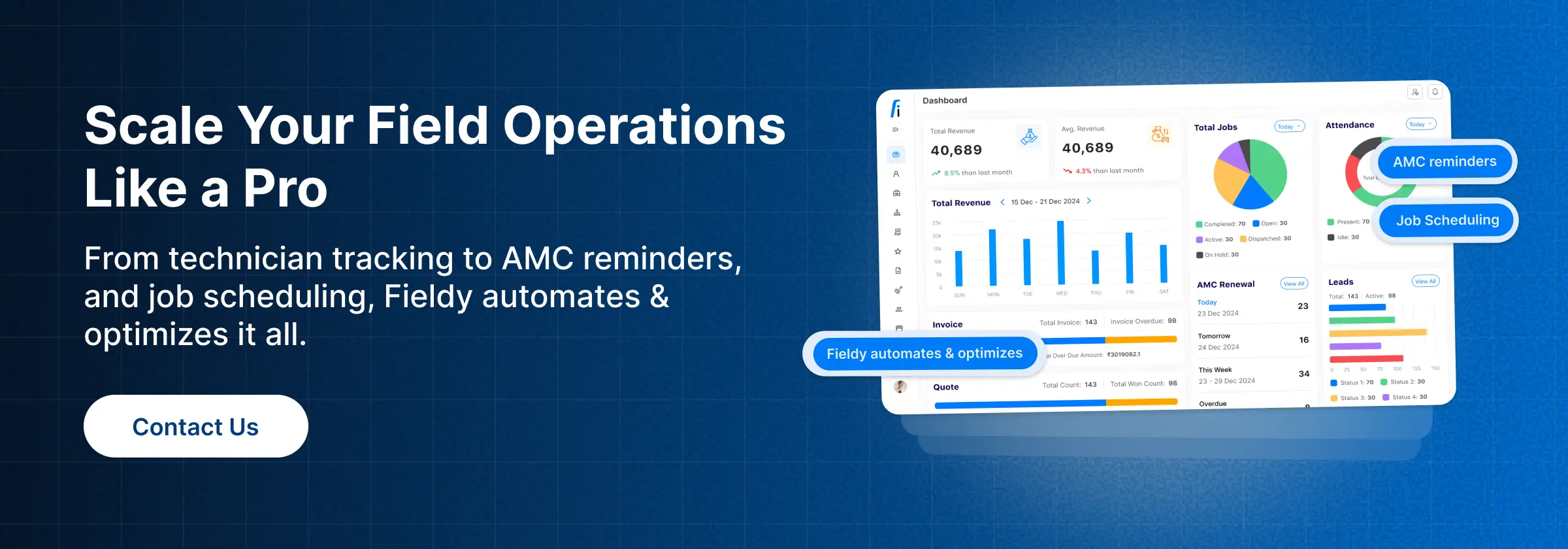
This comparison highlights why many trucking businesses are moving beyond single-purpose tracking tools toward platforms that support end-to-end operations.
🧰 Where Parts Inventory Management Software Fits Into Fleet Operations
Besides vehicles and drivers, trucking companies are very much dependent on spare parts, tools, and consumables to keep their fleets operating in a good way. If there is no proper tracking, missing parts or unplanned shortages can result in downtime and delayed deliveries. Integrated parts inventory management software is the answer to this problem.
Knowing that inventory usage is linked to vehicle maintenance and job records, companies are able to see the levels of their stock; they can also record the parts used in a certain vehicle or repair, and they can even predict future needs. By having fleet management systems that offer inventory visibility, trucking companies are in a position to have more control over their expenses, and at the same time, they can be sure that their vehicles will always be fit for the road without any stoppages.
🔗 Fleet Management + Business Operations: Why Integration Matters
Today , trucking businesses cannot be satisfied with simply being able to see their vehicles. They want to have a deep understanding of their operations. The value of fleet data multiplies enormously when it gets linked to sales pipelines, customer management, invoicing, and payroll.
As a matter of fact, the linkage of dispatch data with the billing systems is what provides the foundation for accurate invoicing based on the actual routes and delivery times. By connecting customer contracts with the availability of the fleet, the scheduling efficiency gets enhanced. That is the main reason why a great number of trucking companies, who are on the journey of operational upgrade, are also considering the Pagarbook alternative or a wider range of platforms that help in aligning fleet activities with revenue workflows. Additionally, by partnering with the best lead management software, integration becomes a powerful tool in demand generation and customer relationship management, where companies can meet the customer demand in line with fleet capacity.
🌐 Industry Use Cases Beyond Trucking
Fleet Management software is beyond just trucking. Transportation and delivery companies utilize it for the final mile of their operations. Building material hauling businesses have adopted it as a tool to efficiently manage deliveries throughout different construction sites. The use of fleet platforms by security and infrastructure-supporting vehicles to manage technicians, the use of vehicles, and service commitments is essentially the same as that of security camera installation businesses that are highly dependent on accurate scheduling and mobility.
🧭 How to Choose the Best Fleet Management Software for Your Trucking Business
Initially, you should assess the number of vehicles in a fleet and the types of vehicles, since bigger fleets will need more sophisticated analytics and automation. Think about the necessity for compliance and reporting, especially if you are operating in different regions. Features for driver management are essential both for safety and keeping the drivers. Money and the possibility of growth are quite important—the program should be able to expand along with your business.
Another factor that is just as important is the integration. Trucking businesses that handle customer relationships, contracts, and dispatch processes can get the most out of platforms that are in line with the top lead management software, thus enabling fleet operations to be a tool for revenue generation and not working separately.
✅ Final Verdict:
✅ Which Fleet Management Software Is Best for Trucking Operations?
Fieldy is the most flexible option that can be singled out for all-in-one local business and fleet operations. When it comes to enterprise telematics, Samsara is the market leader. In the case of compliance-first fleets, Motive can be considered a peak performer.
The top fleet management software, in the end, is the one that keeps up with your business and integrates vehicles, drivers, customers, and operations into one smart system. Platforms that combine fleet visibility with features available in the best lead management software, as well as the best lead management software for a small business, result in sustaining operational and financial advantages for a considerable length.
❓ FAQs
What is the best fleet management software for trucking companies in 2026?
The best fleet management software in 2026 depends on fleet size and operational complexity.
All-in-one platforms like Fieldy work well for trucking companies that need dispatching, driver management, billing, and customer workflows in one system,
while tools like Samsara or Motive are better suited for telematics or compliance-heavy fleets.
Is GPS tracking alone enough for modern trucking operations?
No. GPS tracking only shows vehicle location, but modern trucking operations require route optimization,
driver behavior monitoring, maintenance alerts, compliance reporting, and operational integration.
Fleet management software combines all of these into a single system.
How does fleet management software help reduce fuel costs?
Fleet management software reduces fuel costs by optimizing routes, minimizing idle time,
monitoring driving behavior, and providing fuel usage analytics that help eliminate unnecessary mileage.
Can fleet management software integrate with billing and customer management?
Yes. Advanced fleet platforms integrate vehicle activity with invoicing, payroll, and customer management,
enabling accurate billing and better alignment between fleet availability and customer demand.
Is fleet management software suitable for small trucking businesses?
Absolutely. Modern fleet systems are scalable and help small trucking businesses improve efficiency
through automation, mobile apps, and centralized operational visibility.
How do I choose between compliance-focused and all-in-one fleet software?
Compliance-focused tools are ideal when regulatory reporting is the top priority.
However, trucking companies that also manage customers, dispatching, and billing benefit more from
all-in-one fleet management platforms that support long-term growth.