

 Blog Details

🚀 Introduction
Lead management is the silent hero that has transformed into the main factor of business growth.
Technologically speaking, companies in the mentioned sectors are facing a paradigm shift in how consumers find, vet, and hire service providers. In addition, consumers demand responses within no time, follow-ups with accuracy, and communication via transparent digital channels. Hence, the traditional way with spreadsheets, handwritten notes, or basic CRMs is already outdated.
By 2026, enterprises using manual systems regularly have situations of lead leakage, slow response times, missed follow-ups, and a lack of team insight. That is why landing the top lead management software has become a top concern for field service organizations.
Service companies are upgrading their systems since they want to have technology capable of capturing leads coming from various channels, automatically organizing and scoring them, assigning them in real-time, and converting them into scheduled jobs with minimal intervention. Purpose-built FSM lead management platforms are the answer, especially if they are designed for field service operations.
If you are considering platforms and wondering which ones give the best results, it is the point to start. (Also, if you are interested in a wider market view, you can consider the best lead management software options of 2026.)
🔑 Why Lead Management Software Is Now Essential in 2026
A service branch that was manned mostly by labor-intensive handwritten notes and phone calls a decade of 10 years ago could barely survive in today’s world. Consumers’ conduct as well as demands have changed drastically over time.
🌐 Consumers Are Engaging in a Fully Online Purchasing Journey
If any person is looking for a security camera installer, an HVAC technician, or a cleaning service, it is almost certain that they will begin their journey online. They go through websites and compare prices; they read reviews and submit inquiry forms to several vendors simultaneously. So businesses must make their responses in a fraction of the time of their competitors; otherwise, the opportunity is wasted.
⚡ Real-Time Follow-Ups Are Mandatory Due to Fierce Competition
According to studies, the chances of a company getting the client if it answers within five minutes are almost tenfold compared to those companies that do not. The lead management system can let your employees know about the lead response time through automatically assigning a lead to the person responsible, sending reminder emails, and simultaneously prompting follow-up messages.
🗂️ Manual Lead Tracking No Longer Works
With increased leads on different platforms such as Google Ads, websites, WhatsApp, Facebook, contact centers, and referral partners, it is becoming harder to track each and every lead. Companies become victims of lead duplication, loss of contact details, and delayed response, and finally, overcoming the challenge, they are faced with lead management software that facilitates and brings them order as well as transparency/visibility.
🔗 Lead Management Now Bridges Sales and Field Service
Advanced solutions are capable of going further to establish strong bonds between sales and job scheduling, billing, and technician dispatch. Thus, what is more important is that leads are converted into jobs swiftly, schedules are made easy for customers, and administration time is efficiently utilized.
Such a change accounts for the reason why the majority of enterprises are already seeking top lead management software for 2026.
🧠 What Makes a Lead Management Platform “Top Tier” in 2026?
As service companies grow, they need more than basic CRM data entry. They need tools that operate with intelligence, speed, and automation across the entire customer lifecycle. True 2026-ready platforms offer advanced lead management software features such as:
🤖 AI-Driven Lead Scoring & Assignment
AI evaluates lead potential based on:
- Source
- Customer behavior
- Industry relevance
- Likelihood of conversion
Then the system assigns leads to the best-matching team member automatically.
📥 Multichannel Lead Capture
A top-tier platform brings leads into one place from:
- Website forms
- Calls
- Emails
- Social media
- Paid ads
- Landing page inquiries
- Chatbots
- WhatsApp or SMS
This centralization prevents fragmentation and improves visibility.
🔔 Automated Follow-Ups & Reminders
If a follow-up is missed, the sale is missed. Modern systems ensure:
- Automated call/SMS/email reminders
- Follow-up alerts
- Pipeline stage prompts
- Escalation if a lead is ignored
Sales teams stay consistent even during busy days.
🔄 CRM, Invoicing & FSM Workflow Integration
This is where FSM companies get maximum value. For example, when discussing billing and workflow automation, many service providers compare integrations similar to what you’d expect from a strong Zoho Invoice Alternative, but with even tighter lead-to-job connectivity.
📱 Mobile-Friendly Lead Access
Field teams work outside the office. They need instant updates on:
- Assigned leads
- Customer details
- Appointment times
- Maps & directions
- Lead history
Mobile-first platforms outperform desktop-heavy CRMs in real-world scenarios.
🧩 Customizable Pipelines
Because not all businesses follow the same sales cycle, a great platform lets you modify:
- Stages
- Labels
- Approval workflows
- Lead categories
- Conversion milestones
⚙️ Workflow Automation Across Sales & Field Operations
For FSM companies, the ideal platform bridges both worlds:
- Sales captures a lead
- Dispatch assigns a technician.
- Technician completes work
- Billing sends an invoice automatically.
This single-platform continuity is exactly why many companies eventually shift to Fieldy.
🏆 Top Field Service Management Lead Software for 2026
In 2026, these are the most comprehensive and up-to-date lists of highly rated lead management software methods that can be used by field service teams. Each product review focuses on how the product can be easily used, what features it has, if it is automated, if it suits the industry, and if it is worth the money.
1.🥇 Fieldy – Most Preferred
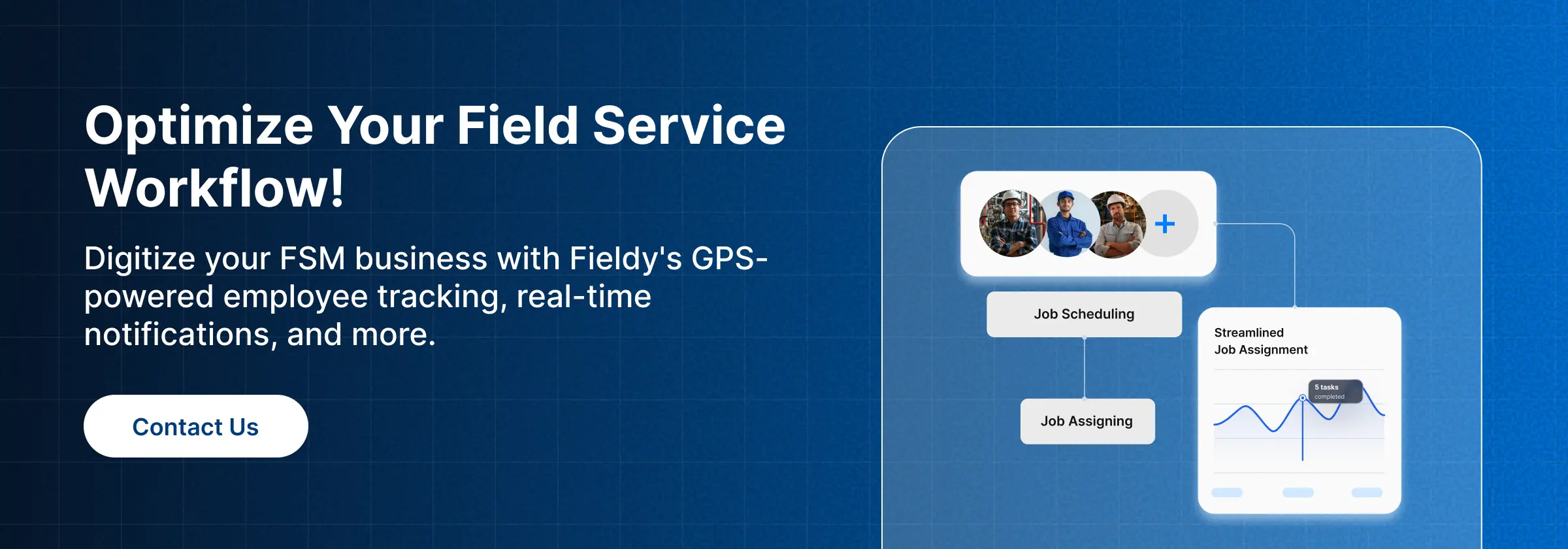
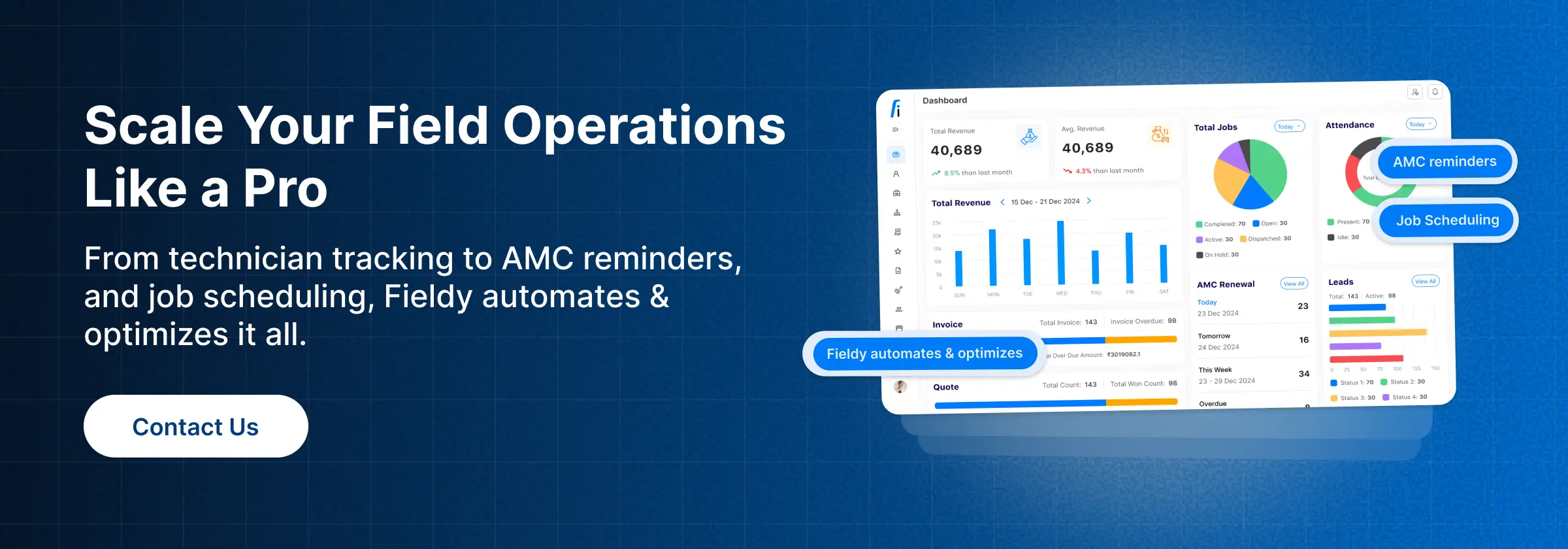
Fieldy is the most comprehensive lead management software as it does something differently than most CRM and lead trackers. It integrates lead management, CRM, dispatching, scheduling, invoicing, contracts, inventory, and technician workflows all in one single ecosystem.
Fieldy is not simply a CRM for a field-heavy company; it is an operational engine.
One of the main reasons Fieldy’s FSM software is so successful is that it merges the entire lifecycle: lead → quote → job → technician → invoice → payment, without needing numerous applications. This is a very crucial point when the teams want to have quick follow-ups, mobile access, job automation, and clarity of the situation.
Just to name a few, the features include:
- Leads can be assigned in real-time to sales reps or technicians
- Automated workflows that notify your team when an entirely new inquiry has been received
- The mobile app enables the staff to respond immediately when they are out of the office
- Job scheduling and dispatch integration without any hitches
- On the same platform, invoicing, payments, and contract management
- Lead routing is determined by the team’s availability, the type of job, or the location
Businesses that were using merely workforce tools before now often transition to Fieldy as their need for automation increases. When contrasting Fieldy with other workforce tools, many users refer to this change in the same manner as teams do when they decide to switch from basic attendance and payroll systems to a Pagarbook Alternative.
⭐ Pros & Cons
| ✅ Pros | ⚠️ Cons |
|---|---|
| 🔗 Unified system for leads, work orders, invoices, and service history | 🏢 Designed specifically for FSM companies, which may feel overly detailed for standard enterprise CRM use cases |
| 🔄 Automated follow-ups based on predefined parameters, with no manual intervention | — |
| 🤝 Strong team collaboration and internal communication tools | — |
| 📊 Detailed performance tracking and lead-to-conversion analytics | — |
| 📱 Ideal for mobile-first, field-heavy industries | — |
| 💰 Simple, low-cost user-based pricing | — |
| 📈 Scales easily from small teams (3 users) to large organizations (500+ users) | — |
| 🔍 Transparent and predictable lead management software pricing | — |
2.🟠 HubSpot CRM
HubSpot is still one of the most popular cloud CRM systems, out of which sales and marketing teams can greatly benefit. The software provides brilliant multichannel lead capturing and automations along with a user-friendly interface.
⭐ Pros & Cons
| ✅ Pros | ⚠️ Cons |
|---|---|
| 🆓 Free tier available | 💸 Scaling costs increase very quickly |
| ⚙️ Powerful automation workflows | ➕ Some features require paid add-ons |
| ✨ Excellent user experience | 🧰 Not built specifically for FSM industries |
| 📧 Email and pipeline management supported | — |
It is a perfect solution for startups or office-based sales teams who require CRM flexibility but do not need features related to job dispatching.
3.🔵 Zoho CRM
Zoho CRM is primarily recognized for its low price and extensive configuration possibilities. The system allows limitless channel lead capture, has many integrations, and offers custom modules. Yet, one might find the installation process too difficult to handle.
⭐ Software — Pros & Cons
| ✅ Pros | ⚠️ Cons |
|---|---|
| 💰 Excellent value for small businesses | 🧩 Complicated setup process |
| 🛠️ Extensively customizable to different workflows | 📡 Can feel slow for field teams needing instant updates |
| 🤖 Well-designed automation flows | ⏱️ Perceived slowness is usually due to system depth, not performance |
Many companies exploring Zoho often check Zoho CRM Alternatives when they find it harder to tailor to field-heavy workflows.
4.☁️ Salesforce
Arguably, Salesforce is the most powerful business CRM system of an enterprise kind available in the market. The company can automate almost everything, make use of AI, offer personalization features, and is open to huge changes and customizations. But these powers are closely guarded by a tricky maze of steep learning curves.
🚀 Platform — Pros & Cons
| ✅ Pros | ⚠️ Cons |
|---|---|
| 📈 Intensely powerful and able to scale as the business grows | 💸 Really costly compared to most alternatives |
| 🧩 Highly customized workflows and dashboards per team or role | 🧑💻 Requires technical or admin support to manage effectively |
| 🤖 Machine learning–based insights for smarter decision-making | ⚖️ Too complex for small to mid-sized service businesses |
Large enterprises mainly use it; hence, not typical FSM providers.
5.🛠️ Jobber
Jobber is a great tool for service companies, which provides an easy way to track leads and assign jobs.
📊 Platform — Pros & Cons
| ✅ Pros | ⚠️ Cons |
|---|---|
| 🧭 User-friendly interface that’s easy to navigate | 🔍 Limited depth in lead management capabilities |
| 🗓️ Simple and easy-to-use scheduling features | ⚙️ No advanced automation workflows |
| 👥 Well-suited for small teams with basic operational needs | — |
Because it lacks scalability, many growing teams start searching for Jobber Alternatives to support higher lead volume.
6.🌱 Freshsales
Freshsales focuses on AI-powered sales insights, lead scoring, and multi-channel engagement.
📊 Platform — Pros & Cons
| ✅ Pros | ⚠️ Cons |
|---|---|
| 🤖 Good AI-based lead scoring for prioritizing prospects | 🔌 Limited compatibility with field service (FSM) environments |
| 📞 Email and call integration for streamlined communication | 🛠️ Lacks job management and dispatching capabilities |
| 🧼 Clean and modern interface that’s easy to navigate | — |
Better suited for SaaS or B2B sales teams than field service companies.
📊 Lead Management Software Comparison Table (2026)
Fieldy is placed first because it provides the most complete, FSM-ready lead workflow.
| 🧩 Software | 📬 Lead Capture Channels | 🤖 Automation | 📱 Mobile Access | 🗓️ Scheduling Integrations | 📊 Analytics | 💰 Pricing Tiers | 🏗️ Ideal Industries |
|---|---|---|---|---|---|---|---|
| ⭐ Fieldy (Most Preferred) | Excellent | Excellent | Excellent | Excellent | Excellent | Affordable | FSM: HVAC, CCTV, Plumbing, Electrical, etc. |
| HubSpot | Fair | Fair | Fair | Bad | Fair | Mid to high | General sales teams |
| Zoho CRM | Fair | Fair | Fair | Bad | Fair | Low to mid | SMBs needing custom CRM |
| Salesforce | Excellent | Excellent | Fair | Fair | Excellent | Very high | Enterprises |
| Jobber | Bad | Bad | Fair | Fair | Bad | Mid | Small service teams |
| Freshsales | Fair | Fair | Fair | Bad | Fair | Mid | SaaS / B2B sales |
🏭 Industry Use Cases: Who Needs Top Lead Management Software the Most?
Lead management should not only be considered as a tool for sales teams. In the case of field service operations, the need for lead conversion into scheduled jobs is of high priority. These companies are the biggest winners:
📹 CCTV & Security System Installers
Security firms are in a position to deal with customers who have a buying intention but demand quick answers. They get leads from website forms, landing pages, property managers, WhatsApp inquiries, local businesses, walk-ins, etc.
Using purpose-built security system management software ensures proper tracking, quick assignment, and dependencies like installation scheduling and maintenance planning.
Those wanting business expansion often study strategies similar to how companies build a Profitable CCTV Installation Business in modern markets.
🔧 Contractors: Electrical, HVAC & Plumbing
These industries require a smooth lead → schedule → technician → invoice workflow. They also handle urgent bookings, emergency repairs, recurring service plans, and multi-location clients.
Because FSM operations dominate the workflow, many compare platforms through resources like Housecall Pro Alternatives to decide on more advanced solutions.
🧾 Service Companies Using Legacy Tools Like Fieldpoint
Older systems often lack lead routing, real-time updates, mobile follow-ups & workflow automation. This causes delays and missed opportunities.
Many such organizations evaluate modern platforms through guides like Fieldpoint Alternatives to upgrade to intelligent lead tracking.
🧭 How to Choose the Right Lead Management Tool
1.📈 Evaluate Your Lead Volume
Your lead volume is the main factor that will determine what kind of system you need. If requests are increasing from different channels such as web forms, ads, calls, WhatsApp, and you are still using manual methods, you will soon see that they are not effective. To a large extent, lead volumes require automation: in other words, instant assignment, reminders, lead scoring, and duplicate prevention are some of the features that help in making sure that nothing is lost among the leads.
2.🗺️ Map Your Full Lead & Job Workflow
Each service company works in its own way. Some are very fast, whereas others take a long, multi-step approval process. Draw the way by which a lead is coming to your business through the stages of qualification, scheduling, job assignment, completion, and at the same time, you will decide which system to support this flow. In case you have a very fast lead-to-job dispatch conversion, it will be a great time saver to use an FSM-integrated platform.
3.🤖 Identify Automation Requirements
In case your team is always late in following up, forgetting updates, and losing leads during handovers, then automation is a must. Present-day platforms facilitate the automation of reminder sending, intelligent routing of leads, pipeline stage changing, as well as the dispatch of communication at the right time, which is an effective way of minimizing human errors and speeding up end results.
4.📲 Prioritize Mobile-First Capabilities
In cases where a team is mostly working outside the office in a certain business area, it should be mobile-first. With such a mobile-first system, real-time alerts, brief updates, customer details, and the ability to either schedule or qualify leads right from a smartphone ensure that the response to any lead is quick, thus no loss of income due to delays.
5.💰 Compare Pricing for Value
Apart from only looking at the price of a product, you should also check if various features such as automation, mobile access, scheduling, or invoicing are available or not in the given plan. The correct means should be able to work with you, and your team should be able to grow without sudden cost increases.
6.🧾 Ensure Scheduling & Invoicing Integration
The implementation of tasks such as scheduling and invoicing through one integrated system gets rid of the need for manually transferring the information from one place to another. So, when leads turn into direct jobs and invoices within the same platform, it is not only your conversion time that drops, but at the same time, communication improves, and your whole workflow gets more efficient.
✅ Conclusion
Fieldy is the top lead management software that stands out in 2026
On every measurement—automation, pricing, readiness on the field, scheduling integration, mobile use, and lead-to-job flow—Fieldy is always the top pick for FSM companies.
Fieldy’s winning move is very straightforward: it lowers lead leakage, quickens response times, elevates conversion rates, and merges sales with operations in a single ecosystem.
Fieldy is the tool that allows you to grow, simplify, and bring your entire lead workflow into the 21st century, whether you are managing a small team or a large multi-location operation.
If you want to take your sales process and service workflow to the next level, check out the lead management capabilities of Fieldy and facilitate business growth in the field most efficiently.
❓FAQs
What is lead management software?
Lead management software helps businesses capture, organize, track, score, and convert leads across channels. For field service industries, it also connects leads with scheduling, dispatching, and invoicing.
Why do FSM businesses need lead management software?
Field service teams deal with urgent jobs and high competition. Lead management software ensures no lead is missed, follow-ups are automated, and technicians receive jobs quickly—boosting conversions.
What are the most important lead management features?
Top features include multichannel lead capture, AI scoring, automated reminders, pipeline management, customer history tracking, and integrations with FSM systems.
How much does lead management software cost in 2026?
Pricing ranges from free for basic tools to $20–$150 per user monthly for advanced AI-driven systems with automation, integrations, and analytics.
What is the #1 lead management software for 2026?
Fieldy ranks #1 for 2026 because it integrates CRM, lead management, scheduling, dispatching, invoicing, and mobile field operations into one unified platform—ideal for fast-moving service businesses.