

 Blog Details
![Top Quoting Software for Builders 2026! Faster Estimating & Pros, Cons, etc., [Ultimate List]](/_next/image?url=https%3A%2F%2Fblog-admin.getfieldy.com%2Fwp-content%2Fuploads%2F2026%2F01%2FQuoting-Software-For-Builders.webp&w=1536&q=75)

👋 Introduction
Builders face unique challenges when it comes to quoting: they must balance labor, materials, equipment, overhead, subcontracting, and change orders — all while keeping quotes accurate and timelines tight. That’s why modern quoting software for builders is far more than a pricing tool — it’s a strategic asset that accelerates conversions, improves cash flow, and reduces costly errors.
This guide explores the top quoting solutions for builders in 2026, examining their strengths, weaknesses, and real-world applicability. We highlight how each tool supports faster estimating, handles construction complexity, and integrates with scheduling, inventory, and CRM workflows.
🧰 Why Builders Need Specialized Quoting Software in 2026
Traditional spreadsheets and disconnected quoting tools were never designed to meet the dynamic demands of building projects, where variables such as subcontractor rates, material availability, and compliance requirements frequently change. Building quotes must be:
- Accurate across labor + material + equipment
- Configurable with markup and margin logic
- Compatible with mobile estimating on-site
- Tied to approval workflows and change orders
For these reasons, construction teams now evaluate quoting within broader lead management software comparison strategies. These comparisons help identify tools that connect estimate creation not just to CRM, but also to field execution and customer conversion.
🔄 Why Builders Are Adopting Quoting Tools Beyond Construction
While this guide focuses on builders, many platforms discussed here qualify as the Best Quoting Software that operates with variable pricing, labor-based services, or on-site estimates. From facility maintenance to field services and contracting, the core principles—speed, accuracy, approvals, and automation—remain the same. Builders benefit from tools that were designed with flexibility rather than rigid, industry-locked assumptions.
🥇 Best Quoting Software for Builders 2026 [Updated Listed]
1️⃣ Fieldy – Most Recommended
Fieldy consistently ranks at the top of builder quoting evaluations because it combines speed, accuracy, and workflow depth in a single platform. Rather than simply generating a price sheet, Fieldy’s field service quoting software embeds quoting directly into cost models, service templates, mobile capture, and job execution.
Builders can generate accurate estimates on-site, tie them to approved pricing templates, track changes, and convert them seamlessly into work orders. Because this tool supports real-time collaboration between office and field teams, it eliminates common quoting delays that cost projects time and money.
Pros & Cons
| ✅ Pros | ⚠️ Cons |
|---|---|
| 📱 Mobile-ready builder estimates | Requires initial setup/configuration |
| 💰 Custom pricing rules for materials & labor | Some advanced features need planning |
| 🔄 Quote → job → invoice automation | — |
| 📦 Integrated inventory & CRM workflows | — |
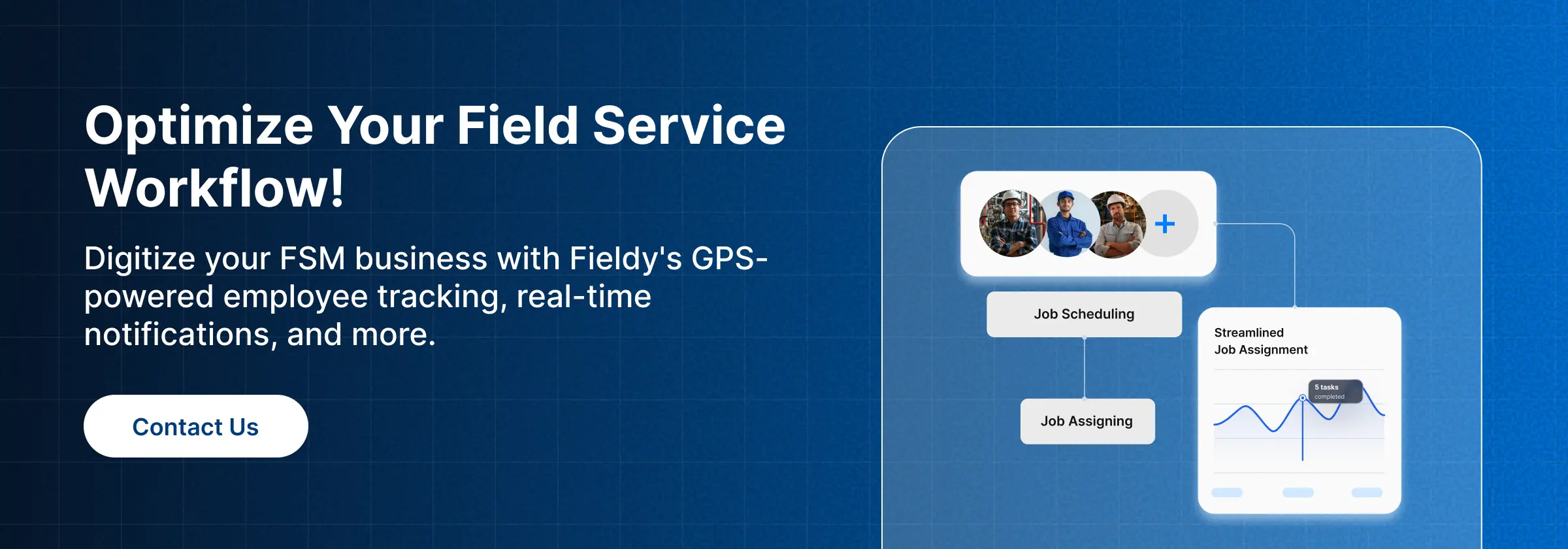
Fieldy shines for builders that need more than basic estimates — it delivers structural intelligence around pricing, approvals, and project start-to-finish tracking. Whether bidding for residential, commercial, or mixed projects, Fieldy removes bottlenecks between quote creation and job fulfillment.
2️⃣ Fieldpoint
Fieldpoint offers a rule-based quoting model designed for highly structured project bidding. Its strength lies in its systematic approach, making it suitable for builders operating in regulated environments or large, multi-phase projects.
However, its workflow rigidity and older user interface can feel cumbersome, especially in on-site quote scenarios. Many mid-sized builders now explore FieldPoint alternatives when they seek more intuitive, mobile-forward experiences without sacrificing structure.
Pros & Cons
| ✅ Pros | ⚠️ Cons |
|---|---|
| 📏 Consistent and rule-based quote logic | Less intuitive UI |
| 🏢 Good for enterprise governance | Harder for quick field quotes |
| 📂 Works well with standard projects | Limited mobile flexibility |
Fieldpoint remains a valid choice for builder teams that prioritize governance and consistency over flexibility. For firms needing rapid field estimating and on-the-fly adjustments, its rigidity may be limiting.
3️⃣ Housecall Pro
Originally focused on home service contractors, Housecall Pro’s simplicity and mobile ease make it an option for smaller builder teams that generate frequent on-site estimates. Its interface is fast and designed around technician workflows, which is valuable when time on site is limited.
That said, for large construction quotes involving complex cost structures, many organizations evaluate housecall pro alternative tools that offer deeper estimating logic.
Pros & Cons
| ✅ Pros | ⚠️ Cons |
|---|---|
| 💡 Very easy to use | Limited for complex construction pricing |
| 📲 Fast mobile quoting | Weak multi-phase support |
| 👥 Good for small teams | Minimal automation |
Housecall Pro suits small builders who want a simple quoting experience. Larger or more complex builds may highlight its limitations in pricing depth and workflow flexibility.
4️⃣ Jobber
Jobber offers straightforward quoting alongside its scheduling and invoicing features, making it accessible for basic construction or repair tasks. Solo builders and micro-teams appreciate its ease of use and quick onboarding.
However, Jobber’s simplicity comes with limits. Builders that need robust estimating, integration with materials databases, or advanced workflows often look into jobber alternatives for more sophisticated quoting capabilities.
Pros & Cons
| ✅ Pros | ⚠️ Cons |
|---|---|
| 💡 User-friendly and affordable | Basic pricing logic |
| 🚀 Fast jump-start for small teams | Lacks advanced quote features |
| 🔁 Integrated job → invoice flow | Not ideal for large builds |
Jobber is excellent if your quoting needs are simple and your projects are small. As your quoting requirements grow in scope or complexity, their limitations become more apparent.
5️⃣ ServiceTitan
ServiceTitan provides powerful quoting capabilities integrated seamlessly into broader sales and field workflows. It handles variable pricing, project line items, contract models, and analytics — all designed for larger trade and construction teams.
ServiceTitan can be expensive and complex for smaller operations, which is why many seek ServiceTitan alternatives with approaching power but easier configurations.
Pros & Cons
| ✅ Pros | ⚠️ Cons |
|---|---|
| 📊 Deep pricing & analytics | 💸 High cost |
| 🔗 Integrates well with field ops | 📚 Steep learning curve |
| 📈 Scales for complex projects | 👨💼 Requires admin expertise |
ServiceTitan is most appropriate for established construction firms with dedicated operations and admin teams. Its complexity and pricing make it overkill for smaller builders.
6️⃣ Zoho
Zoho enables builder quoting by linking CRM pipelines with inventory and invoicing modules. Its modular structure allows businesses to add quoting where needed, but it also introduces complexity for teams that want a quick, unified quote flow.
This is partly why some companies investigate zoho crm alternatives — when they want quoting without deep CRM configuration — or explore Zoho Inventory alternatives — to simplify materials and cost tracking — or a Zoho Invoice alternative when they want faster estimate-to-billing flows.
Pros & Cons
| ✅ Pros | ⚠️ Cons |
|---|---|
| 💸 Affordable modular pricing | 🔀 Fragmented experience |
| 🔗 Flexible integrations | ⚙️ Setup complexity |
| 📦 Works with CRM & inventory | 📱 Requires multiple apps |
Zoho can work if you’re already embedded within its ecosystem and comfortable configuring modular workflows. For builders seeking a pre-integrated quoting path, standalone field quoting tools tend to offer smoother experiences.
📝 Detailed Feature Comparison – Quoting Software for Builders
| 📌 Feature / Platform | 🛠️ Fieldy | 🏗️ Fieldpoint | 🔧 Housecall Pro | 📱 Jobber | ⚙️ ServiceTitan | 🧩 Zoho |
|---|---|---|---|---|---|---|
| 📸 Mobile Quote Capture | ✅ | Limited | ✅ | ⚠️ | ✅ | Limited |
| 📐 Multi-Phase Project Quoting | ✅ | ✅ | ❌ | ❌ | ✅ | ⚠️ |
| 🔄 Quote → Job → Invoice | ✅ | ✅ | ⚠️ | ⚠️ | ✅ | ⚠️ |
| 📝 Approval Workflows | ✅ | ✅ | ❌ | ❌ | ✅ | ⚠️ |
| 📦 Materials + Inventory Logic | ✅ | ⚠️ | ❌ | ❌ | ✅ | ✅ |
| 💰 Custom Pricing & Margins | ✅ | ⚠️ | ❌ | ❌ | ✅ | ⚠️ |
| 🏗️ Best for Small Builders | ✅ | ❌ | ⚠️ | ⚠️ | ❌ | ⚠️ |
📐Construction-Specific Quoting Needs Explained
Dedicated Quoting Software for Construction goes beyond simple price calculations. It must handle phased projects, material dependencies, labor categories, subcontractor costs, and frequent scope changes. Builders need quoting tools that adapt in real time as project details evolve, ensuring estimates remain accurate even when conditions change on-site or during planning stages.
👷♂️ Why Small Builder Teams Need Purpose-Built Tools
For growing teams, choosing the right Quoting Software for Small Business can determine whether quoting becomes a bottleneck or a growth driver. Small builders often lack dedicated estimating staff, making mobile quoting, prebuilt templates, and automated approvals essential. The right software allows lean teams to compete with larger firms by responding faster and presenting more professional estimates.
💰 How Construction Quoting Drives Profitability
Accurate and fast quoting has ripple effects across profitability:
- Reduces bid turnaround time
- Improves win rates with professional proposals
- Decreases pricing errors and costly revisions
- Helps send more precise forecasts to clients
- Turns approved quotes directly into scheduled work
This seamless path from lead capture to estimating and execution is often referenced alongside broader lead management software comparison discussions, since nearly every quote begins with a qualified lead.
🧭 How Small Builders Should Prioritize Quoting Features
Here’s a quick decision checklist:
- Estimate accuracy: Support for materials, labor, markup, and margins.
- Mobile quoting: Can techs generate quotes directly on site?
- Approval workflows: Are managers able to approve before send-out?
- Integration: Does it tie into scheduling and billing?
- Scalability: Will it grow with your team?
The right choice depends on how often you quote, how complex your jobs are, and how much automation you need.
🤝 Final Thoughts:
Choosing the Right Quoting Software for Builders
In 2026, quoting software is not just a tool—it’s a competitive advantage. Builders who automate their estimating process gain faster turnaround times, increased accuracy, and higher close rates. Among the options listed, Fieldy’s field service management software consistently stands out for small builders needing depth, mobility, and automation without enterprise cost or complexity.
Every tool has its place:
- Fieldy for end-to-end quoting + execution
- Fieldpoint for structured project governance
- Housecall Pro for mobile simplicity
- Jobber for basic builder estimates
- ServiceTitan for enterprise operations
- Zoho for modular configurations
Selecting the right quoting software depends on your project complexity, team size, and integration needs. A thoughtful choice today reduces rework later and lays the foundation for faster, smarter, and more profitable builds.
❓ FAQs
What makes quoting software essential for builders?
Builders deal with variable labor, materials, subcontractors, and change orders; quoting software ensures accuracy and speeds up conversions by removing manual calculations and mistakes.
Can builders generate quotes from the field?
Yes. Modern quoting tools allow on-site capture via mobile apps, improving responsiveness and client satisfaction.
Is quoting software different from CRMs?
Quoting software focuses on price calculation, approvals, and conversions; CRMs manage customer interactions. The two overlap but serve different primary functions.
Do construction quoting tools improve win rates?
Absolutely. Faster, accurate, and professional quotes lead to higher client trust and increased conversion rates.