

 Blog Details

Introduction
Over the past few years, businesses in India have radically changed their way of thinking using technology. Tasks that were once as simple as printing invoices and recording sales have now become complicated due to GST compliance, inventory management, tracking payments, managing customers, and getting live reports. By 2026, businesses will have to rely on modern accounting systems, printed invoices, or integrated accounting processes if they want to be competitive and financially accurate.
Some of the reasons for the move towards digital billing include the government regulations about GST reporting and e-invoicing, which have resulted in compliance requirements being raised; while customers, by increasing their demands, have led to businesses being forced to provide faster estimates, professional invoices, and seamless payment experiences. Besides that, businesses are facing enhanced operational complexity today. Small companies, which previously managed a handful of invoices weekly, now often juggle between handling recurring subscriptions, multiple payment channels, inventory systems, remote teams, and online customer interactions simultaneously.
Because of this, the desire for the best billing software in India has surged enormously among small and medium enterprises, retailers, contractors, distributors, manufacturers, and service businesses.
Basically, billing software nowadays is not just about creating invoices. They encompass many other operations and business functions taking place in the user’s surroundings, including:
- GST invoicing
- Quotation generation
- Inventory tracking
- Customer management
- Expense management
- Reporting dashboards
- Payment reminders
- Mobile billing
- Workflow automation
Cloud computing has drastically transformed the way Indian businesses function. Business owners and their teams are no longer restricted to the use of office desktop systems; they can now access billing systems via smartphones and tablets from any place.
Besides, numerous service businesses that are expanding use FSM software to unify invoicing, dispatching, scheduling, and customer management under a single platform.
This comprehensive guide aims to explore the best billing software in India for 2026, features comparison, and provide business help in determining which platform is most suitable for their operating needs.
What Makes Great Billing Software in India?
It is not just about picking a product that can at least provide printed invoices anymore when deciding on a billing software. Apart from reducing financial risks and administrative workload, businesses also want their systems to enhance operational efficiency.
The biggest reason that pushes companies toward modern billing platforms is the increasing difficulties involved in GST compliance. Manually handling tax computations, invoice formatting, e-way bill support, and financial reporting poses administrative challenges. Mistakes in these activities often mean unnecessary problems during tax filing and audits.
Also, customer behaviors keep evolving. Besides quick delivery of quotations, accessing different payment modes through the website, receiving messages related to payments, and having accurate invoices, these are also what customers demand from businesses today. Any billing process that is either very slow or inconsistent may hamper the customer experience and result in late cash collection.
Modern software platforms use automation and integrated workflows to fix these issues.
Today’s leading systems generally support:
- GST invoicing
- E-way bill generation
- Multi-user collaboration
- Quote-to-invoice workflows
- Payment gateway integration
- Inventory synchronization
- Mobile invoicing
- Real-time reporting
- CRM integration
- Expense management
Automation also greatly lowers the level of operational risk. For instance, by utilizing a single system to handle customer information, companies eliminate the need for them to input the same data multiple times across different systems.
Besides that, duplicated efforts can be minimized. Those companies that rely on separate tools without any connections face problems like:
- Duplicate records
- Delayed payments
- Missing invoices
- Inventory mismatches
- Customer communication gaps
- Manual reporting errors
Service companies often prioritize field service invoicing software to automate job-based billing and technician invoicing.
Essential Features Businesses Should Look For
Choosing the right billing software entirely depends on what kind of business you are running and your business needs. For example, a local retailer who is managing inventory will have completely different needs from an electrical contractor who is scheduling technicians and service calls. At the same time, a distributor who is handling warehouse operations will look for other features that a consultant who is preparing monthly invoices probably wouldn’t consider as important.
Here are some of the key factors that should affect your decision on which software to pick:
Business Size
Small businesses usually focus on simplicity and low costs, whereas big companies need more sophisticated automation and support for multiple users.
Industry Requirements
Different industries require different workflows:
- Retail → inventory management
- Contractors → scheduling and quoting
- Distributors → warehouse tracking
- Service businesses → technician workflows
- Manufacturers → procurement management
Operational Complexity
If a company is operating several teams, locations, or projects, it is a wise move to consider using operational tools that are integrated and not just the billing systems that are isolated.
Important Features Checklist
- GST invoicing support
- E-way bill functionality
- Quote automation
- Payment reminders
- CRM integration
- Inventory tracking
- Mobile apps
- Customer databases
- Reporting dashboards
- Multi-user access
Good software isn’t just a quick fix for one single problem today. It should also support future growth and operational expansion.
Best Billing Software in India – Top Picks for 2026
When choosing software for this list, we mainly examined a few important aspects:
- GST compliance capabilities
- Ease of use
- Mobile accessibility
- Accounting integrations
- Automation tools
- Reporting functionality
- Customer support quality
- Industry suitability
- Scalability
Different business models are catered to by the products below, for example:
- SMEs
- Contractors
- Retail businesses
- Distributors
- Service companies
- Field teams
- Growing enterprises
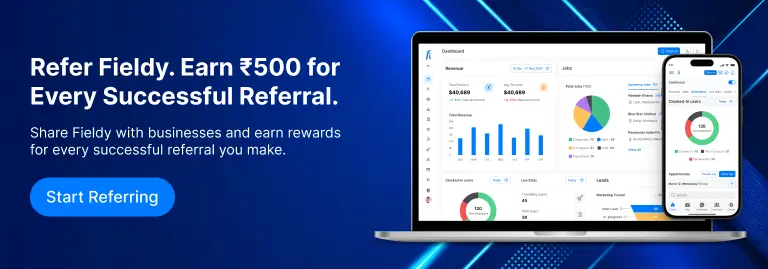
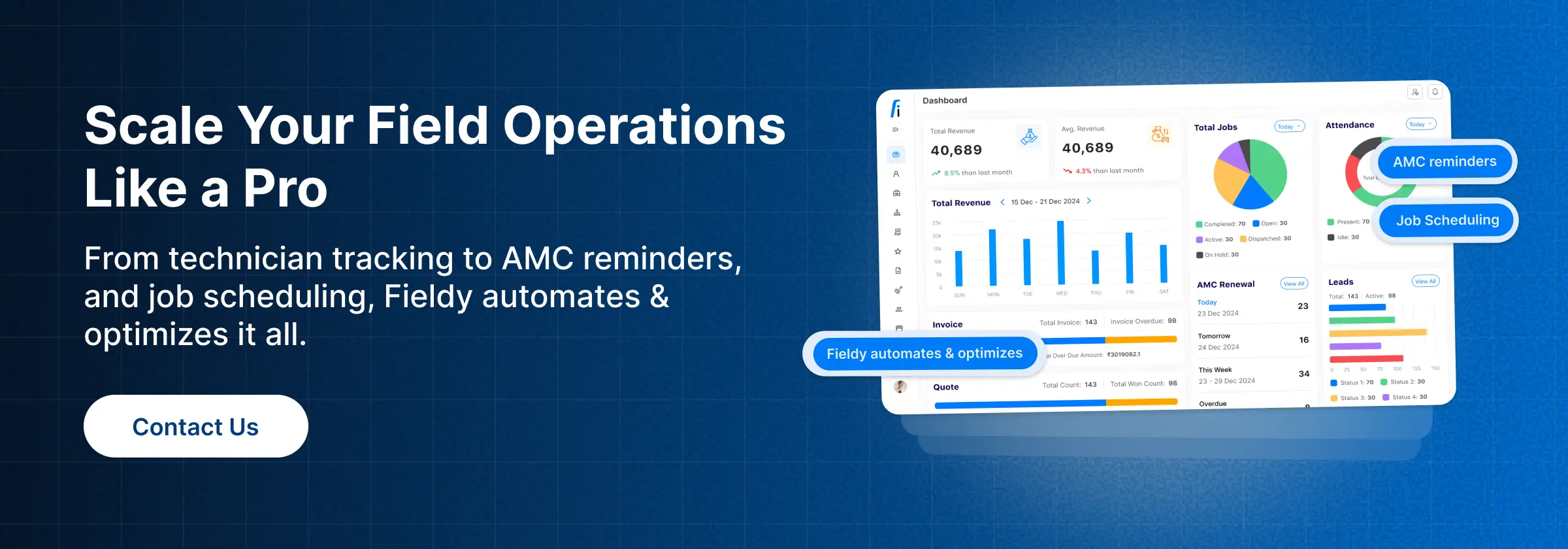
1. Fieldy – Best Overall
Here at Fieldy, we position ourselves as the top pick among all-in-one solutions for Indian businesses. It’s because, alongside billing functionalities, we’re integrating the operational aspects that almost every service company would need daily.
Classic billing software usually zooms in on the accounting operations only. Of course, bookkeeping is a major part, but as the business expands, there’s a need for extra support tools to handle client interactions, appointment scheduling, dispatching field workers, quotations, etc.
Fieldy is a great fit for this need as we consolidate different business operations within one platform.
The platform combines:
- GST billing
- CRM functionality
- Scheduling
- Dispatch management
- Technician tracking
- Inventory workflows
- Quote generation
- Mobile workforce tools
Businesses are no longer forced to use separate applications for different functions, as this results in a more complete operational environment.
Fieldy is particularly useful for:
- HVAC businesses
- Electrical contractors
- Plumbing companies
- Cleaning services
- Maintenance firms
- Multi-service operations
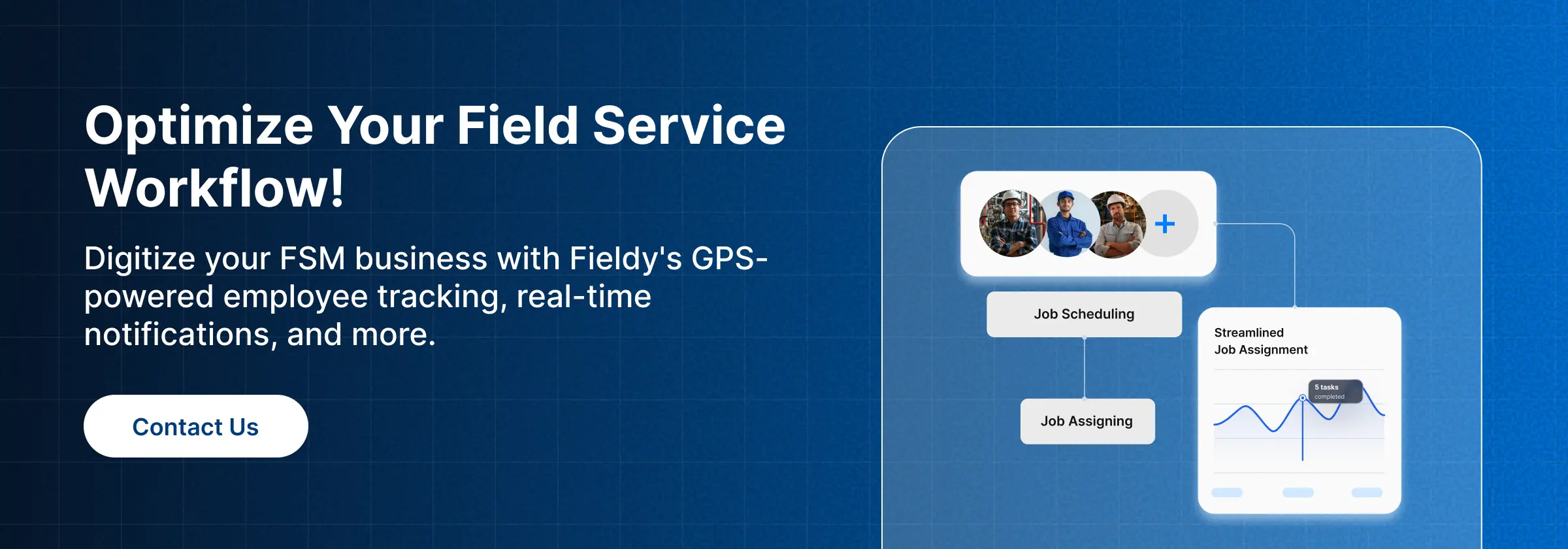
One of the biggest benefits of the platform is its seamless quote-to-payment process. Companies are able to make quotes, turn them into jobs, send out technicians, monitor work progress, and issue invoices all through a single system.
| ⚙️ Feature | 📌 Availability |
|---|---|
| 🧾 GST Billing | Yes |
| 👥 CRM | Yes |
| 📅 Scheduling | Yes |
| 📱 Mobile App | Yes |
| 📝 Quoting | Yes |
| 👨🔧 Technician Tracking | Yes |
Pros
- Complete operational ecosystem
- Strong quote automation
- Mobile workforce management
- Excellent service and business functionality
- GST-ready workflows
Cons
- Advanced features may require onboarding
- More comprehensive than freelancer-focused tools
People who are looking for the best CRM and invoicing software usually lean towards platforms that integrate customer management and operational automation.
Solo freelancers who only need to issue simple bills might be better off with mere accounting systems having less complicated user interfaces.
2. Zoho Books
One reason Zoho Books stands out? It fits well within tight budgets without skimping on useful features. Small and mid-sized companies across India have slowly leaned into using it more often. Starting usually means sending invoices – nothing too complex. Over time, though, needs shift toward handling costs, keeping tabs on stock levels, nudging clients about payments, offering customers a login space, and streamlining financial steps. That is where this tool expands its role quietly. Growing teams find it sticks around helpfully, never demanding too much upfront.
Indian companies find a real edge in Zoho Books when handling GST duties. With built-in tools, it handles invoicing that meets tax rules, works out liabilities, and prepares reports without extra effort. Instead of adding up taxes by hand on many bills, the system takes care of most steps automatically. One less thing to worry about during filings.
What stands out is how well it fits into existing setups. When companies run Zoho CRM alongside Zoho Inventory or Zoho Projects, information flows between them – no need to lean on outside tools. As a result, tasks move faster because people aren’t typing the same details twice.
Out there, on the move, small business owners find it handy to stay connected. When they are nowhere near the office, numbers from recent sales show up right on their phone. Pending bills waiting to be paid? Just a tap away. Customer details pop up fast, no filing needed. Even spending records come through clearly, anytime. A smartphone holds it all together, without fuss.
| ⚙️ Feature | 📌 Availability |
|---|---|
| 🧾 GST Billing | Yes |
| 📒 Accounting | Yes |
| 📦 Inventory | Yes |
| 📱 Mobile App | Yes |
Pros
- Affordable pricing structure
- Strong GST capabilities
- Excellent automation features
- Mobile accessibility
- Strong ecosystem integrations
Cons
- Customization can become complicated
- Advanced functionality often requires additional ecosystem tools
Many startups looking for affordable platforms also look at the cheapest invoicing software options since they are usually the systems for long-term billing.
Companies that have big field teams and tech workflows may face the need for stronger scheduling and dispatch features, as well as accounting functionality.
3. TallyPrime
It is almost impossible to talk about accounting software in India without mentioning Tally. For a very long time, businesses from different sectors have been using Tally for their accounting and financial management needs. TallyPrime not only carries on the tradition but also updates various aspects of the user experience.
A lot of accountants and business owners are already familiar with Tally, so for these users, the changeover would not be difficult. Its trustworthiness, GST support, and extensive financial reporting are some of the reasons why it remains one of the top accounting-focused billing systems in India.
TallyPrime performs especially well in:
- Financial reporting
- Tax management
- Payroll workflows
- Inventory tracking
- GST filing preparation
- Accounting operations
Those companies that are maybe doing a huge number of transactions at a time and require an in-depth level of reporting will definitely find Tally’s features, such as balance sheets, profit and loss statements, tax reports, stock reports, and accounting summaries, very useful and detailed.
At the same time, when Tally is compared to the newer software platforms that are cloud-based, it is sometimes considered more focused on accounting than on the overall workflow. Businesses today normally desire the integration of CRM systems, coordination of mobile workforce, tools for customer communication, and features for scheduling with invoicing.
| ⚙️ Feature | 📌 Availability |
|---|---|
| 🧾 GST Billing | Yes |
| 📒 Accounting | Yes |
| 📦 Inventory | Yes |
| 💼 Payroll | Yes |
Pros
- Trusted across India
- Excellent accounting capabilities
- Strong GST support
- Detailed financial reporting
Cons
- The user interface feels less modern
- Limited workflow automation compared to newer platforms
Construction businesses that are considering financial tools usually compare the best estimating software for small builders in the UK while looking for the project costing workflows.
With modern service companies that require customer workflows, they may choose cloud-first systems with more robust operational functionality.
4. Vyapar
Vyapar is gaining more and more favor among local businesses, retailers, and traders because it is simple and cheap. Most of the smaller businesses that are switching from the handwritten invoice or spreadsheet type of system are looking for a software that will not require much time for the training of the personnel.
But, Vyapar is mainly designed to be user-friendly, unlike other complex platforms, which are first and foremost meant for large enterprises. Without the need for lengthy training, users are still able to make invoices, keep inventory records, and even handle their expenses.
This simplicity makes Vyapar attractive for:
- Local retail stores
- Grocery businesses
- Traders
- Wholesalers
- Small distributors
- Independent entrepreneurs
In fact, the GST billing mechanism is quite simple, so that businesses are able to issue tax-compliant invoices and keep transaction records efficiently.
Inventory management is the feature that is most highly appreciated by most of the smaller businesses that even struggle with the issue of stock visibility. Basic inventory information, in fact, can bring huge improvements in purchasing decisions and a reduction in stock shortages.
| ⚙️ Feature | 📌 Availability |
|---|---|
| 🧾 GST Billing | Yes |
| 📦 Inventory | Yes |
| 📉 Expense Tracking | Yes |

Pros
- Easy setup process
- Budget-friendly pricing
- Good for small businesses
- Simple interface
Cons
- Limited scalability
- Fewer automation tools
The solo entrepreneurs, mainly when making the transition from their manual billing system, always want the easiest invoicing software.
Any business that is planning major growth in its operations will sooner or later consider acquiring more advanced CRM and workforce management features.
5. QuickBooks
QuickBooks continues to be a reliable tool for companies that want to automate their finances and make accounting simpler. QuickBooks is a popular choice among small businesses, consultants, contractors, and professional service firms due to its reporting features and automation.
Invoice automation is one of QuickBooks’ strengths. Features like recurring invoices, payment reminders, and automatic expense categorization help cut down on the time spent doing administrative tasks over and over again. It also equips you with good insights into your financial situation through its dashboards and reports.
Businesses can monitor:
- Revenue trends
- Cash flow
- Outstanding invoices
- Expenses
- Profitability metrics
| ⚙️ Feature | 📌 Availability |
|---|---|
| 🧾 Invoicing | Yes |
| 📊 Reporting | Yes |
| 🤖 Automation | Yes |
Pros
- Excellent automation
- Detailed reporting
- Good templates
- Strong integrations
Cons
- Higher costs with add-ons
- Limited operational workflows
Contractors sometimes use QuickBooks to compare it with the best invoicing software for contractors to see which one is better for their project-based billing workflows.
The service business, which uses technicians and has field operations, may require more effective dispatch and scheduling tools.
6. Marg ERP
Marg ERP tightly integrates with all inventory-intensive business operations and industry-specific requirements. It is known that companies selling large quantities of stock need features that go beyond mere invoicing.
Marg ERP is commonly used by:
- Pharmaceutical businesses
- Distributors
- Retail chains
- Warehouse operations
- Wholesale companies
When dealing with large numbers of products that are stored in different warehouses, inventory automation is a must.
| ⚙️ Feature | 📌 Availability |
|---|---|
| 📦 Inventory | Yes |
| 🧾 GST Billing | Yes |
| 🏢 ERP Features | Yes |
Pros
- Excellent inventory tools
- Industry-specific workflows
- Strong GST functionality
Cons
- More complex onboarding
- User experience feels dated
Companies handling inventory-heavy operations are often on the lookout for the best inventory management software in the UK when they want to do global inventory workflow comparisons.
Businesses that put customers at the center of their operations would probably like CRM-first platforms.
Comparison Table
| 💻 Software | 🎯 Best For | 🧾 GST Support | 👥 CRM | 📅 Scheduling | 🏢 Ideal Business Type |
|---|---|---|---|---|---|
| ⚡ Fieldy | Service SMEs | Excellent | Yes | Yes | Service businesses |
| 📊 Zoho Books | SMEs | Excellent | Yes | Limited | Small businesses |
| 📒 TallyPrime | Accounting | Excellent | No | No | Traditional businesses |
| 🛍️ Vyapar | Retailers | Strong | Limited | No | Local businesses |
| 📈 QuickBooks | SMEs | Good | Limited | No | Consultants |
| 🏭 Marg ERP | Inventory-heavy firms | Excellent | Limited | No | Distribution |
UK-focused contractors often compare regional systems with the best invoicing software in the UK when evaluating international operational tools.
How to Choose the Right Billing Software for Your Business
The selection of billing software is seldom a matter of just picking the platform with the most features. The perfect tool greatly depends on your type of business, how complex your operations are, industry-specific demands, the number of staff, and plans for growth. For example, a mom-and-pop store that just wants to record its POS transactions will have very different needs from an HVAC company that has technicians working in different cities.
Same here, a distributor that deals with a huge variety of products will contemplate inventory management aspects very differently from a consultant who probably issues invoices monthly. The issue is that often businesses pick a software just because it’s popular or cheap, which is the biggest mistake. Software that is cheap at first glance might cause operational constraints later on when it fails to grow with the business.
Several factors should influence your decision-making process.
1. Business Size
Small businesses generally prioritize:
- Simplicity
- Lower monthly costs
- Faster setup
- Basic invoicing functionality
Larger businesses usually require:
- Multi-user access
- Workflow automation
- Advanced reporting
- Team collaboration
- Custom permissions
One of the main reasons why tons of businesses suffer nowadays is due to the complexity of their operations. So if you select a platform that will fit your growth, you won’t have to worry about migration issues later on.
2. Industry Requirements
Different industries, whilst they have their own ways of doing things:
Contractors
Contractors often require:
- Job scheduling
- Estimates
- Technician management
- Mobile invoicing
- Project tracking
Retail Businesses
Retail companies usually prioritize:
- Inventory management
- Barcode systems
- Stock alerts
- Purchase management
Service Businesses
Service companies typically need:
- CRM integration
- Appointment management
- Technician scheduling
- Quote generation
- Dispatch workflows
SMEs
Growing SMEs often require:
- Automation
- Financial reporting
- Customer management
- Team collaboration
Field-service companies generally rely on the field service scheduling software that can help them in coordinating technicians and also billing functions.
3. Mobile Workforce Requirements
The workforce is becoming more mobile nowadays. Work teams don’t always work only in offices.
You should consider:
- Mobile applications
- Offline functionality
- Real-time updates
- Technician communication
- GPS support
Meaning that if employees go to the customers’ sites quite often, the mobile feature becomes very important
Buying Checklist
Before selecting software, ask:
✓ Does it support GST requirements?
✓ Can it integrate with existing systems?
✓ Does it support future business growth?
✓ Does it provide mobile accessibility?
✓ Can it automate repetitive tasks?
✓ Does customer support meet expectations?
✓ Is the reporting detailed enough?
Common Billing Challenges Indian Businesses Face
Billing problems hardly ever start at the invoice level. In fact, invoicing issues in most businesses stem from disconnected workflows, manual processes, inconsistent data entries, and a lack of visibility into operational activities.
As companies mature, these problems become more evident.
The most widespread problem is related to tax compliance errors. Incorrect calculation of tax, duplicate records, or missing details in an invoice can mean complications in tax filing and additional administration work.
Another significant problem is payment delays. Due to the late sending of invoices or irregular payment reminders, businesses may suffer a considerable loss of cash flow.
Additional common problems include:
- Duplicate invoice creation
- Missing transaction records
- Customer information errors
- Inventory mismatches
- Poor estimate accuracy
- Weak reporting visibility
Manual systems often lead to the creation of information silos where sales, operations, and finance teams are working with different sets of data.
Here are some indicators that a business may require upgraded billing systems:
Signs Your Current Process Is Holding Growth Back
- Repeated invoice corrections
- Late customer payments
- Spreadsheet dependence
- Missing tax records
- Difficult reporting
- Poor inventory visibility
- Customer communication gaps
Field service quoting software is a tool that is often used by operational businesses to shorten the time spent on estimation and reduce pricing mistakes.
Companies usually miscalculate the amount of time that their workers spend fixing errors that are avoidable. A tiny inefficiency that is repeated several times throughout the year can seriously increase the cost.
Future Trends in Billing & Accounting Software
Billing software has seen a marked evolution over the last ten years. Yet, the rate of transformation is speeding up A lot now. Companies that get on board with advanced solutions these days are mainly concentrating on automation-oriented, insight-driven, and integrated workflow systems.
What follows are some key trends that may determine the direction of billing software in 2026 and the years to come.
AI-Powered Billing Automation
Artificial intelligence is finding its way more and more into software designed for financial purposes.
Some of the things that AI can do are:
- Invoice generation suggestions
- Payment prediction
- Smart reminders
- Expense categorization
- Fraud detection
- Forecasting insights
Instead of retyping the same things over and over, a machine can do it most of the time without any help.
Predictive Financial Reporting
Conventional reporting simply narrates what happened before.
Nowadays, reporting forecasts more and more:
- Cash flow trends
- Seasonal revenue patterns
- Payment risks
- Customer behavior
- Inventory requirements
By using predictive analytics, companies can decide in advance what to do rather than respond to issues after they have occurred.
Mobile-First Business Management
The trend of business owners demanding full operational visibility from mobile phones and tablets is growing day by day.
Nowadays, mobile capabilities generally cover:
- Invoice generation
- Payment collection
- Customer communication
- Team tracking
- Reporting dashboards
Connected Business Ecosystems
Software categories are merging more and more.
Nowadays, systems often combine:
- Billing
- CRM
- Inventory
- Scheduling
- Dispatching
- Reporting
- Customer portals
In fact, instead of running multiple independent applications, companies are more and more inclining towards unified ecosystems.h
Service businesses that are increasing the automation of their operation are turning to field service booking software to help with customer scheduling and job management.
Billing software will advance to include more automated features, greater transparency, and seamless integration of business processes.
Conclusion
Choosing the right billing software greatly depends on the needs of a business, the level of complexity of the operations, and the ambitions for future growth. Small businesses that only want to issue invoices will probably give preference to inexpensive and easy-to-use software, while big enterprises will probably opt for comprehensive solutions that integrate accounting, customer management, inventory, and workflow automation.
Throughout this guide, a handful of options have been highlighted as being most of all good:
- Fieldy → Best overall for service businesses and operational workflows
- Zoho Books → Strong SME accounting and GST support
- TallyPrime → Excellent traditional accounting platform
- Vyapar → Ideal for local businesses and retailers
- QuickBooks → Strong reporting and automation
- Marg ERP → Best for inventory-heavy operations
More and more companies are realizing that billing systems should not be considered just as stand-alone accounting tools. Most of the time, modern systems affect the overall customer experience, how fast payments are made, business performance, and the company’s ability to grow in the future.
Fieldy is a great choice for service-based businesses because it merges:
- Billing
- CRM
- Scheduling
- Dispatching
- Workforce management
- Quoting
- Operational workflows
This generates a network that goes far beyond merely invoicing.
When international contractors look for global platforms, they usually include Field Service Management solutions in the UK as one of the operations for comparison.
Getting software by relying heavily on price or popularity is not the best way. On the contrary, companies should be on the lookout for those that not only meet the existing needs but are also capable of handling the increase in demand in the future.
The goal of a billing software should be to make the work lighter, giving a clearer picture of the financial side, deepening the rapport with customers, and aiding the business as they grow in proficiency and efficiency.