

 Blog Details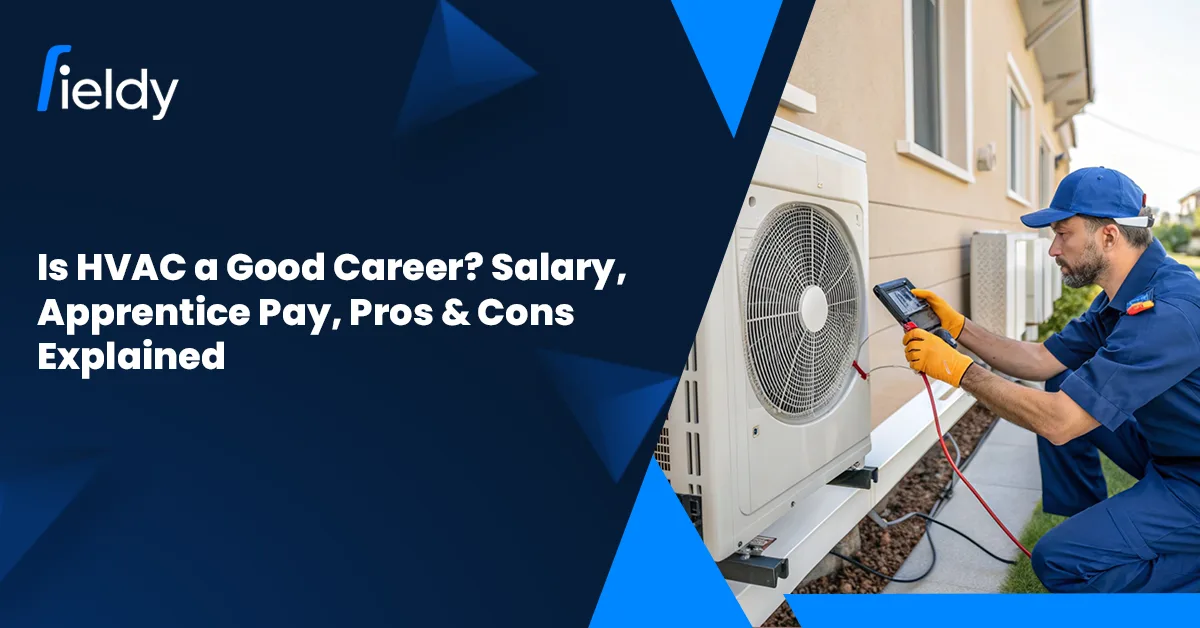

❓ Introduction
Choosing the right career path is one of the decisions that can significantly impact a person’s life. Among those who are inclined towards skilled trades, HVAC is often a top pick on career lists. So, it is a common question from both students and people looking to change careers: “Is HVAC a good career in 2026?”
The HVAC industry—an abbreviation for heating, ventilation, and air conditioning—is a significant contributor to the modern way of life. Every dwelling, workplace, hospital, and store relies on the climate control systems to ensure comfort and good air quality. With the continuing expansion of the construction industry and the increasing focus on energy efficiency, the need for qualified technicians remains high.
For someone considering an HVAC career, this job offers a great mix: hands-on work, constant demand, and the opportunity to climb the ladder or even start one’s own business. Research into the job market shows that the employment of HVAC technicians is likely to increase at a steady pace during the next ten years because of new infrastructure projects and old HVAC systems that need to be replaced.
It is always good to know what you are getting into before you make a decision. Therefore, it is best if you take some time to learn more about the job duties, salaries, and prospects before you even consider the HVAC industry as your profession.
🔧 Understanding the HVAC Profession
If you are wondering “Is HVAC a good career?”, it would be good to understand the kind of work a technician does daily. HVAC technicians are the ones who do the installation, maintenance, and repair of the heating and cooling systems in homes, offices, and factories. Initially, many beginners ask, what does the term HVAC mean?
If you are wondering “what is HVAC?”, then HVAC is an abbreviation that stands for heating, ventilation, and air conditioning, which are the indoor atmosphere controlling systems. These systems consist of air conditioners, furnaces, ventilation ducts, and refrigerators. Understanding mechanical systems, electrical components, and airflow dynamics are some of the areas technicians need to be skilled in. Besides, they need to be capable of problem-solving and giving expert advice on suitable solutions to homeowners and businesses.
The HVAC field also incorporates up-to-date technology for service operation management. Several companies continually depend on digital tools like HVAC field service management software to efficiently schedule technicians, monitor service calls, and handle customer information.
Those software solutions are usually pieces of overall FSM software that include scheduling, dispatching, invoicing, and technician tracking, all integrated into one platform.
💰 HVAC Salary in 2026
One of the biggest deciding factors in whether or not HVAC is a worthwhile career will always be income potential.
The average salary of a HVAC technician depends on variables such as one’s experience, location, and area of specialization. Freshly trained workers usually get between $40,000 and $50,000 a year, while those with a lot of exposure can easily make $70,000 or more per annum.
Another similar occupation in the sector is refrigeration technician work. The refrigeration technician salary is usually higher as these specialists are responsible for the operation of very advanced cooling systems that are found in supermarkets, industrial plants, and food storage facilities.
One more element affecting the AC service technician’s salary is the skill level and the number of certifications. Those who perform work primarily on commercial HVAC systems or installations that are energy-efficient are among the highest earners.
🧑🔧 HVAC Apprentice Pay
Many technicians step into their careers as apprentices. Apprentices learn the trade while working under seasoned professionals.
Generally, HVAC apprentice pay is lower than what a full-time HVAC technician makes. However, the pay increases as apprentices get more knowledgeable and experienced. In most places, apprentices make from $15 and $25 per hour, depending on their level of training and the employer.
Apprenticeships are wonderfully beneficial as they not only give you real experience but also enable you to continue earning money while you are learning.
Before embarking on an apprenticeship, many students look up “how long is HVAC school?” to get an idea about the amount of education needed prior to starting work.
⏳ How Long Does It Take to Become an HVAC Technician?
The time it takes to enter the HVAC field really depends on the type of education one chooses.
Several students finish vocational school and only then start working. Certain educational courses may even take 6 months, while others can extend up to two years.
Those who are getting certified most likely will find out “how long does it take to get HVAC certified?”, as there are different licenses required to work with refrigerants or carry out certain repairs.
When you look at it from the perspective of many traditional four-year college degrees, HVAC education is a way for people to start making money quite soon.
📈 Career Growth in the HVAC Industry
Among the reasons why a lot of people see HVAC as a career choice is the long-term growth potential of this field. Technicians have the chance to specialize in refrigeration, energy efficiency systems, or commercial HVAC installations.
As they become more skilled, technicians may step into supervisory roles or even become management cadres.
The profession of an HVAC dispatcher is another career option within HVAC companies. Many people ask, “What is an HVAC dispatcher?” and the answer is that it is a person who schedules technicians, assigns their service calls, and plans their routes.
By making sure that technicians are directed to appropriate jobs within the company’s service area, dispatchers are also helping businesses to run efficiently.
🏢 Starting Your Own HVAC Business
Many seasoned HVAC techs also become business owners. It is indeed a lucrative idea to start an HVAC service business in areas where weather extremes make heating and cooling systems necessary.
Owners/coordinators oversee technicians, customer scheduling, the buying of equipment, and service delivery.
Besides HVAC services, startup entrepreneurs in the service sector sometimes look into other service-type businesses as well. For instance, everyone gets information on how to start a cleaning agency so that they can better understand service-based business structures before opening their own HVAC company.
Some startups go as far as digital service platforms or a TaskRabbit alternative to reach out to local technicians and customers.
👍 Pros of an HVAC Career
When weighing the pros of HVAC career, several factors support the attractiveness of the profession.
One key advantage is that it’s stable work. Since HVAC systems need regular check-ups and fixing, the technicians’ services will always be in demand.
What is more, earning capability really is one of the main reasons why people who aren’t familiar with the field still keep asking “does HVAC make good money?” Of course, the answer is typically yes, and the best part is that those who have expertise in highly technical systems or have established their own companies stand to benefit the most.
The benefits of being an HVAC technician extend far beyond the main ones, such as flexible career transition, chances of starting one’s own venture, and exposure to different sectors like residential buildings, commercial properties, and factories.
This, in turn, is also a great way for one to upskill that comes in handy when working in related trades.
⚖️ HVAC Pros and Cons
Like every other profession, the HVAC industry comes with its own advantages and disadvantages. Knowing the HVAC pros and cons will help newcomers decide whether the profession fits their interests and way of life.
| ⚙️ Feature | 🧰 Fieldy (Most Preferred) | 📦 Zoho Inventory | 🏭 Cin7 | 📋 inFlow | 🧩 Odoo |
|---|---|---|---|---|---|
| 📦 Inventory Tracking | ✅ Yes | ✅ Yes | ✅ Yes | ✅ Yes | ✅ Yes |
| 👨🔧 Field Service Integration | ✅ Yes | ❌ No | ⚠️ Limited | ❌ No | ⚠️ Limited |
| 🧾 Billing & Invoicing | ✅ Yes | ✅ Yes | ✅ Yes | ⚠️ Limited | ✅ Yes |
| 📅 Technician Scheduling | ✅ Yes | ❌ No | ❌ No | ❌ No | ⚠️ Limited |
| 🏭 Warehouse Management | 🚀 Advanced | ⚠️ Moderate | ⚠️ Moderate | ⚠️ Moderate | ⚠️ Moderate |
| 📊 Reporting & Analytics | 🚀 Advanced | ⚠️ Moderate | ⚠️ Moderate | ⚠️ Moderate | ⚠️ Moderate |
Besides, some wonder, “Is HVAC physically demanding?” Well, in most cases, it is so because technicians usually carry heavy machines, get onto ladders, and work in small places like attics or crawl spaces.
On the other hand, some of the workers appreciate the physical side of their job, as they are more active than when doing office work.
🛠️ Skills HVAC Technicians Must Learn
HVAC technicians with the right skillset and a broad perspective on the job are the ones who usually succeed. And the skill set required is quite diverse.
Apart from the electrical troubleshooting and mechanical repair skills, technicians must be adept at airflow analysis and refrigerant handling.
Regularly guiding customers on the subject “how often to change HVAC filter” for a good system efficiency and an indoor quality of air is probably the primary way an HVAC technician will be communicating with homeowners.
Besides the filter change, another common maintenance procedure will include “how to clean HVAC coils,” as this will help in restoring the cooling performance.
What is more, technicians will educate the system users on the maintenance of the system, the energy efficiency, and the possibilities for the replacement of the equipment.
🗣️ Customer Education and Equipment Sales
Another part of HVAC work can be talking to customers about upgrading their systems. For instance, it’s a pretty common situation when homeowners want to know how to buy a new HVAC system after their old one breaks down or stops doing the job efficiently.
Besides, a lot of customers ask, “Can you finance a new HVAC system?” because heating and cooling equipment isn’t cheap and can run into a few thousand dollars.
While on the job, technicians often end up describing the pros and cons of different systems, how to finance them, and when the installation could be done.
🔄 Comparing HVAC With Other Skilled Trades
HVAC is only one of the many career choices in the skilled trades sector. People who are thinking about HVAC sometimes compare it with other technical jobs.
Some look into electrical work and check out “how to get electrician license” before deciding which field to pursue.
Others consider plumbing as a career and look for certifying plumber programs to see which is the best way to break into the trades.
There are other trades, like landscaping, which may also be linked with HVAC work in certain projects. When contractors are installing outdoor units, they may be in contact with teams that handle landscaping supplies during property construction or renovation.
In cold regions, HVAC contractors may sometimes be involved with service companies that prepare snow removal cost estimates as part of their efforts to keep outdoor equipment accessible during the winter months.
💵 Income Comparisons With Other Service Jobs
People exploring HVAC careers sometimes make comparisons of salaries among various service industries.
On the other hand, some job hunters check “how much do window cleaners make” to get an idea of the income levels of other service-oriented professions.
Many service sector positions can offer consistent earnings; however, HVAC is typically associated with a greater capacity to earn, as technicians have specialized technical skills.
The need for HVAC skills usually rises during times of extreme weather when the heating or air conditioning systems break down.
📊 HVAC Job Market Outlook
The career prospects for HVAC technicians are bright worldwide. As buildings are being designed to be more energy-efficient and HVAC systems are becoming more sophisticated, the demand for top-notch technicians keeps on increasing.
Not only are a lot of old HVAC systems getting phased out, but advanced HVAC technologies also necessitate highly specialized skills for installing and servicing them.
This blend of modern technology and the need to upgrade old infrastructures guarantees that there will be a steady demand for experienced HVAC professionals in the future.
✅ Final Thoughts
So, is HVAC a good career choice in 2026? For many, the answer is yes. The HVAC field provides strong job security, attractive earnings, and pathways for career advancement. From apprenticeships to starting your own business, there are various career options within the industry. Although the work can be physically demanding and requires technical training, the benefits often surpass the challenges. Technicians develop valuable skills, enjoy stable employment, and have the chance to build successful careers in a growing sector. For those who like hands-on work, problem-solving, and helping customers maintain comfortable indoor spaces, HVAC remains one of the most promising skilled trades today.