

 Blog Details

📘 Introduction
Billing and invoicing software in 2026 has evolved beyond being mere back-office utilities; it has become a primary operational system that directly affects revenue speed and accuracy, as well as customer trust. Those businesses that still rely on separate tools, manual invoice creation, or billing only after project completion are consistently slower to receive payments and more susceptible to disputes.
The top billing and invoicing software nowadays operate as a financial command center. Such software integrates estimates, time recording, materials, field operations, approvals, and payments into one single, traceable workflow. A correct implementation of such a system results in less work for the administration, faster billing cycles, and guarantees that every billable item is accounted for.
This article provides a detailed and practical review of billing and invoicing platforms in 2026; their functionalities, differences, and which types of businesses stand to gain the most from each approach.
🚨 What Billing & Invoicing Software Must Handle in 2026 (Not Optional Anymore)
Today , it is less common for companies to fail in their billing merely because they do not have invoicing tools; rather, it happens when their tools are far detached from the real situation.
1️⃣ 🔁 Workflow Automation (Not Just Invoice Creation)
Automation in 2026 will imply:
- Invoices are automatically created based on the completed work
- Milestone reaching to trigger billing
- Chains of approval for high-value invoices
- Automated follow-ups for the balances not paid
This is why many businesses are going for the best automated invoice processing software nowadays, which is event-driven billing rather than manual.
2️⃣ 🔗 Deep Integration With Operations
Accurate billing is very much dependent on the data coming from the upstream processes:
- Quotes indicate the scope
- Time tracking shows the labor cost
- Inventory shows material usage
- Scheduling shows the completion status
The best software for billing and invoicing leverages data from these systems, which really means less reliance on manual data entry after the fact.
3️⃣ ⏱️ Time Tracking That Feeds Billing
Time tracking isn’t about watching employees; it’s about making sure that the billing is correct. The consequences of separating time logs from invoices are:
- Billable hours are lost
- Invoices are disputed
- Money is lost without anyone noticing
New systems have either built-in time tracking or can instantly synchronize with external tools so that the labor can be used for billing purposes without any delay.
4️⃣ 📱 Mobile & Field Accessibility
In the case of service and contracting businesses, billing should not be delayed simply because the person has to go back to the office. Field-capable platforms make it possible for:
- Time capture on the spot
- Approval of a change order
- Generation of an invoice right away
This is one of the main advantages of today’s field service billing software.
5️⃣ 💳 Embedded Payment Processing
Invoices that accept payments directly are closed more quickly. Platforms that embed ACH, card, or wallet payments drastically reduce friction and shorten payment cycles.
🏆 Top Billing & Invoicing Software for 2026 (Deep Comparison)
🥇 1) Fieldy — Best & Most Preferred
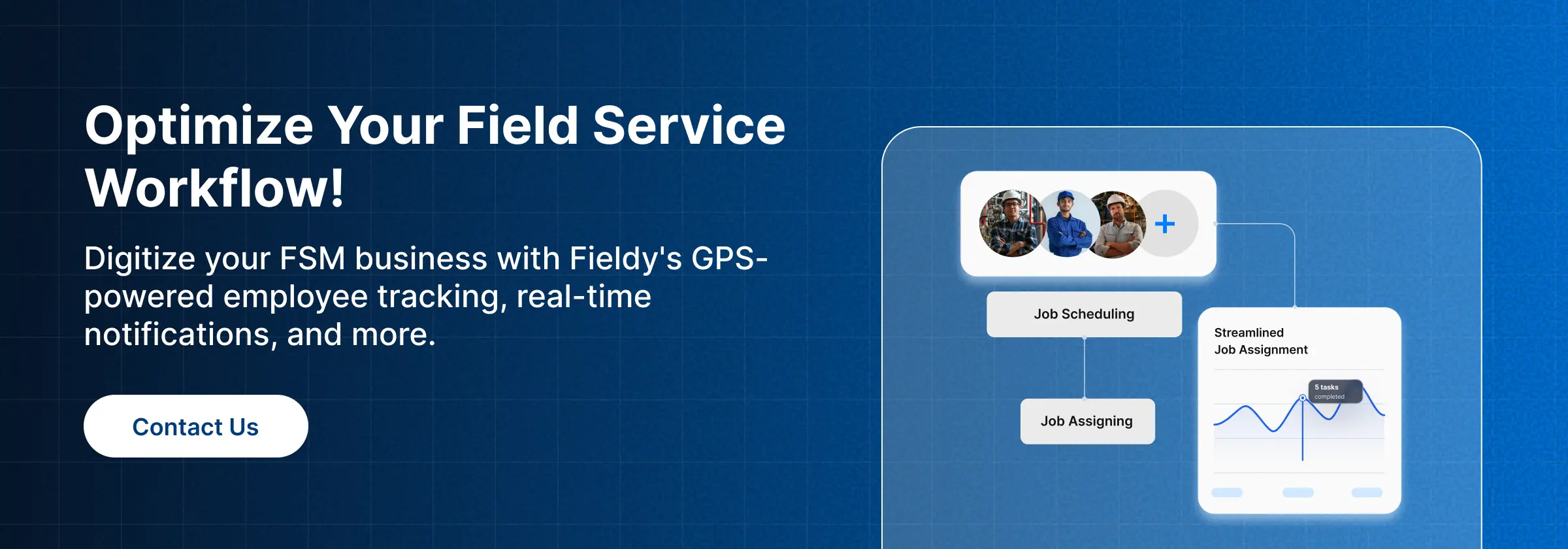
Fieldy’s whole concept is that billing should just naturally be the finish of the work done, and not some separate accounting thing. So it brings together scheduling, quoting, time tracking, job costing, inventory, and invoicing into one uninterrupted operational flow.
Fieldy’s field service invoicing software really differentiates itself because billing is field-driven. Technicians record labor, materials, and changes. The invoice is generated automatically from that data.
In this way, it is a very good fit for contractor or service-based teams who bill on real-world execution and thus are in the market for the best invoicing software for contractors.
Pros & Cons
| ✅ Pros | ⚠️ Cons |
|---|---|
| 🔄 Direct field-to-invoice workflow | 🛠️ Initial configuration takes planning |
| ⏱️ Real-time labor & material capture | 🏢 Overkill for non-service businesses |
| 🧾 Integrated quoting and billing | 📋 Requires operational discipline |
| 📱 Strong mobile experience | — |
Best for: Field-heavy service companies, trades, and contractors
💼 2) Tipalti
Tipalti is not a customer billing software but a platform for operating accounts payable automation. Its core is bringing in invoices, data validation, compliance with tax regulations, and payment execution.
When the invoice volume is large and there is a real risk of compliance, it is perfect, but it does not have operational or quoting integrations.
Pros & Cons
| ✅ Pros | ⚠️ Cons |
|---|---|
| 🤖 Advanced invoice intake automation | ❌ No quoting or job linkage |
| 🛡️ Strong compliance controls | 🚫 Not field-friendly |
| 🌍 Global payment execution | 💸 Expensive for SMBs |
| 🧾 Audit-ready reporting | — |
Best for: Finance teams handling complex payables
Rather than Tipalti, account payables provided by Tipalti competitors are less complex. Those in need of tighter integration with the accounting or ERP systems may find these alternatives to be a better match. These alternatives quite often focus on highly efficient invoice processing, more flexible approval workflows, or lower implementation complexity, thereby making them suitable for those teams that do not require Tipalti’s enterprise-level compliance and global payment capabilities.
📘 3) QuickBooks Online
QuickBooks still holds the lead as the most popular tool for small businesses, mainly due to the company’s familiarity with it and the depth of the accounting features. It is very capable in handling invoicing but relies on third-party apps for workflows of higher complexity.
It is a good practice for many teams to set it up as the Primary platform in which other best invoicing software for small business solutions are plugged in.
Pros & Cons
| ✅ Pros | ⚠️ Cons |
|---|---|
| 🚀 Easy to adopt | 🧩 Limited automation depth |
| 📊 Strong accounting backbone | 🧰 Field workflows require add-ons |
| 🔗 Large integration ecosystem | ⏱️ Time tracking is not native |
| 💰 Cost-effective | — |
Best for: Small businesses with straightforward billing
Aside from the Intuit ecosystem, many QuickBooks alternatives focus more on the core area of invoicing, bring newer UI/UX, or cater to industry-specific workflows/services. These substitutes not only lessen the dependence on third-party integrations but also provide built-in automation, clearer reporting, and scalability, which are features aligning well with service-based and growing small businesses.
🛠️ 4) Jobber
Jobber revolves around jobs instead of projects. An invoice is generated once the job is done. Such a simple concept makes it very user-friendly, but at the same time, there is a lack of flexibility.
It is a good match where the scope is predetermined, and billing is straightforward.
Pros & Cons
| ✅ Pros | ⚠️ Cons |
|---|---|
| ✨ Extremely intuitive | 🧾 Weak for complex billing |
| 🔄 Automatic post-job invoicing | 📊 Limited reporting |
| 👤 Client-friendly portal | 🧩 Minimal customization |
| 📅 Scheduling included | — |
Best for: Small service teams with repeatable jobs
For those who require more flexibility, a handful of Jobber alternatives offer functionalities such as variable scope support, milestone billing, and longer-term project workflows. These competitors usually come with features like scheduling, invoicing, and customer management, with additional strong support for change orders handling in contractors, phased work, or mixed service and project-based operations.
⚙️ 5) Zoho Invoice & Zoho Books
Zoho presents a modular billing stack where invoicing is covered by Zoho Invoice, and Zoho Books brings in accounting, automation, and reporting functionalities.
Such a setup is excellent for startups looking for flexibility without a hefty price tag.
Pros & Cons
| ✅ Pros | ⚠️ Cons |
|---|---|
| 💰 Affordable pricing | 🧩 Requires the Zoho ecosystem |
| 🔔 Automated reminders | 🛠️ Limited field workflows |
| 📈 Scales gradually | 📊 Less robust analytics |
| 🌍 Multi-currency support | — |
Best for: Freelancers and early-stage teams
However, if the teams are assessing other choices, Zoho Invoice alternatives may be considered if there is a need for more in-depth industry-specific features or built-in field operations. These alternatives are generally more advanced in workflow customization, project-based billing, or the integrations are localized to the nature of the service and contracting businesses, which would suit them better as the operational complexity increases.
🏢 6) ServiceTitan
ServiceTitan is an operational powerhouse. The billing component is tightly integrated with scheduling, dispatching, customer history, and analytics. Invoices are created automatically from work orders, time logs, and materials resulting from completed jobs, which makes it one of the best field service management software platforms available.
Pros & Cons
| ✅ Pros | ⚠️ Cons |
|---|---|
| 🏢 Enterprise-grade automation | 💸 High cost |
| 📊 Advanced analytics | ⏳ Long onboarding |
| 🛰️ Deep field integration | 🚫 Not SMB-friendly |
| 📈 Scales extremely well | — |
Best for: Large, multi-crew service enterprises
On the other hand, for those enterprises that do not require such a level of complexity, there are ServiceTitan alternatives that can provide scheduling, invoicing, and customer management functions very well without the high implementation cost and overhead associated with them. These alternatives tend to be attractive to small and medium-sized service companies that want quicker installation, simpler workflows, and more flexible pricing, yet at the same time, they require support for core field service operations.
🧾 Why Quoting Is the Foundation of Accurate Billing
Billing errors rarely come from invoicing; they usually originate from quoting.
When quotes are not connected to billing:
- Changes in scope are overlooked
- Some items in the invoice are omitted
- Clients challenge the charges
- Revenue goes missing unnoticed
That’s the main reason why advanced software for quoting and invoices offers tight integration for billing.
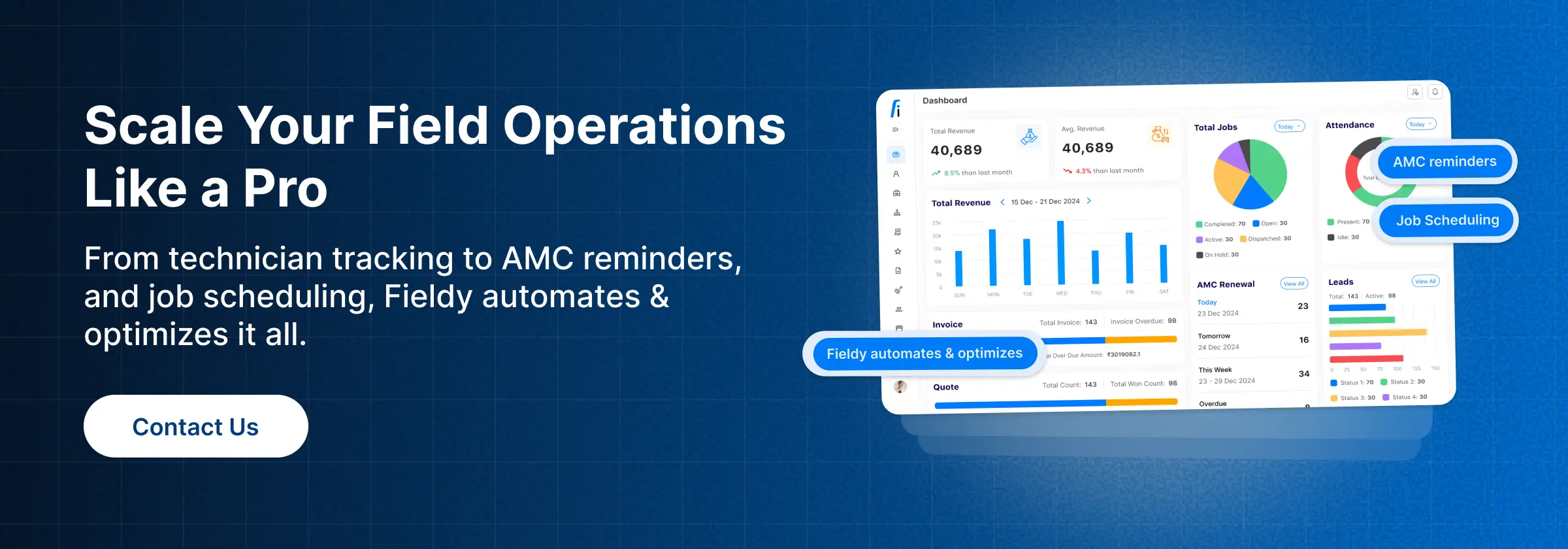
Disconnecting the quote causes more than just errors: it destroys the trust. Invoices that don’t clearly relate to the initial quote inevitably lead clients to verify, question, and even refuse to pay certain charges that they don’t recognize. This makes collections slow, strains relationships, and turns teams from value creators into defenders of paperwork. By implementing an FSM software that synchronizes quotes, invoices, and billing, companies can generate a clear and smooth path from contract to payment, thus keeping everybody in agreement, confident, and receiving the payments on time.
📐 Quoting Tools That Streamline Billing
Quoting has evolved beyond just a simple figure attached to a proposal; it is now essentially the blueprint of the company’s revenue. A contemporary quote states in detail what will be charged, how it will be organized, and when revenue can be accounted for. If a quoting software is seamlessly integrated with the billing system, the quote becomes a “living contract” instead of merely a “static document”. Every approval, modification, and stipulation is carried forward, thus minimizing the potential for misinterpretation and making sure that the billing is in accordance with the original agreement.
Quoting Software for Small Business
If there is a tool that helps small businesses to effortlessly complete their sales-to-cash cycle, then it would be a quoting software for small businesses. The fact that the transaction should be completed quickly is understandable, but the accuracy of the document is equally important. Simple features, standardized service catalogs, and one-click conversion from quote to invoice eliminate the need for manual re-entry and the guessing game. Not only does this save administrative time, but it also guarantees that customers are charged the exact amount that they agreed upon — no surprises, no follow-up emails, and quicker getting the money.
Quoting Software for Contractors
Contractors typically operate in situations where change is constant and seldom predictable. The number of labor hours varies, materials prices fluctuate, and scope changes are made during a project. So, a quoting software for contractors, which is designed to handle these changes by capturing them as formal change orders and then automatically carrying them into billing. This way, there is a clear audit trail from approval to invoice, which not only protects the margins but also reduces disputes over what was included versus what was added later.
Quoting Software for Builders
Construction companies mostly use milestone-based contracts, whereby the cash inflow depends on the accomplishment of certain clearly defined phases. Quoting software for builders will organize the estimate so that deposits, phase completions, and retainage are clearly indicated from the very beginning. Once milestones are achieved, invoices go out automatically based on the terms of the contract. In this way, billing is kept up with the progress of the work, clients are kept informed, and there is a steady flow of cash that is very much expected during the entire construction period.
Quoting Software for Construction
Construction projects bring about the greatest complexity in terms of billing due to the use of progress billing, retainage, different compliance requirements, and frequent issuance of change directives. Quoting software for construction links the approved scope to billing engines, ensuring that the invoiced work is only the work that is authorized and properly timed. This synchronization is very important for keeping cash flow steady, successfully passing audits, and not losing revenue in long, multi-phase projects.
When quoting is directly feeding billing, invoices no longer become documents that are made in response to an event, but rather they turn into documents that can be accurately expected, fairly justified, and completely open—thus, enhancing the trust of the client while at the same time securing the revenue at every step of the project lifecycle.
⏳ Time Tracking: The Difference Between Estimated and Earned Revenue
Time tracking connects work done and money received; if this connection is not strong, money will leak. Contemporary field service management software sees time entries as financial data rather than just operational logs. Real-time capture of every working hour is directly linked to billable labor rules so that nothing is overlooked or wrongly classified.
Teams eliminate the possibility of delay and manual corrections, which lead to underbilling or customer complaints, by instant transfer of field time. Work minutes, pay rates, invoicing rates, and other related data are automatically determined based on preset criteria, thus eliminating human error. Consequently, invoices correspond to the work done, can be easily justified, and are less likely to be challenged, thus the flow of money and client trust are both kept safe.
🚐 Field Billing Requires Purpose-Built Tools
Generic invoicing tools fail in the field. Modern field service billing software supports:
- On-site approvals
- Real-time billing triggers
- Inventory-linked invoicing
- Mobile payment capture
This eliminates delays and accelerates cash flow.
🧠 Final Verdict: Choosing the Right Billing Platform in 2026
- Field-first businesses: Fieldy or ServiceTitan
- Small businesses: QuickBooks or Zoho
- Finance-heavy operations: Tipalti
- Simple job billing: Jobber
🏁 Final Thoughts
By 2026, billing and invoicing have stopped being a mere accounting task and will have turned into a revenue lifecycle. Enterprises that integrate quoting, time tracking, field execution, and invoicing into one seamless workflow experience payments at record speed, have almost zero disputes, and enjoy better margins.
Picking the right platform today is not only a time-saving decision; it can make a huge difference in the speed and accuracy of your payments as well.