

 Blog Details

Introduction
In 2026, businesses face constant pressure to improve efficiency, cut costs, and make accurate decisions based on the latest information. Many companies still manage key processes through spreadsheets, email threads, separate accounting software, inventory tools, and CRM systems that aren’t properly synced with one another. While getting bigger, such a piecemeal method makes it even harder for a company to be managed well. It was precisely for such a scenario that enterprise resource planning (ERP) emerged.
It was precisely for such a scenario that ERP systems became popular. ERP integrates multiple areas of a company through one platform, allowing financial reports, customer data, procurement orders, inventory, staff, manufacturing activities, and business reports to be generated in real time and in harmony with each other. Instead of having separate software for every unit, business organizations can have one environment that is central in managing operations. The top ERP system in 2026 will more than likely not be identified by having the biggest number of features. An ideal ERP solution that works well must align with the current size, the sector, internal processes, financial capacity, and plans of the firm. Apart from the modules available in the system, other features like ease of use, automation, connectivity, analysis options, safety, how well it will scale, and technical demands for setting up should be taken as equally significant.
As well, this article evaluates 10 major ERP software and ERP-like systems that are suitable to meet the requirements of various businesses based on the aspects discussed earlier, besides discussing which ones should be the preference for small businesses, medium/large businesses, etc. Fieldy, for instance, is a great system to look into if you are a type of company that calls for managing customer relationships, service appointments, sales orders, and other operations together with inventory management and operations in remote areas.
What Is ERP Software and How Does It Work?
What Does ERP Stand For?
ERP is short for Enterprise Resource Planning. ERP software integrates the core operational and administrative departments of a company under the same system and with one common database to allow easy sharing of information. For a simple illustration: when a sales representative places an order, he is able to automatically inform other departments about the purchase details without having to enter the same info all over.
In other words, it is not just about a single application that a company has at its disposal, and a couple of people work with, but a set of applications connected with and running off each other. That means you have one platform with multiple functions, departments, divisions, and teams that have different responsibilities but use the same system. In addition, ERP systems are popular among companies that manufacture, sell wholesale products online or offline, have stores, offer specialized or consulting professional services, construction businesses, and companies operating in the field providing services. Although the modules themselves differ, the fundamental purpose of the vendor’s product stays the same: to give a company an accurate and complete picture of its operations.
What Does an ERP System Manage?
Depending on the platform, ERP software can manage:
- Finance and accounting
- Sales and CRM
- Inventory
- Purchasing
- Vendor management
- Employee information
- Operations
- Projects
- Customer service
- Assets and equipment
- Manufacturing
- Reporting and analytics
A company doesn’t always have to run on all modules. An example: a small distributor might only require accounting, stock purchases, and customer relationship management modules, but a manufacturer will need modules for production planning, bill of materials, quality management, warehouse management, and job costing.
How Does ERP Software Improve Business Management?
One significant benefit of ERP is how departments can be connected. Using the same base data across all departments, decision-makers can monitor how selling one item will impact inventory or how buying on credit will affect the amount of cash in hand. Similarly, how operational efficiency will affect profit is another area for managers to monitor and control.
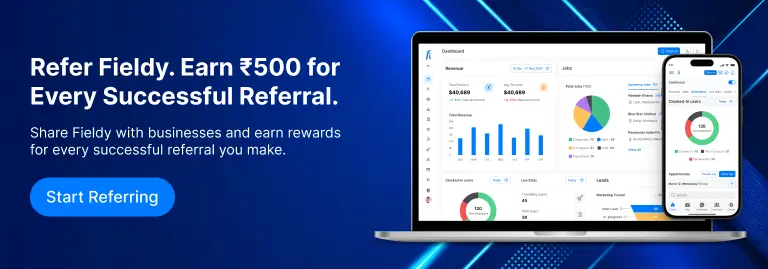
For field service software, this connected approach can also be extended into work scheduling, job dispatch, work order system, mobile job management, and customer service areas. This helps a lot when the ERP system running in the office has to get synchronized with the work being done by employees in the field at customer sites.
What Makes a Good ERP Software?
If deciding upon ERP software is going to solve your daily challenges, then you cannot rely solely on counting the number of modules advertised. Real problem-solving will come from having a system that addresses the actual needs of the business without making everything complex.
Core ERP Features
Usually, a competent ERP platform consists of these features:
- Accounting and financial management
- CRM and sales management
- Inventory management
- Purchasing and vendor management
- Human resources
- Project management
- Reporting and analytics
- Order management
- Asset management
- Workflow automation
The key issue is whether these modules really cooperate. Having accounting, CRM, and inventory modules separate from one another might be convenient, but if data exchange among them is automated, that is where a major boost to the overall value comes.
Automation and Workflow Management
The work of automation is to take away tasks that would otherwise have to be done manually and repetitive work done by the administration from the daily operations.
Businesses considering whether to automate certain tasks might want to check out the possibility of doing it through configuration without any heavy-duty custom development. For instance, a versatile approval workflow could be set up where purchase orders over a specific value just go directly to a manager for approval.
Integration Capabilities
ERP systems are almost always linked with external tools and systems. Companies need to make connections between the ERP and payment processors, accounting platforms, e-commerce stores, marketing platforms and sales pipelines, warehouse systems, communication tools and specific industry platforms, etc.
A high level of integration is essential, as a system that isn’t able to share data reliably will end up causing more data silos that the company tried to get rid of in the first place.
Scalability and Customization
The solution that was suitable for a 10-person business might not work when the company reaches 100 or 500 employees. You should assess user permissions, multiple locations, reporting structures, workflow customization, automation, and data capacity before finalizing a platform.
Security and Data Management
These systems house information critical for an organization’s finances and operations, which often includes very sensitive data. Make sure that role-based permissions are enabled, audit trails are maintained, the system has a secure user authentication system, regular backups are in place, there is data protection, and administrative controls are appropriate.
10 Best ERP Software in 2026
Some of the platforms listed here are traditional ERP systems for enterprises, while others are more flexible or niche-oriented platforms that act only within certain business models as an ERP base.
1. Fieldy — Best Overall
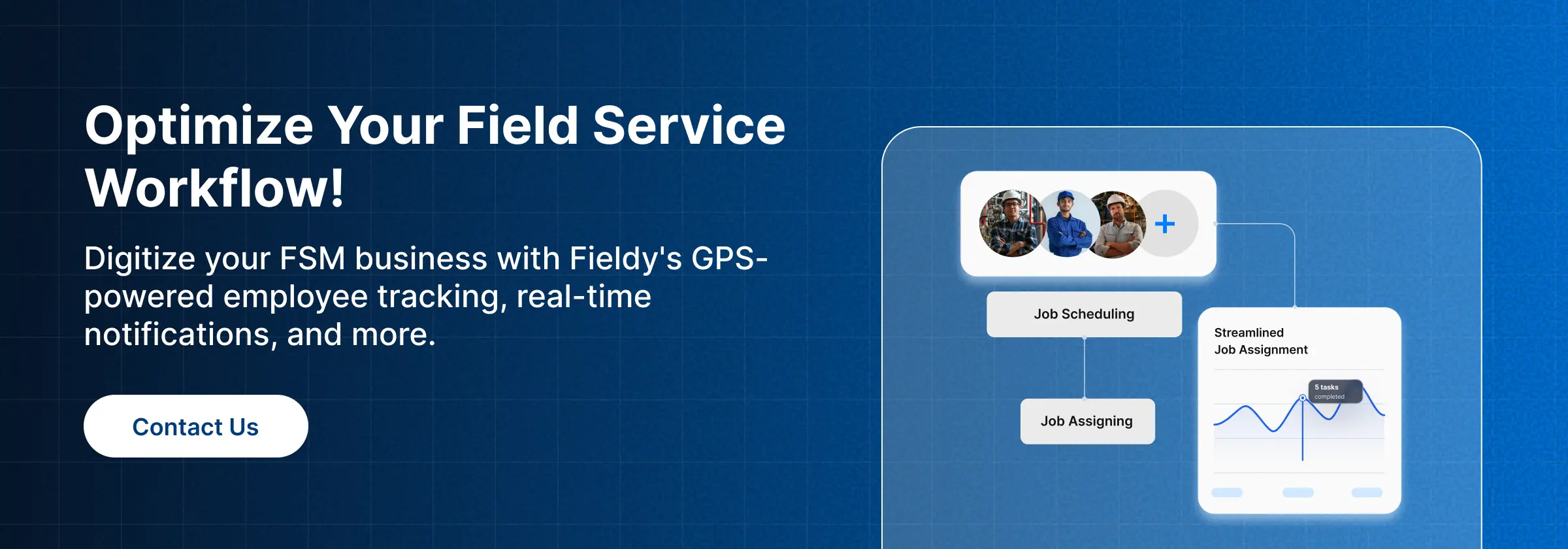
Fieldy adopts a service-operations-first approach and, rather than trying to compete directly with large enterprise ERP suites, it has its own unique positioning. It’s ideal for businesses where managing customers, jobs, employees, equipment scheduling, and invoicing are the main activities that take place on a daily basis. For a service business to be efficient, it must be able to track customer inquiries, produce estimates, allocate a technician to a team, dispatch a work order to a work site, monitor employee activity, document the usage of materials, collect the money, and keep records of service history.
Doing everything in a series of disconnected systems adds redundant administrative work. Fieldy can help reduce such a hassle by integrating several operational functions into a single platform. The company’s CRM features act as a centralized hub of customer and prospect data, whereas scheduling and dispatching tools are available to managers to efficiently work with field crews. Also, with jobs, quotes, and invoices linked, there is less need for manually entering duplicate data.
The company’s product development team must be closely involved with Fieldy if the manufacturer needs to have highly specialized financial consolidation, complex manufacturing execution, or global tax management. On the flip side, Fieldy is really good at handling Inventory and asset-related workflows like regular parts consumption or customer equipment servicing. Fieldy should be interesting to those in the service industry, like HVAC, plumbing, electrical, cleaning, pest control, roofing, landscaping, appliance repair, etc. It would be an odd choice for a big multinational manufacturer that uses a financial consolidation system, a complex manufacturing execution system, or a highly specialized global tax management system.
Key capabilities
| ⚙️ Capability | 💡 Business Benefit |
|---|---|
| 👥 CRM | Centralizes customer and lead information. |
| 📅 Scheduling | Coordinates jobs and employee availability. |
| 🚚 Dispatch | Helps assign work efficiently. |
| 📝 Quoting | Speeds up estimate creation. |
| 🧾 Invoicing | Connects billing with completed work. |
| 📦 Inventory | Tracks parts and stock. |
| 🔧 Asset Workflows | Maintains equipment and service information. |
| 📱 Mobile Access | Gives field employees access to job information. |
| 📊 Reporting | Improves operational visibility. |
Best for: HVAC, plumbing, electrical, cleaning, roofing, pest control, and other field-service businesses.
Pros
- Strong field-service orientation
- CRM, scheduling, dispatch, quoting, and invoicing in one platform
- Useful for mobile teams
- Designed around service workflows
- Can reduce dependence on disconnected applications
Cons
- Not a traditional enterprise manufacturing ERP
- Businesses requiring sophisticated global financial consolidation may need a larger ERP platform.
In fact, Fieldy works best for businesses that see customers and field tasks at their core management and workflow activities. If your company needs a high-tech manufacturing solution, cross-border financial consolidation capabilities, or unique planning processes, then a combination with an ERP system would be more appropriate.
2. SAP Business One
SAP Business One is particularly helpful for small and mid-sized businesses that are interested in a solid ERP solution but do not find it feasible to deploy any of SAP’s larger products that are targeted at enterprises. It deals with various areas like financial management, sales, purchasing, inventory, production, and reporting.
Perhaps one of the main reasons why SAP Business One stands out from other ERP systems is the wide functional range available. A growing manufacturer or distributor can, for example, integrate financial transactions with inventory, purchasing, sales, and operational activity using this platform. Then again, businesses with more advanced needs could opt for enhancements that are the result of the system being open to integrations and partner solutions.
Still, the downside is the complexity of initial setup. Compared to a light business application, SAP Business One is much more tightly structured. That is why organizations usually require good planning, detailed configuration, data conversion, sufficient training, and technical support from partners before they can begin to utilize the full capacity of the system.
Key capabilities
| ⚙️ Capability | 💪 Strength |
|---|---|
| 💰 Financial Management | Strong |
| 📦 Inventory | Strong |
| 🛒 Purchasing | Strong |
| 🏭 Manufacturing | Strong |
| 👥 CRM | Good |
| 📊 Reporting | Strong |
| 🔗 Integrations | Strong |
| 📈 Scalability | Good |
Best for: Small and midsized manufacturers, distributors, and growing companies needing a traditional ERP.
Pros
- Broad ERP functionality
- Strong financial and inventory management
- Manufacturing support
- Large partner ecosystem
- Suitable for growing organizations
Cons
- Implementation can be complex
- May require specialist support
- More infrastructure than a small service company needs
SAP Business One is great for companies that require a traditional ERP base. A service company that faces mainly issues such as technician availability/scheduling dispatching work in the field, and customer jobs, might prefer a product like Fieldy that is tailored and in particular developed for such scenarios.
3. Oracle NetSuite
Oracle NetSuite is a cloud-based ERP system that targets mainly small-to-large-sized enterprises and is a combination of financial management functions with other capabilities like inventory, order management, procurement, CRM, project management, and analytics. This platform can be helpful for businesses that operate through a lot of entities, various locations, or different business units.
Since it is cloud-based, it will enable businesses to reduce their expenditure on an on-premises ERP system, which is the case for most business organizations.
Beyond this, NetSuite can be a very powerful tool since it comes with many options for changes. Still, this feature may be a bit confusing for some companies, and because of this, it is recommended that businesses clarify the details of their workflows as well as make a proper plan for changes before implementation, as they should not just copy everything from the current state.
Key capabilities
| ⚙️ Capability | 💪 Strength |
|---|---|
| 💰 Financial Management | Excellent |
| 📦 Inventory | Excellent |
| 🛒 Procurement | Strong |
| 👥 CRM | Strong |
| 📊 Analytics | Strong |
| 🏢 Multi-Entity Management | Excellent |
| ⚡ Automation | Strong |
| 📈 Scalability | Excellent |
Best for: Growing and enterprise companies with complex financial and operational requirements.
Pros
- Comprehensive cloud ERP
- Strong financial management
- Multi-entity support
- Extensive reporting
- Highly configurable
Cons
- Can be expensive
- Implementation requires planning
- May be excessive for small service businesses
NetSuite is a powerful option for companies for which accounting and handling multiple company divisions are top business objectives. Enterprises mainly driven by field technicians could discover that their day-to-day operations would be much easier if they are supported by a field-service-oriented system rather than the other way around.
4. Microsoft Dynamics 365
Microsoft Dynamics 365 offers an integrated set of ERP and CRM functionalities through a suite of business applications. Customers can purchase software modules for finance, manufacturing and supply chain management, sales, marketing, service and support, and other business departments that require it.
The product is closely integrated with the rest of Microsoft’s software offering, which definitely counts as a major plus point. Businesses that are already running Microsoft 365, Power BI, Power Automate, Teams, and other Microsoft platforms may feel more comfortable with the environment and at the same time get more out of their software through the wide range of integrations that Dynamics 365 has to offer.
Still, Dynamics 365 is definitely not just a product you buy, and that will work without additional effort, configuration, or changes.
Key capabilities
| ⚙️ Capability | 💪 Strength |
|---|---|
| 💰 Finance | Excellent |
| 👥 CRM | Excellent |
| 🔗 Supply Chain | Strong |
| 📊 Analytics | Excellent |
| ⚡ Automation | Excellent |
| 🔌 Integrations | Excellent |
| 🛠️ Field Service | Strong |
| 📈 Scalability | Excellent |
Best for: Mid-sized and enterprise organizations already invested in the Microsoft ecosystem.
Pros
- Strong ERP and CRM combination
- Excellent Microsoft integrations
- Advanced analytics
- Extensive automation
- Highly scalable
Cons
- Can be complex
- Licensing can be difficult to understand
- Implementation often requires specialist expertise
Dynamics 365 is very well suited for organizations aiming at a comprehensive enterprise ecosystem. A small service company might be better off with a focused platform, as they find it easier to set up and run.
5. Odoo
Odoo has a unique and modular ERP system where companies just pick the apps they need for their CRM, accounting, inventory & manufacturing, procurement, sales, or other functions. This is one key point that sets Odoo apart as a product. A small organization can start off with just a few applications and gradually get more features when they scale up. Technical staff on board, as well as those working with experienced consultants, are capable of deep customization as well, which allows one to completely change their workflow.
However, one has to be careful in order not to get lost in customization and modules. Too many module installations without a very good reason can easily lead to extremely complicated workflow models within a business.
Key capabilities
| ⚙️ Capability | 💪 Strength |
|---|---|
| 👥 CRM | Strong |
| 💰 Accounting | Strong |
| 📦 Inventory | Strong |
| 🏭 Manufacturing | Strong |
| 🛒 Purchasing | Strong |
| 📋 Project Management | Strong |
| ⚙️ Customization | Excellent |
| 📈 Scalability | Good |
Best for: Small and mid-sized companies wanting a modular ERP.
Pros
- Broad application ecosystem
- Flexible architecture
- Manufacturing support
- Strong customization
- Multiple deployment options
Cons
- Customization can become complicated
- Implementation quality depends heavily on configuration
- Total cost can increase with additional requirements
Odoo will work great for companies who would rather build an ERP system based on their current processes. Service businesses, if they value more field scheduling and technician workflows, might be better off with a purpose-built service-oriented platform.
6. Acumatica
Acumatica is a cloud-based ERP system that mainly serves fast-growing and medium-sized companies. Features include financial distribution, shop floor, project accounting, CRM, and field service modules.
One of the major things that Acumatica can do is help companies that have surpassed the features of simple accounting software and yet do not quite want to deal with the complexities of full-size enterprise ERP.
With its flexible licensing model and large number of functions, it suits distributors, manufacturers, contractors, and professional service firms. As it stands with most ERP systems, careful project execution remains vital.
Key capabilities
| ⚙️ Capability | 💪 Strength |
|---|---|
| 💰 Financials | Strong |
| 🚚 Distribution | Strong |
| 🏭 Manufacturing | Strong |
| 📋 Project Accounting | Strong |
| 👥 CRM | Good |
| 📊 Reporting | Strong |
| ☁️ Cloud Deployment | Strong |
Best for: Mid-sized distributors, manufacturers, contractors, and growing businesses.
Pros
- Strong cloud architecture
- Broad ERP functionality
- Good manufacturing and distribution support
- Flexible configuration
Cons
- Implementation can require specialist assistance
- Less appropriate for very small companies
Acumatica is a good solution if a business calls for a broad ERP solution covering financials, distribution, and operations. Field service companies focused only on jobs and mobile technicians would be better served by a more targeted application.
7. Sage X3
Sage X3 is a fully integrated ERP solution tailored for medium-sized enterprises, covering finance, supply chain, manufacturing, purchasing, inventory, and multi-site operations. Organizations with complex supply chain and production needs will benefit most from this solution.
The platform offers a strong fit for companies running across several countries and sites, as it makes it possible to share company information and business processes in different locations. So, it is a great fit for a company with sophisticated financial and operational structures.
At the same time, Sage X3 is definitely for companies that want a simple business application. Implementation, configuration, and training are to be treated as substantial projects.
Key capabilities
| ⚙️ Capability | 💪 Strength |
|---|---|
| 💰 Finance | Excellent |
| 🔗 Supply Chain | Excellent |
| 🏭 Manufacturing | Excellent |
| 📦 Inventory | Excellent |
| 🏢 Multi-Site Operations | Strong |
| 📊 Reporting | Strong |
| 📈 Scalability | Excellent |
Best for: Mid-market and enterprise manufacturers and distributors.
Pros
- Strong manufacturing capabilities
- Comprehensive supply-chain management
- Multi-site support
- Strong financial controls
Cons
- More complex than SMB-focused platforms
- Implementation can be substantial
- Higher total ownership requirements
Aspects of Sage X3 make it more compatible with companies where manufacturing and supply-chain complexities have a say in ERP demands. Then again, a service business that has fairly simple back-office needs is more likely to choose a lesser solution.
8. ERPNext
ERPNext is an open-source ERP system covering various business functions such as accounting, CRM, inventory, purchasing, manufacturing, projects, assets, and employee resources.
Open-source allows for greater control, which is the reason many businesses love this type of software foundation. Organizations with technical capabilities can tailor the platform, while implementation partners can help companies that do not want to handle deployment themselves.
While a lighter footprint often means a smaller expense, open source does not automatically imply free or easy implementation. Expenses related to hosting, configuring customized features, support, training, and ongoing maintenance all add up to the total cost.
Key capabilities
| ⚙️ Capability | 💪 Strength |
|---|---|
| 💰 Accounting | Strong |
| 👥 CRM | Strong |
| 📦 Inventory | Strong |
| 🏭 Manufacturing | Strong |
| 🛒 Purchasing | Strong |
| 🔧 Assets | Strong |
| ⚙️ Customization | Excellent |

Best for: Small and mid-sized companies wanting open-source ERP flexibility.
Pros
- Open-source foundation
- Broad ERP coverage
- Manufacturing support
- Strong customization potential
- Large functional scope
Cons
- Technical resources may be needed
- Implementation quality varies
- Customization can increase maintenance requirements
ERPNext should be a viable choice for technologically advanced businesses that want the freedom to manage and customize their ERP environment as per their needs and desires. In contrast, enterprises that desire a more hands-off and hassle-free approach towards daily operations with a major emphasis on delivering great service through their field-service department may benefit by switching to Fieldy.
9. Infor CloudSuite
Infor CloudSuite represents a portfolio of cloud-based software solutions specifically designed for manufacturing, distribution, health care, hospitality, and niche markets among others.
One of the core advantages that Infor CloudSuite has over most other business solutions is its targeted approach to specific sectors of industry. Rather than forcing everyone onto a one-size-fits-all solution requiring them all to change their operations to fit Infor, they have chosen to develop specialized products around the operations of each business.
The tool is mainly targeted at companies with highly complex and detailed operational workflows, which would naturally make a very small business that only needs some simple business software not a suitable client in most cases.
Key capabilities
| ⚙️ Capability | 💪 Strength |
|---|---|
| 🏢 Industry Functionality | Excellent |
| 🏭 Manufacturing | Excellent |
| 🔗 Supply Chain | Excellent |
| 💰 Finance | Strong |
| 📊 Analytics | Strong |
| ☁️ Cloud Architecture | Strong |
| 📈 Scalability | Excellent |
Best for: Mid-sized and enterprise companies requiring industry-specific ERP.
Pros
- Industry-focused functionality
- Strong manufacturing capabilities
- Cloud-based architecture
- Advanced supply-chain management
Cons
- Enterprise-oriented
- Can require significant implementation
- May be excessive for smaller companies
Infor CloudSeries truly shines when your business revolves around manufacturing processes or supply chain operations with a strong industry-specific flavor. A services-oriented company that has relatively few administrative tasks may get a better return from service-oriented solutions.
10. QuickBooks Enterprise
QuickBooks Enterprise is clearly positioned differently compared to these big enterprise resource planning (ERP) systems. It is basically a financial and business management system for small to mid-sized enterprises having features that span accounting, inventory, purchasing, reporting, and other business processes.
Because of its similarity with basic accounting software, a company already in the QuickBooks environment is more likely to choose it. Although it offers a great deal of functionality compared to basic accounting software, it still remains much friendlier and easier to use than a major enterprise ERP.
But companies with very complex production, global operations, advanced CRM, or elaborate field service needs may eventually outgrow it if they decide to.
Key capabilities
| ⚙️ Capability | 💪 Strength |
|---|---|
| 💰 Accounting | Excellent |
| 📦 Inventory | Strong |
| 🛒 Purchasing | Good |
| 📊 Reporting | Strong |
| 👥 CRM | Limited compared with dedicated CRM |
| 🏭 Manufacturing | Limited compared with specialized ERP |
| ⭐ Ease of Use | Strong |
Best for: Small and midsized businesses prioritizing accounting and inventory.
Pros
- Familiar accounting environment
- Strong financial management
- Useful inventory features
- More approachable than enterprise ERP
Cons
- Not a full enterprise ERP
- Limited advanced operational functionality
- Businesses may require additional applications
For businesses where accounting is their main work, QuickBooks Enterprise will work fine. If the businesses also need scheduling, dispatching technicians on the go, CRM, and service workflows, then it is advised to look at an operations-specific platform beyond their accounting system.
Best ERP Software Comparison: Which System Is Right for You?
| 💻 ERP Software | 🎯 Best For | 👥 CRM | 💰 Accounting | 📦 Inventory | ⚡ Automation | 🔗 Integrations | 📈 Scalability |
|---|---|---|---|---|---|---|---|
| Fieldy | Service businesses | ✅ | ✅ | ✅ | ✅ | ✅ | High |
| SAP Business One | SMB manufacturing/distribution | ✅ | ✅ | ✅ | ✅ | ✅ | High |
| Oracle NetSuite | Growing/enterprise companies | ✅ | ✅ | ✅ | ✅ | ✅ | Excellent |
| Microsoft Dynamics 365 | Enterprise ecosystem | ✅ | ✅ | ✅ | ✅ | ✅ | Excellent |
| Odoo | Modular ERP users | ✅ | ✅ | ✅ | ✅ | ✅ | High |
| Acumatica | Mid-market companies | ✅ | ✅ | ✅ | ✅ | ✅ | High |
| Sage X3 | Manufacturing/supply chain | ✅ | ✅ | ✅ | ✅ | ✅ | Excellent |
| ERPNext | Open-source ERP users | ✅ | ✅ | ✅ | ✅ | ✅ | High |
| Infor CloudSuite | Industry-specific enterprise | ✅ | ✅ | ✅ | ✅ | ✅ | Excellent |
| QuickBooks Enterprise | SMB accounting/inventory | Limited | ✅ | ✅ | Moderate | ✅ | Moderate |
The main difference lies in how well the software matches the users’ needs rather than only looking at the number of features offered. Business fit is also important. NetSuite, Dynamics 365, Sage X3, and Infor CloudSuite are systems created for companies dealing with a lot of operations and processes on a regular basis, which means they will need software that can handle their complex workflows and data. SAP Business One and Acumatica are systems tailored almost entirely for the small/mid-business segment of traditional ERP, which means they offer a solution for such companies. Odoo and ERPNext are good examples of modular software that are flexible.
The reason why Fieldy is, in fact, not comparable to the previously mentioned systems is that, in reality, its core functions revolve exclusively around service businesses. If your business belongs to one of the service industries like HVAC, plumbing, electrical, cleaning, roofing, or similar, the whole workday is structured around customers, jobs, employees, schedules, estimates, invoices, equipment, and field execution. In that case, using a service-dedicated platform could easily be more efficient than setting up a comprehensive system for manufacturing processes.
Best ERP Software by Business Need
Best ERP Software for Small Businesses
Small businesses are better off not selecting an ERP solely because it brings enterprise-level functions. Factors like implementation duration, training, ease of use, and monthly fee might be more influential than high-level features that staff members never use.
For the small business, the top-notch system will handle core accounting, customer relationships, stock keeping, buying, and automation without leading to excessive and unnecessary administrative burden. Odoo, ERPNext, QuickBooks Enterprise, and customer-care platforms like Fieldy may all be appropriate choices based on the business nature.
Best ERP System for Mid-Sized Businesses
Mid-sized businesses, with their growth and complexity, generally need more advanced operational processes. Different departments working simultaneously can have one another’s data requirements, while higher-ups want stronger reports as well as tighter control over purchasing, inventory operations, people, payroll, and financial management.
SAP Business One, Acumatica, Odoo, NetSuite, or Dynamics 365 – all five – could be options worthy of the attention of companies whose business structure is quite complex. It is best to study and understand in detail how a company will implement its ERP, since once various departments get used to an ERP system, it’s quite impossible to switch it out.
Best ERP Software for Enterprises
Enterprise customers usually require more advanced permissions, the capability to manage multiple entities, international support, compliance control mechanisms, detailed reporting options, integration capabilities, and the possibility for deep customization.
Platforms like NetSuite, Microsoft Dynamics 365, Infor CloudSuite, and Sage X3 suit these kinds of needs. An enterprise buyer should weigh implementation partners’ support, security, total cost of ownership, and software features.
Best ERP Software for Service Businesses
Service businesses typically function in a different manner. The core operational flows usually contain elements like the customer service process, estimating, scheduling, dispatch, managing technicians, work orders, billing, equipment, and keeping track of all service activities.
HVAC Field service management software for AC service providers would enable HVAC companies to have those features that a traditional ERP may not be able to handle as a natural extension. For example, technician scheduling, updating jobs through mobile devices, customer asset history, service workflows, and dispatching jobs.
Best ERP Software for Finance, Billing and CRM
ERP Software for Billing and Accounting
Companies still use ERP for one of the main reasons being finance management. With centralized billing, accounts receivable, accounts payable, payments, and reporting, a manager’s financial view would become more transparent.
Those companies that only need billing and payment features and are not looking for a full-blown ERP should also take into consideration specialized tools. Comparing the best billing software in India in detail and narrowing it down could be very effective when finance and billing are the major needs instead of production or enterprise planning.
ERP Software for Customer Relationship Management
CRM features enable companies to keep customer records and sales history, manage communications, track lead information, and see opportunities as well as account history.CRM integration with ERP will allow sales departments to get information on stock availability, previous orders, accounting, and even customer status without switching to a different system.
If an organization values CRM functions more than other ERP capabilities, it should also take a look at separate CRM products. A guide about the best CRM software in India could assist a business in checking different customer relationship managers (CRMs) independent of an integrated ERP system.
ERP and Inventory Management
Carrying inventories of goods, spare parts, or raw materials means inventory management will matter a lot in business operations. ERP systems can integrate inventory data with customer orders, sourcing material, warehouse operations, and accounting.
Some businesses are such that stock control is the only important element, and there is no need for a full-blown ERP. In such cases, a detailed look can be taken at which software is recommended for inventory management purposes only. At the same time, software sophistication should meet the level of complexity of the operational issue one is addressing.
ERP for Small Business CRM Needs
The main need for small businesses is to have a CRM that will enable their employees to use it effectively. An overly complex sales process together with too many customizations can only add more work at the admin level.
By looking at the simplest of the customer-management options, companies can also do a review of the best CRM for small businesses to know if they need a full ERP or if they would find that combining a light-weight CRM with accounting and operational tools is a better way of doing things.”
ERP Software for Industry-Specific Businesses
ERP for Metal Fabrication
Crafting metal is more than just having good money management. Production planning, raw material stock, purchasing department, job costing, scheduling, and production work processes all affect profit margin.
So, metal shops that are looking for the best ERP software for metal fabrication should make sure the manufacturing features are given top consideration, along with other ERP functions. The solution should give managers insight into material requirements, progress with manufacturing costs, purchasing, and completed jobs.
ERP for Field-Service Businesses
In field-service sectors, consider finding a way of ERP implementation that allows for an interaction of the office side with the actual work being performed on the customer’s site.
For businesses whose estimates need to be connected to actual jobs, field service quoting software may minimize the redundant entry of data and help the office staff to keep records of where the quotes are in the sales cycle.
Billing of the services and materials is the first requirement. Field service invoicing software allows invoices to be tied to jobs, thereby eliminating the requirement of manual input at different stages.
Customer history is considered one of the vital aspects of running service businesses. Field service CRM software can maintain customer records, jobs done before, correspondence, equipment owned, and sales information, which can be accessed by employees working in the office as well as those working in the field.
In companies where it is necessary to track multiple technicians and appointments at different customer locations daily, scheduling matters a lot. Field service scheduling software allows directors to manage employee availability for appointments, time windows, repeating work, and new priorities.
Dispatching is the link completing the office-side plan to the field-side execution. With the help of field service dispatch software, managers assign jobs, see the development of the task on-the-go, and also get notified when the schedule is changed during the day and be able to manage it.
ERP and Asset Management
What Is Enterprise Asset Management Software?
Enterprise asset management software is an effective solution for managing physical assets from creation until disposal. An asset information management system includes, for instance, asset records, asset maintenance calendars, work orders, asset repair history, operating data, warranty details, and asset replacement planning.
If you have a big equipment inventory or customer-kept assets, a specialist EAM system can be helpful to you even if you run an ERP system. Knowing “what is enterprise asset management software“is an advantage for a business decision-maker since he/she can find out if asset data management will be better implemented via ERP or through a separate specialist program.
ERP vs. Asset Management Software
ERP and EAM both share some overlapping functionalities, yet their main functions are distinct. ERP is the management of overall business finance, purchasing, inventory, sales, and operations. A much wider view of the whole business is provided by ERP. By contrast, EAM looks in much more detail with an emphasis on the physical asset lifecycle and maintenance.
In such a scenario, a business might want to have both systems. The ERP system handles purchase-related activities and accounts-related data, while the EAM platform takes care of preventive maintenance and equipment performance monitoring, among other related activities.
ERP for Service and Maintenance Businesses
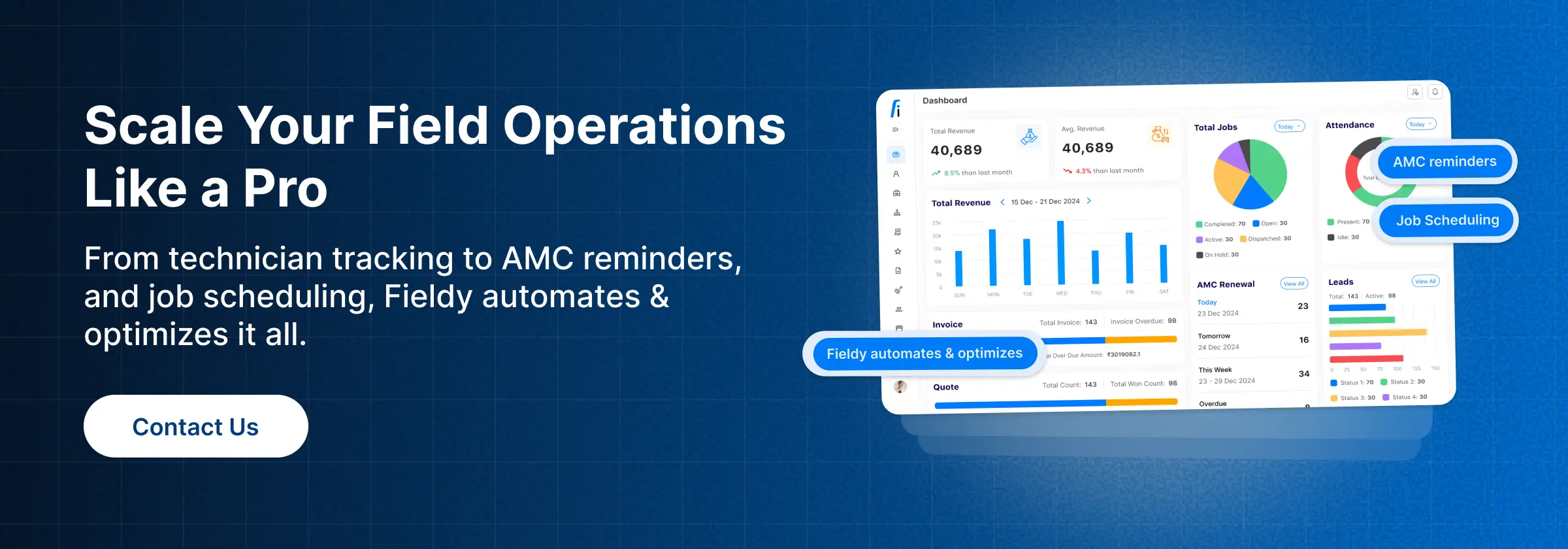
Businesses that mainly rely on offering maintenance-related services will have to keep track of repeating service arrangements, customer agreements, records of assets, technicians’ allocation, and service documentation. AMC management software can organize annual maintenance contracts and recurring maintenance obligations together with the larger business management processes.
Field Asset Management
Field teams regularly use various equipment that often requires inspection, maintenance, replacement, or repair as a routine. Field service asset management software links these records together with technicians, service history, parts, work orders, and maintenance schedules, etc.
ERP, Field Teams and Employee Management
ERP (Enterprise Resource Planning) systems allow for managing employees at an administrative level, but organizations whose employees mostly work “on site” often need additional levels of visibility. It’s really necessary for a manager to have a view on his team members who are going to carry out particular jobs, employee availability, and whether jobs are carried out as scheduled or if there are still problems.
Managing Field Employees
A well-integrated platform enables managers to allocate tasks, maintain calendars, log employee check-ins, keep track of work progress, and share updates with their teams – essentially doing away with the need for numerous phone calls and the tedious work of maintaining spreadsheets.
Employee Location and GPS Tracking
One of the most practical uses of an employee GPS tracking app is to get visibility over the field and track progress. As long as the usage is transparent and with the employee’s consent, location data can be used by companies to efficiently allocate manpower, confirm employee arrivals, streamline transportation, and most importantly – better serve the customer by having quicker response times.
Tracking Field Staff
A field staff tracking app equips dispatchers with the ability to monitor the availability and the work progress of the repairmen. It can greatly help when the schedules are amended during the day or when the customers ask for urgent service.
ERP Integrations: What Should Your Software Connect With?
To ensure ERP software is not yet another island system, first figure out the existing systems that will need to exchange data with it before you make a platform selection decision.
CRM Integrations
Keeping customer and sales data in sync with operations such as order placement, service billing, and inventory.
Accounting Integrations
Accounting links can eliminate the need for entering data twice and help the flow of operational transactions into financial reports.
Inventory Integrations
Inventory integrations can help to automatically keep track of stock purchasing, warehouse, and product data levels.
Payment Integrations
Payment integrations facilitate collection and reconciliation of payments through the link of invoices to payment transactions.
Field-Service Integrations
Service providers should check if the ERP can connect with their scheduling, dispatch, mobile workforce, work-order, and asset-management applications.
E-Commerce Integrations
Retailers and distributors must ensure that there are stable links between online store orders, inventory, fulfillment, and accounting.
Communication and Productivity Tools
Connecting with email, chat, teamwork, and productivity programs is also a big step in reducing manually handled communication and improving overall visibility.
It’s actually more important to check if the specific integrations that your company needs are reliable, well supported, and easy to maintain rather than looking at the sheer number of integrations a solution can offer.
How Much Does ERP Software Cost in 2026?
The price of ERP software will differ greatly from company to company. Since there is no fixed pricing model, different factors contribute to this variance. The main determinants are: the number of users the license should cover, modules required to be installed, the cloud and on-premises delivery models, the number of transactions, and implementation requirements.
Common ERP Pricing Models
- Per-user pricing
- Per-module pricing
- Tiered subscriptions
- Usage-based pricing
- Custom enterprise pricing
Additional ERP Costs
The software subscription cost is just ONE component of the whole cost. Companies will also need to factor in these expenses:
- Implementation
- Data migration
- Training
- Customization
- Integrations
- Support
- Internal project management
Deducting the subscription fee only does not automatically reduce the total expenditure. Implementing a very customized system that needs a lot of training may cost much more over several years.
How to Calculate ERP ROI
ERP ROI generally is derived from multiple areas:
- Reduced administrative work
- Fewer data-entry errors
- Better inventory control
- Faster invoicing
- Improved employee productivity
- Better purchasing decisions
- Faster reporting
- Reduced software duplication
As a case in point, when employees spend several hours a week manually transferring data from spreadsheets to applications, it is possible to save money by using an automated process instead of the manual one.
How to Choose the Best ERP System for Your Business
Step 1: Identify Your Business Processes
Map out your business processes so that you have an accurate picture of what’s going on behind the scenes with sales, purchases, inventory, finance, and customer service. Look at the system from its point of view (e g as an outsider) and identify the bottlenecks first before looking at the software aspect.
Step 2: List Your Must-Have Features
Mind your real requirements apart from the features that you might be easily seduced into thinking of during a sales pitch.
Step 3: Decide Which Departments Need Access
Finding out which employees or departments need access and the kind of data they require is very important to know besides being able to estimate the number of licenses you are willing to purchase.
Step 4: Check Integrations
List every system that the ERP needs to be connected with, like an accounting system, e-commerce, field-service, CRM, inventory, and payment tools.
Step 5: Compare Implementation Requirements
Clarify the standard implementation period, who is taking care of data migration, how training will be organized, and what internal expertise is required for successful operation.
Step 6: Evaluate Security and Scalability
Double-check user access rights, login requirements backups activity logs, legal requirements, and the vendor’s capacity to handle your growing needs.
Step 7: Compare Pricing
Estimate how much you will spend by the year or over 5 years based on the expected software costs apart from licensing, hardware expenses, and internal time.
Step 8: Request a Demo
The demo should show you what you do regularly so you will be better able to judge the value of the product.
Step 9: Test the Software With Real Workflows
If you give them all of your workflows and your company procedures as an example, then the vendor can show you scenarios like: adding a customer, generating a ticket, placing, purchasing, and fulfilling the request, completing the job, and billing.
Step 10: Calculate Long-Term ROI
Figure out what the software will do in the long-run for you. It should reduce the number of hours spent on paperwork and error correction, and it must lead to better efficiency, faster service from the customers’ perspective, and much improved reporting as a general rule.
ERP Software vs. Specialized Business Software
ERP vs. CRM
ERP handles a more holistic approach to business resource planning. But CRM centers around customers, their leads, sales, and their relationships. Some software of the latest trend is developed to merge both ERP and CRM together.
ERP vs. Inventory Management Software
Inventory management software is all about inventory control, stock warehouses, purchasing, and movement of products from one location to another through a supply chain. ERP system is an integrated application software that connects all the major functions of business, like accounting, sales operations, HR, etc.
ERP vs. Field Service Management Software
Field-service platforms are mostly about getting the job done at the customer’s site or location. And scheduling, dispatching mobile work orders, technician location monitoring, providing estimates, and referencing service history are all key things that are typically much more important compared to features of standard ERP manufacturing.
ERP vs. Accounting Software
Accounting software keeps track of financial transactions, whereas ERP usually links finances to business operations such as inventory, purchasing, production, sales, and projects.
ERP vs. Asset Management Software
But EAM relates to the maintenance of physical equipment and its lifespan. Arguably, ERP offers a general business environment where purchases, management of funds, stock handling, and day-to-day operations take place together.
The key factor is the central issue in operation is that the company has to solve. A factory that produces various types of machinery would probably use ERP fully. On the other hand, a small plumbing business of twenty people would probably make use of an all-in-one field service platform and accounting system.
Best ERP Programs for Different Business Scenarios
| 🏢 Business Scenario | 🎯 Recommended Direction |
|---|---|
| 🏪 Small Business | Odoo, ERPNext, QuickBooks Enterprise, or specialized software |
| 📈 Growing Company | SAP Business One, Acumatica, Odoo, NetSuite |
| 🏭 Manufacturing | SAP Business One, Sage X3, Infor, Epicor-type manufacturing ERP |
| 🛠️ Service Business | Fieldy or a service-focused ERP/FSM platform |
| 🌎 Multi-Location Company | NetSuite, Dynamics 365, Infor, Sage X3 |
| 🏢 Enterprise | NetSuite, Dynamics 365, Infor CloudSuite, Sage X3 |
Small businesses must look towards affordable and user-friendly options. Larger companies should aim for the ability to grow and compatibility with others. Producers require reliable manufacturing and stock tracking features, whereas service industries rely heavily on the ability to schedule jobs, organize a team of mobile workers to carry out the assigned jobs, customer relationship management, price proposals, invoice generating with mobile workforce capabilities.
Final Verdict
A choice of an ERP platform cannot be made simply based on the company itself, but other factors like the nature of the work, the company’s size, and the way it operates also need to be accounted for. Also, the company’s financial situation, existing technological infrastructure, and growth objectives are factors that must be considered when choosing an ERP solution.
If a company is large and operates globally on many fronts – financially, manufacturing-wise, and supply-chain – Oracle NetSuite, Microsoft Dynamics 365, Infor CloudSuite, and Sage X3 would be good to consider for its ERP needs. SAP Business One and Acumatica can be good for expanding manufacturers and distributors, whereas Odoo and ERPNext offer a flexible choice for businesses with a modular or open-source ERP.
Small businesses that mainly focus on accounting and inventory can manage with QuickBooks Enterprise. Still, service companies have a completely different set of things that they are most worried about. Most of their workflows revolve around customer estimates, scheduling, dispatching technicians, work orders, invoices, inventory, assets, and mobile operations.
Fieldy is an excellent choice for such kinds of businesses. It does not set out to be a jack-of-all-trades ERP, but rather it focuses on being a powerful tool for managing those particular operational workflows that service businesses use day-to-day. For those in HVAC, plumbing, electrical, cleaning, roofing, pest control, and related sectors, fieldy’s service-first model may even be a better idea than going with a big old-style ERP implementation.
Before choosing any system, ask these five questions:
- Does it solve our most important operational problems?
- Can our employees use it without excessive training?
- Does it integrate with the systems we already depend on?
- Can it scale as the business grows?
- Does the long-term ROI justify the implementation and subscription cost?
If your business is looking for an all-in-one platform that covers the whole process from customer relationship management, service bookings, estimating, technician assignments, billing, warehousing, and on-site operations, you’ll probably like Fieldy as one of the main modern choices for your service management in 2026. Check out what’s available by asking the team for a demo. Through its seamless integration, Fieldy might transform your service department from being a set of separate tools into a fully streamlined system where everything is organized, easily overseen, and operates much faster.