
 Blog Details


Introduction
Estimating is a critical business process for construction companies throughout Australia. You’re always under pressure to provide the right estimate, keep materials costs down, supervise subcontractors, and deliver to scope and budget. As a builder, renovation specialist, commercial construction company, or tradesperson, small mistakes in an estimate can be costly to your bottom line. Tracking estimates with spreadsheets and disconnected tools creates problems when it’s time to update, inform clients, and plan work.
The technology behind construction software brings all of these procedures together in one place. It offers all of this in the form of digital quantity takeoffs, calculations for materials and labor, professional quotations, project scheduling, tracking costs, invoicing, and field-team coordination.
When comparing the best construction estimating software Australia has on offer, it’s not just the subscription prices you need to look at. Factor in the scale of your projects, estimating accuracy, pricing from Australian suppliers, how the software integrates with your accounting, accessibility, and how easily estimates can be linked with operations.
This field estimation software buyer’s guide compares six products like Fieldy, Buildxact, Cubit Estimating, CostX, Procore, and CostMiner. Each of these products is suited to different company needs, from linking quotes to the field to generating accurate quantity takeoffs on complex projects.
So, if you are comparing some of the leading construction software in Australia in 2026, then your preferred choice will be based on solutions such as estimating or commercial cost planning, residential building, or an entire workflow from quote to completion.
Best Construction Software in Australia Listed
1. Fieldy
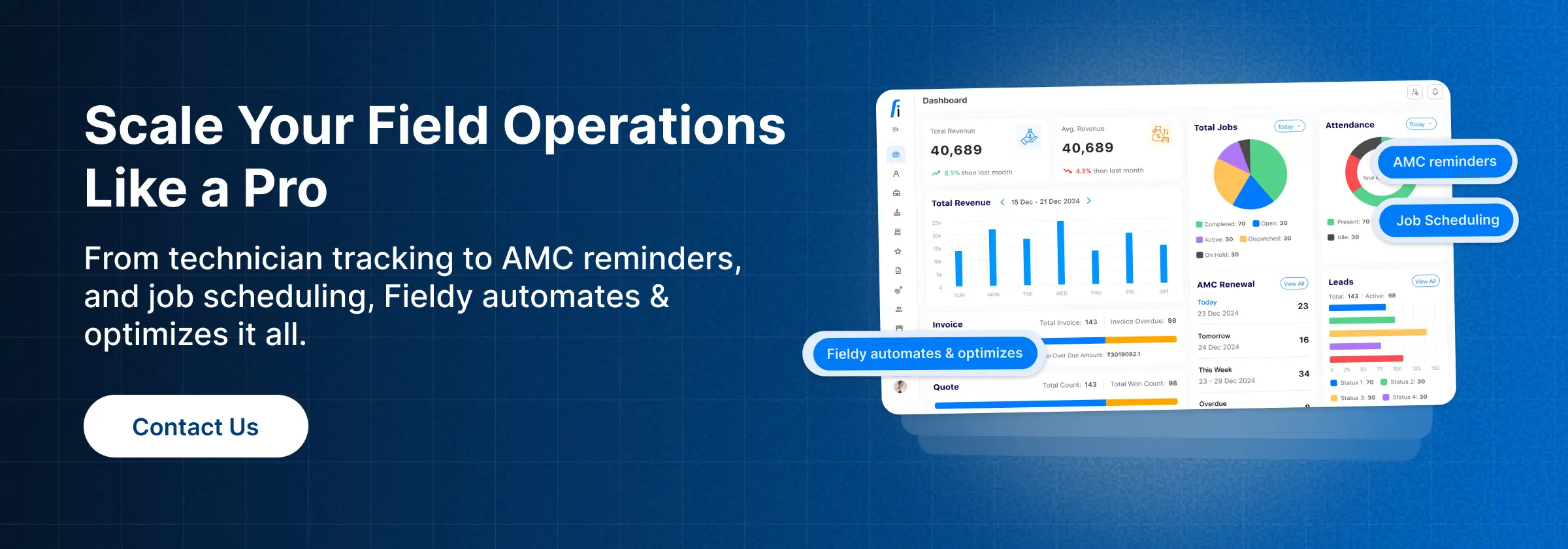
Fieldy is a field management platform that allows businesses to manage customer quotations, scheduling, dispatching, invoicing, and mobile field work. It is mainly useful for construction-related service providers, maintenance contractors, installation companies, and trade businesses who require a link from the office to the job site.
Where it differs from specialist estimating apps, which are often designed entirely on digital plan measurement and bills of quantities, Fieldy is based on how things work on the ground. It might be worth considering if the biggest issue is not just producing a quote, but taking approved work into a schedule of jobs, managing employees and monitoring progress.
If you are looking for the top construction software Australia has available for connected field work, then try Fieldy as its workflow aligns with your construction needs.
Key features
Quoting and estimates
Standardized quotation templates are vital for trade and construction companies receiving several customer queries. Implementing a quote process gives your teams a consistent way of documenting the scope of work, aggregating prices, and sharing the price with the customer before work.
Of course, for companies, you will want to test how Fieldy’s field service quoting software handles estimates and customer quotes within the overall job process. For any construction estimate or commercial or residential quote, verify that the quoting software has the necessary quantity takeoff features, cost assemblies, material library, and quantity measurement tools.
Customer relationship management
Organizing enquiries, contact information, past jobs, and their follow-ups makes the handling of customer data easier.
Businesses looking for field service CRM software might look into the customer management features of Fieldy to maintain customer records linked to operational processes. This allows front office staff to track inquiries and customer relationships while minimizing duplicated data entry.
Job scheduling and workforce coordination
A construction or trade business often has to manage dozens of staff, subcontractors, customer schedules, and site visits. Overlapping schedule conflicts can cause delays and wasted travel and can even get your customers on the wrong side of your business.
Field service scheduling software use field service scheduling software to keep jobs organized and field work coordinated. While testing Fieldy, determine whether its scheduling and assignment processes handle your crew needs with availability, time for jobs, skills, site accessibility, and subcontractor management.
Field-team visibility
You need managers to know what jobs are in process, who has been assigned to them, and where the delays are. By linking field information with office procedures, you can eliminate the need for multiple phone calls and status reports.
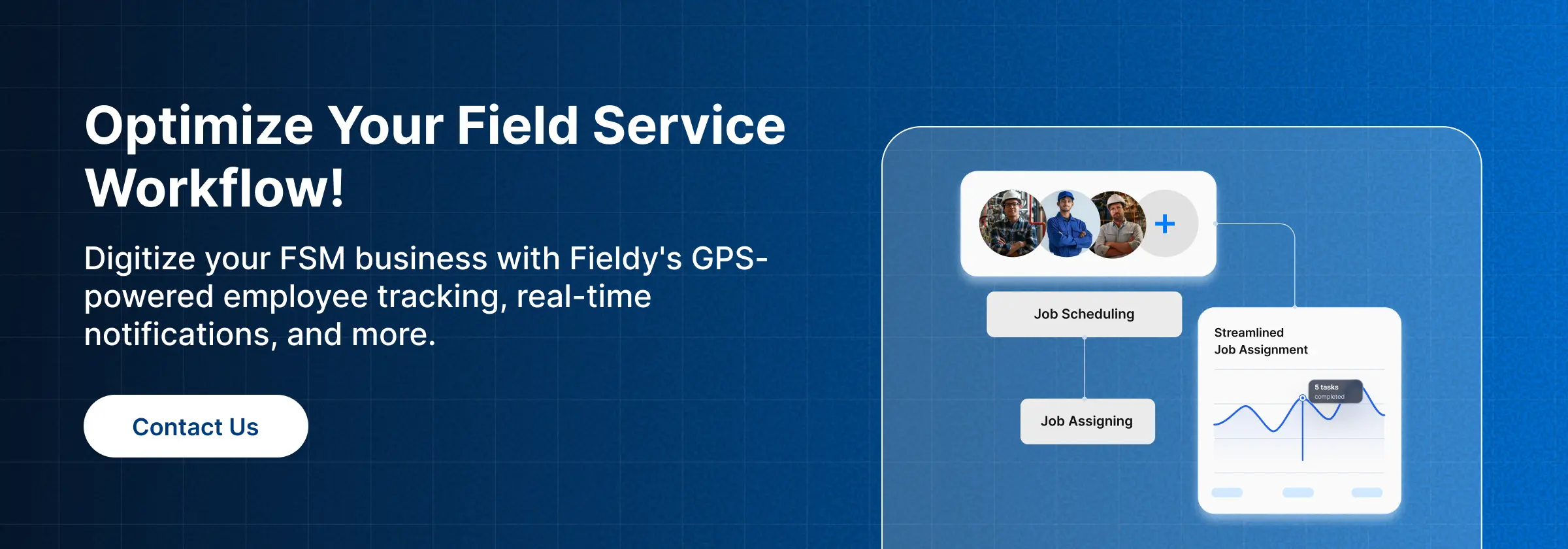
When exploring field service software, companies can check what Fieldy brings for job-status updates, mobile communication, and field-team management. GPS and other location-based features and functionalities should be verified on your current plan and corresponding product literature, not assumed to be identical to all construction-site tracking features.
Who should consider Fieldy?
Fieldy is worth considering for:
- Trade contractors managing installation, maintenance, and repair work.
- Construction-related service businesses handling recurring customer jobs.
- Businesses that need quotations, customer records, scheduling, and invoicing connected.
- Teams managing mobile employees across multiple locations.
- Companies looking to reduce administrative work between the office and field staff.
Important limitation: The assumption here is that Fieldy is being used as a quick-and-easy alternative to using a specialist quantity-surveying application. If your business is creating detailed bills of quantities from architectural drawings, or handling complicated commercial construction estimates, make sure you check for those requirements separately.
It is also wise to double-check the price with the source, as the bill can be impacted by the plan, additional users, and new features.
Other Leading Construction Estimating Software in Australia
These are some of the proven platforms that focus on estimating, quantity takeoffs, construction cost management, or project delivery in general: Compare these options to Fieldy.
2. Buildxact
Buildxact is best for residential builders, renovators, and smaller-scale construction companies that need to estimate costs and manage jobs with an integrated workflow.
Designed features include digital takeoffs, estimating reusable templates, supplier pricing, quoting, scheduling, tracking costs, invoices, and integration with accounting systems. The platform also provides AI-powered estimating with its Blu building assistant.
Availability of features is based on subscription and any paid add-ons.
Buildxact may be particularly beneficial for companies that frequently estimate home construction, home renovations, home extensions, and more. Using digital measurements and reusable cost templates, repetitive calculations can be minimized, and teams can generate standard, repeatable quotes.
Best for: Residential builders, renovation firms, and small to medium construction businesses.
Limitation: If your business is working on highly complex commercial projects, you should evaluate whether the platform gives the estimating depth and reporting flexibility you require.
3. Cubit Estimating
Cubit Estimating integrates estimating and digital quantity takeoffs within a single interface. It accommodates workflows that include measurements, rate sheets, price lists, calculation sheets, reporting, and bills of quantities.
Paid versions of Plan-grid also offer more features, including reporting tools, revision control, and the ability to perform takeoffs using BIM. This can be useful to estimators and quantity surveyors working with detailed construction documents and many project revisions.
The Bottom Line. Any business that needs more estimating detail than a standard job-management platform is likely a good fit for Cubit.
Best for: Professionals – estimators, quantity surveyors, subcontractors, and home builders for residential and commercial construction.
Limitation: Businesses must evaluate the learning curve and whether they need a dedicated system for customer management and scheduling across broader field operations.
4. CostX
CostX is an estimating and quantity take-off platform for commercial construction and quantity surveying. It should be considered when your work involves some or all of these: detailed measurement from plans, a formalized cost plan, or complex estimating workflows that go beyond trade-by-trade pricing.
This is suitable depending on the kind of estimates generated, the size of the estimating team, and the current cost-planning procedures at the organization. Buyers should confirm the current product edition, integrations, and available features directly with the provider.
Best for: Quantity surveyors, commercial estimators, and companies with demanding building projects.
Limitation: Specialist estimating software could need complementary applications for customer communication, workforce scheduling, invoicing, and field-service management.
5. Procore
Procore is built around construction project management, not just estimating. Its bigger ecosystem enables construction teams to organize project information, document work, handle budgets, and connect with all relevant stakeholders.
Think about when an organization demands a project-wide view and the need for cooperation across more significant construction projects. Organizations should validate which estimating and financial processes would be included in the software selected and what will need to be included in other systems.
Best for: Commercial builders, larger building contractors and anyone trying to manage a host of stakeholders on a more complex project.
Limitation: might be too much for a small contractor that just needs quick quotations, easy cost estimates, and job scheduling.
6. CostMiner
CostMiner is another solution for Australian construction companies looking at cloud estimating workflows. If you would like to do estimating, document cost information, and perform digital takeoffs without forcing every aspect of the process into spreadsheets, then it’s another solution to consider.
Consider its measurement features, supported file types, reporting integrations, and collaboration features based on what you usually track. Double-check the current prices and exact features included in each plan.
Best for: Builders and estimators who require a dedicated estimating workflow and access via the cloud.
Limitation: Make sure its project-management and operational features meet your requirements, or if you will need further software.
Comparison table
| 💻 Software | 🎯 Best For | 📐 Estimating Features | 🏗️ Project Management Capabilities | 🔗 Integrations | 💰 Pricing |
|---|---|---|---|---|---|
| 🛠️ Fieldy | Trade and field-service operations | Quoting and estimates; verify detailed takeoff requirements | Scheduling, dispatch, customer management, invoicing | Confirm current supported integrations | Contact provider |
| 🏠 Buildxact | Residential builders and renovators | Digital takeoffs, templates, cost calculations, quotes | Scheduling, job management, cost tracking | Accounting and supplier integrations | Subscription plans |
| 📏 Cubit Estimating | Detailed estimating and quantity takeoffs | Rate sheets, measurements, bills of quantities, reporting | Estimating and job collaboration | Xero, Excel, and other supported tools | From about A$167/user/month + GST annually |
| 📊 CostX | Commercial estimating and quantity surveying | Specialist takeoff and estimating workflows | Depends on the wider product environment | Verify current options | Request a quote |
| 🏗️ Procore | Larger construction projects | Verify the required estimating and financial products | Broad construction project coordination | Product-dependent integrations | Custom quote |
| ☁️ CostMiner | Cloud-based construction estimating | Digital estimating and takeoff workflows; verify plan features | Verify current capabilities | Confirm with provider | Check current pricing |

A dedicated estimating tool and a construction operations platform address separate needs. Businesses should evaluate them based on the specific tasks they handle, rather than presuming all products offer the same features.
Get an overview of some of the platforms that add documentation, site coordination, project controls, and contractor collaboration by checking out our comparison of the best construction management software Australia has to offer, alongside niche estimating tools.
Other companies that require estimates for purchasing, accounting, inventory, and overall corporate reporting might find it necessary to research and consider the best ERP software Australia has. ERP works with estimating software but with an extent to which the complexity of the operation will allow.
If your main concern is overseeing project milestones, dependencies, responsibilities, and deadlines rather than quantifying construction drawings, reviewing the best project management software in Australia may help you find a suitable complementary solution.
Key Features to Look for in Construction Estimating Software
A good construction estimating platform should boost precision, simplify preparing quotations, and also provide a clear understanding of the foreseen costs before a job.
Material and labor cost calculations
Every estimate shall include the materials, labor, equipment, subcontractor costs, overheads, and other expenditures necessary to carry out the work.
For instance, a renovation quote can break down the fees for demolition, materials, carpentry, electrical, plumbing, removal of waste, and project supervision. If one of these isn’t listed, the quote might not cover the actual cost of getting it done.
Check for many configurable rates, reusable cost items, quantity calculations, and the ability to change assumptions when prices of Suppliers change.
Digital quantity takeoffs
Quantity takeoffs assist estimators in determining the necessary quantity of materials from the drawings and project specifications. The tools may have features that measure from PDFs, imported plans, or BIM models, depending on the software platform.
A good takeoff process ought to allow you to quickly check dimensions, easily revise quantities if the plans change, and connect quantities directly to your cost calculations. You should consider specialist estimating software like Cubit or CostX if detailed measurement is key to estimating.
Templates and quotation generation
Templates are a time saver for multiple similar jobs. For example, a builder may develop a template for bathroom renovations, or an electrical sub-contractor may create a template for installation work.
Templates should be kept editable, enabling the estimator to update quantities, labor, materials, exclusions, and conditions specific to the project.
Cost tracking and estimate revisions
You should not end your estimating process once a quote is approved. Companies like to track estimate costs against actual costs as they work through the delivery.
An effective tool should enable the team to pinpoint deviations, analyze overspending, and determine the reasons that made one project more successful than another. Revision tracking is also helpful when clients require specifications to be altered or work to be added.
Invoicing and payment workflows
At the time of an estimate being accepted, the business calls for a practical method to invoice the customer based on the negotiated terms. For some jobs, this will be deposits, progress claims, milestone payments, variations, or a final invoice.
Any business considering the best invoicing software in Australia should see if invoices can be prepared from authorized quotations, if taxes are managed, and whether payments can be reconciled. For more complex construction businesses, they also need to ensure that their unique contract-administration and progress-claim needs are being met.
Customer records and communication
Many conversations can happen before a customer agrees on a job for building estimates. Grouping inquiries, contact details, quotes, amendments, and follow-ups together can avoid some confusion.
If a business is looking for the best CRM software in Australia, then they should consider whether customer records integrate into their estimating process, and if personnel can easily locate the newest proposal, customer needs, and sequence of interaction.
Fleet and equipment coordination
Construction sites rely on the movement of trucks, trailers, machinery, and equipment to get between suppliers, depots, and jobsites. An inability to coordinate this movement can cause hold-ups to work even where the estimate is correct.
The best fleet management software in Australia can get placed side-by-side can assist businesses with applications for monitoring vehicle utilization, maintenance scheduling, and tracking and moving vehicles. Look for these capabilities in an estimating system or determine if you need to integrate with another program.
Mobile access and reporting
Accessing jobs via a mobile device enables staff to update jobs, share progress, and communicate when away from the office. Reporting enables managers to view estimated vs. actual costs, quotation approval, job margins, and delays.
Before comparing software, try it out on a real project rather than a sales demo.
Construction Estimating Software for Different Business Needs
Not every construction company requires every estimating feature. The appropriate solution is based on factors like project size, type of trade specialization, team organization, and how estimates are completed into work.
Residential builders and renovation businesses
Repeatability is high for residential builders, so these types of templates and supplier pricing are extremely useful. Client selections, variations, scheduling, progress invoicing… all of these things might be a requirement for the estimate.
Buildxact is worth considering for these workflows as it combines estimating and general residential construction and job-management features.
Commercial contractors and quantity surveyors
Commercial projects may require detailed drawings, various subcontractors, detailed bills of quantities, and many revisions. These organizations may benefit from specialist takeoff and cost-planning capabilities.
If measurement precision and more detailed cost reporting are the main focus, then worth mentioning are the cost-estimating side of Cubit Estimating and CostX. Larger systems like Procore can work alongside estimating to help with project-level coordination.
Small construction businesses
The smaller business will tend to be more cost-conscious, have a simpler workflow, and have little administrative overhead. They might not require the level of BIM measurements or complex reporting, but they will need good estimates and a tracking system for approved jobs.
Any smaller contractor should assess the comprehensive cost of training, implementation software, and other subscriptions before signing.
Specialist trade contractors
Plumbing, electrical, HVAC, and maintenance companies require quotes that include labor, equipment, materials, travel, and other project requirements. The problem continues to plague them even once the quote is approved, because they have to find the time to schedule their employees and finish jobs at multiple locations.
For contractors that give regular property maintenance or pest-treatment visits, you can determine whether the pest control software Australia offers is right for handling service appointments, client information, repeating work, and job documentation. The right choice will depend on whether the trade needs to document specific treatment records or simply needs a general field-service workflow.
Property maintenance companies that use their management platform for tasks such as managing trades, surveys, and contractor visits should consider the best property management software Australia has to offer. Mainly when there’s a need to log maintenance requests from tenants, property managers, or building owners as work orders.
Labor costs should further be incorporated into trade estimates using plausible wage, on-cost, travel allowance, and productivity estimates. For jobs like plumbing, data from the Australian plumbing salary market can help inform the labor portion of a pricing estimate; though, the actual cost of labor needs to be based on the employee’s skill level, location, employment status, and the total labor cost to the business.
Similarly, companies calculating electrical installation work can refer to the current information on the electrician salary Australia market value for labor budgeting purposes. Salary levels are different from the hourly rate of an employed electrician, which might add superannuation, vacation, and sick days, insurance, tools, travel expenses, and non-billable hours.

Construction Software for Quoting, Scheduling, Dispatch, and Field Teams
A construction estimate is a financial plan for the work. After the customer accepts the quote, the business must translate that plan into a well-organized job with the proper personnel, materials, schedule, and documents.
From approved quote to invoice
Upon acceptance of a quotation, subsequent activities may include: scope confirmation, setting up jobs and scheduling work, ordering materials, tracking variations, and preparing invoices.
You can connect field work to customer billing with field service invoicing software. Check the invoicing flow of the platform to see whether it does the type of work that is involved in billing for big construction projects.
Scheduling and dispatch
Scheduling is the process of planning when a job should be done. Dispatch is the process of defining who has the job and providing those people with the data that they need to accomplish it. Both get more complex when multiple crews operate in multiple locations.
There should be clear job assignments, schedule tracking, work-order access, and staff availability when shopping field service dispatch software. This is important for trade contractors working on installations, repairs, and service calls in tandem with construction work.
Employee location visibility
Knowing a user’s location could help managers track a worker’s travel or monitor field work, if provided voluntarily, using it in compliance with privacy policies and workplace regulations.
Where employees’ location needs to be viewable for legitimate business purposes, an employee GPS tracking app could be beneficial. Ask, before installation, the scope of when tracking takes place; who can see the data; how long the data remains; and if the app will meet your business’s real needs.
But a field staff tracking app can support organizations in setting up site visits and maintaining the status of field personnel. Also, the location is not able to determine the correct completion of a construction activity so fields updates, work logs and site documentation are key.
Mobile job updates and customer communication
Job instructions, customer information, and pertinent documents must be accessible to site teams. Mobile access allows them to update these with completed jobs and inform of any delays that may be impacting the schedule.
With a consistent process for estimating and operating information, office staff spend less time inputting the same data and receive an accurate, real-time picture of what jobs have been approved, scheduled, are in progress, and are all set to invoice.
How to Choose the Best Construction Software in Australia
This is a business decision & not a feature list review of construction software. The software should meet your needs today, but it will need to scale as your business grows.
Start with estimating accuracy.
Determine how your team generates estimates, and where mistakes are made. Typical issues include older supplier prices, omitted materials, non-matching labor rates, duplication of data entry, and unaccounted-for expenses.
Prepare a sample estimate for a real project, using each of the platforms you are considering. Evaluate the results, time taken, and the ease with which a colleague could check the calculations.
Check Australian requirements
How to prepare: You should evaluate the level of support you need for the Australian dollar GST metric measurements, local pricing of suppliers, and reporting and accounting workflows.
For some projects, the company may also need to consider specific state needs, contract terms, building codes, and documentation requirements. Software can help with administration but cannot guarantee regulatory compliance.
Evaluate integrations
Check if the estimating tool can integrate with the business applications you use. Connections to consider include accounting programs, CRM, scheduling, purchasing, inventory, and project-management applications.
See if it can push data out automatically, or if you have to export things manually. What seems inexpensive can suddenly get expensive if someone is duplicating data entry of the customer, material, and job data multiple times.
Consider labor availability and trade costs.
Labor assumptions need to take into account required skill level, labor market and local conditions, productivity assumptions, and availability of people with the right skill set. Market insights related to HVAC technician salary in Australia can be helpful for HVAC labor assumptions, but assumptions should be based on the actual labor costs and rates.
Review the impact on workforce planning by factors like training, licensing, and recruitment. Look into ‘how to become an electrician in Australia‘ to help understand the pathways for qualifications and the time taken to establish a qualified workforce. For a rough estimate, use the relevant labor rates and workforce assumptions instead of assuming careers as direct benchmarks for prices.
Check scalability and support.
What once was a good fit for a single builder may be too tight once a company has estimators, project managers, sub-contractors, and/or multi-sites.
Inquire about user permissions, reporting training, customer support, data access, and export procedures when the system changes in the future. Conduct a trial run with the end users of the software.
Match the software to the entire workflow.
If your team is handling enquiries, estimates, work orders, scheduling, employee management, and invoices, consider doing them all together rather than picking an estimating tool in a vacuum.
The best job management software Australia has might be most suited for contractors who would like to unify tested quoting with the job in execution. The aim is to acquire a program that will meet the necessary operations without having to buy extraneous complexity.
Final Verdict:
Which is the best construction software really depends on the work that your business does and the level of estimates.
If you are a trade contractor or a construction-related service business and you want to get quotes related to customer management, scheduling, dispatch, invoicing, and field operations, then Fieldy is the solution to review first. Its core value proposition is the flow in the field around a job, and not that it’s a substitute for specialized quantity-takeoff software.
For estimators and builders working in the residential space, Buildxact is another good candidate, providing estimating plus job management. If you need to also do detailed takeoffs and cost calculations, Cubit Estimating is focused on this. CostX offers another possibility for specialist commercial estimating and quantity surveying. Procore is more applicable to more general construction project management, while CostMiner offers another cloud option.
Before you settle on a tool, test drive it on a real project and compare Australian pricing, verify that it includes the features your team actually uses, and see that estimates can easily flow into scheduling, purchasing costs, and invoicing without rekeying.
If you want to link quoting with day-to-day field operations for contractors, test Fieldy and book a demo. Check your feature set to your construction workflow, mostly if your projects need accurate quantity takeoffs, bills of quantities and commercial cost planning.
Your business needs the right platform that will allow you to better prepare more accurate estimates, improve the ability to better understand project costs, coordinate people and materials, and deliver work with improved visibility into operations.